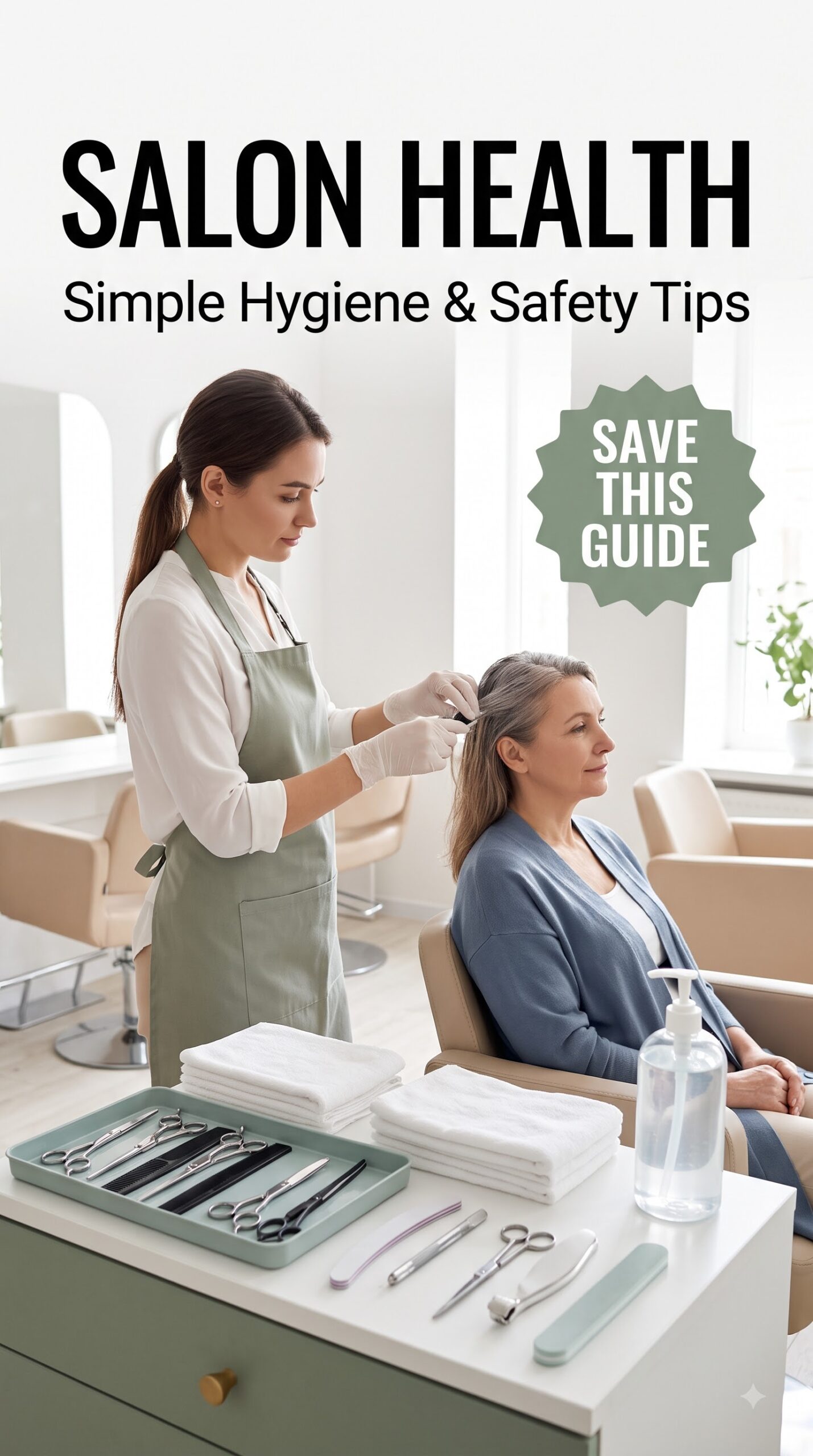

Introduction
A beauty salon should be a place where clients can relax while receiving professional services in a clean and comfortable environment. Salon health involves much more than having a tidy waiting area. Good salon practices can include proper hand hygiene, appropriately cleaned tools, fresh towels, clean workstations, careful product handling, and good communication between clients and professionals.


8
Whether you’re visiting a hair salon, nail salon, or beauty studio, understanding basic hygiene practices can help you make informed choices about where you receive services.
What Is Salon Health?
Salon health refers to the practices used to maintain a clean, hygienic, and safe environment for both clients and beauty professionals.
Important areas include:
- Hand hygiene
- Clean workstations
- Properly handled tools
- Fresh towels and linens
- Appropriate disinfection
- Safe product storage
- Chemical handling
- Good ventilation
- Proper disposal of single-use items
- Following applicable local requirements
Different beauty services have different safety requirements, so salons should follow the relevant professional guidance, manufacturer instructions, and local regulations.
1. Clean Tools Are Essential
One of the first things to consider when visiting a salon is how reusable tools are handled.
Hair and beauty professionals may use equipment such as:
- Scissors
- Combs
- Brushes
- Clippers
- Nail tools
- Tweezers
- Other reusable implements
Reusable equipment should be appropriately cleaned and, when required, disinfected according to the type of tool and applicable requirements.
A clean and organized tool station is a positive sign that the professional takes routine hygiene seriously.
2. Understand Cleaning vs. Disinfection
These two terms are sometimes used interchangeably, but they are not exactly the same.
Cleaning generally removes visible dirt, hair, oils, and debris.
Disinfection uses an appropriate method or product to reduce microorganisms on a properly cleaned surface or item.
The appropriate process depends on the equipment and service.
Salon professionals should always follow:
- Product directions
- Equipment instructions
- Applicable regulations
- Professional sanitation procedures
3. Fresh Towels and Linens Matter
Towels are commonly used during hair, facial, nail, and other beauty services.
A well-organized salon should have a clear process for separating used linens from clean ones.


6
Look for towels that appear fresh, clean, and appropriately stored rather than sitting exposed in areas where they could become contaminated.
4. Keep Workstations Clean
Salon workstations can accumulate hair, product residue, and other debris throughout the day.
Regular cleaning helps keep the area organized and comfortable.
Important surfaces can include:
- Salon chairs
- Countertops
- Mirrors
- Shampoo stations
- Tool trays
- Product shelves
- Frequently touched handles


6
A professional cleaning routine should be appropriate for the surfaces and services being provided.
5. Pay Attention to Ventilation
Some salon services involve products that can produce strong odors or vapors.
Good ventilation can contribute to a more comfortable environment, particularly in salons where chemical products are used regularly.
If you find a product smell overwhelming or uncomfortable, let your beauty professional know.
For salon workers who regularly handle professional chemicals, workplace safety guidance and appropriate protective measures are especially important.
6. Be Careful With Beauty Products
Hair color, bleach, nail products, adhesives, relaxers, and other professional products should be handled carefully.
Salon professionals should:
- Read product instructions.
- Store products appropriately.
- Use products only for their intended purpose.
- Avoid unnecessary skin or eye contact.
- Use protective equipment when appropriate.
- Follow relevant safety requirements.
Clients should also tell their professional about relevant allergies, sensitivities, or previous reactions before a service.
7. Ask About Patch Testing When Appropriate
Certain beauty products can cause allergic or sensitivity reactions in some people.
Depending on the product and service, patch testing may be recommended or required by the manufacturer, salon policy, or applicable local rules.


6
If you’re receiving a new color or chemical service, ask your professional whether any testing or preparation is recommended.
8. Single-Use Items Should Stay Single-Use
Some salon materials are designed specifically for one-time use.
Examples can include:
- Certain applicators
- Cotton products
- Disposable files
- Protective coverings
- Some waxing materials
These should be discarded according to appropriate professional procedures after use.
If you’re unsure whether an item is reusable or disposable, it’s perfectly reasonable to ask.
9. Hand Hygiene Is Important
Clean hands are a basic part of salon hygiene.
Professionals should follow appropriate hand-cleaning procedures before and after relevant services.
Clients can also wash their hands before services when appropriate, particularly before nail or other hand-related treatments.


7
Simple hygiene practices can become part of a salon’s normal daily routine.
10. What Should Clients Look for in a Salon?
Before booking an appointment, take a moment to observe the overall environment.
Look for:
| Area | What to Look For |
|---|---|
| Workstations | Clean and organized |
| Tools | Properly handled |
| Towels | Fresh and appropriately stored |
| Products | Clearly labeled and handled carefully |
| Staff | Professional and attentive |
| Environment | Generally clean and comfortable |
| Communication | Staff willing to answer reasonable questions |
You don’t need to inspect every detail. The overall appearance and organization can give you useful information.
11. Questions You Can Ask Your Salon Professional
If you’re visiting a new salon, you can ask simple questions before your appointment.
Hair Services
- What products will be used?
- Do I need any preparation?
- Should I mention previous color treatments?
- Is testing recommended?
- What aftercare should I follow?
Nail Services
- How are reusable tools cleaned?
- Which items are disposable?
- What should I do if I experience irritation?
Chemical Services
- What precautions should I know about?
- How should the product be handled?
- What should I do if I feel discomfort?
A professional should be able to explain relevant procedures clearly.
12. What Salon Professionals Can Do
Salon health isn’t only the client’s responsibility.
Beauty professionals can build hygiene into their normal workflow.
Before Each Client
- Prepare a clean workstation.
- Check required equipment.
- Make sure clean tools are ready.
- Follow appropriate hand hygiene.
During the Service
- Keep clean equipment protected.
- Follow product directions.
- Use appropriate protective equipment when required.
- Communicate with the client.
After the Service
- Remove disposable materials.
- Clean appropriate surfaces.
- Properly handle reusable tools.
- Separate used towels from clean ones.
- Prepare the workstation for the next client.
Signs You May Want to Choose Another Salon
While no salon will look perfectly spotless every second of the day, repeated hygiene concerns deserve attention.
Consider looking elsewhere if you consistently notice:
- Clearly dirty workstations
- Used towels mixed with clean ones
- Tools that appear visibly dirty
- Poor product storage
- Staff ignoring reasonable hygiene questions
- Strong chemical odors without adequate ventilation
- Unprofessional handling of equipment
Your comfort and safety should be taken seriously.
What to Do If You Experience a Reaction
Sometimes a person can experience irritation or an unexpected reaction to a beauty product.
If you experience significant burning, swelling, severe irritation, difficulty breathing, or another concerning symptom during a service, tell the professional immediately and seek appropriate medical attention when necessary.


5
Salon professionals should not be expected to diagnose medical conditions.
Simple Salon Health Checklist
Before your next appointment, save this checklist:
Before Booking
☐ Check recent reviews
☐ Look at salon photos
☐ Confirm the service you need
☐ Check salon policies
At the Salon
☐ Observe general cleanliness
☐ Check that workstations are organized
☐ Notice how tools are handled
☐ Ask questions if you’re unsure
Before a Chemical Service
☐ Explain previous treatments
☐ Mention relevant allergies or sensitivities
☐ Ask about recommended testing
☐ Understand aftercare instructions
After Your Appointment
☐ Follow professional aftercare instructions
☐ Watch for unexpected reactions
☐ Contact a healthcare professional if concerning symptoms occur
Frequently Asked Questions
What does salon health mean?
Salon health refers to hygiene, sanitation, safe product handling, cleanliness, and other practices that help maintain a clean and professional beauty-service environment.
How can I tell if a salon is hygienic?
Look at the overall cleanliness, tool handling, towel storage, workstation organization, product handling, and willingness of staff to answer reasonable hygiene questions.
Should salon tools be cleaned between clients?
Reusable tools should be appropriately cleaned between clients and disinfected when required for the specific tool and service.
Should I tell my stylist about allergies?
Yes. Inform your beauty professional about relevant allergies, sensitivities, or previous reactions before receiving a service.
Are salon chemicals safe?
Professional products are designed for specific uses, but they still need to be handled according to manufacturer instructions and applicable safety requirements.
What should I do if a salon treatment causes severe irritation?
Stop the service when appropriate, inform the professional, and seek appropriate medical attention for significant or concerning symptoms.
Conclusion
Good salon health starts with simple, consistent habits.
Clean tools, fresh towels, organized workstations, appropriate product handling, hand hygiene, good ventilation, and clear communication all contribute to a better salon environment.
As a client, you don’t need to be an expert in sanitation. Simply paying attention to the environment and asking reasonable questions can help you make informed decisions about your beauty services.
For salon professionals, making hygiene part of the normal workflow can help create a cleaner, more professional experience for everyone.