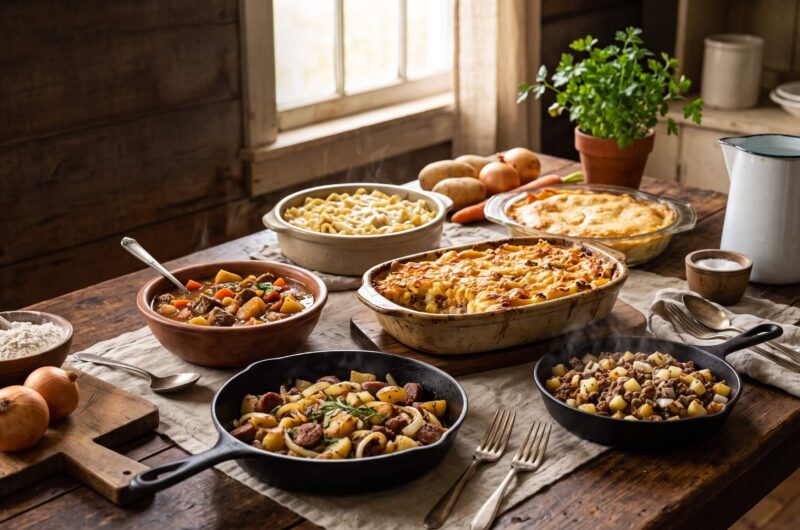

There is something special about recipes that were created when cooks had to make every ingredient count.
Long before budget-friendly meals became a popular search term, families were finding creative ways to turn inexpensive pantry staples into filling, comforting dinners. During the Great Depression, home cooks worked with what they had available: potatoes, onions, flour, eggs, milk, noodles, vegetables, and small amounts of meat that had to stretch across an entire family.
These weren’t complicated restaurant-style meals. They didn’t require expensive ingredients or a kitchen full of specialized gadgets. Instead, they relied on simple cooking techniques, inexpensive staples, and a little creativity.
And that’s exactly what makes these old-fashioned recipes interesting today.
With grocery budgets under pressure and busy families looking for simple weeknight meals, vintage Depression era recipes are once again appealing. They are practical, flexible, comforting, and often make enough food for leftovers.
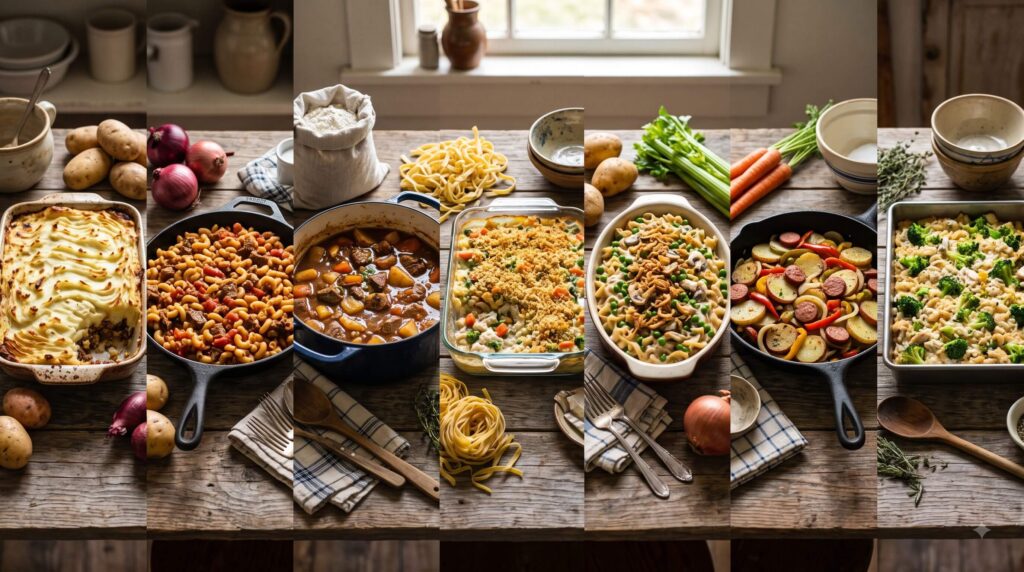
The seven dinners below capture that spirit. From creamy potato casseroles to hearty beef stew and simple skillet meals, these forgotten “poor man’s” dinners show how humble ingredients can become seriously satisfying comfort food.
What Are “Poor Man’s” Dinners?
The phrase “poor man’s dinner” generally refers to meals built around inexpensive, accessible ingredients rather than costly cuts of meat or specialty products.
During difficult economic periods, cooks had to think differently about dinner. A small amount of meat could be combined with potatoes, rice, noodles, vegetables, or a thick sauce to create enough food for several people.
Potatoes were particularly useful because they were inexpensive, filling, and versatile. Flour could become a sauce or dumplings. Leftover meat could be incorporated into casseroles. Vegetables could stretch a small portion of protein into a much larger meal.
The result wasn’t necessarily a boring meal.
In fact, these recipes demonstrate an important cooking principle: technique can make inexpensive ingredients taste much better.
Slow simmering can turn inexpensive beef into tender stew. Browning can add flavor to potatoes and sausage. A simple white sauce can transform noodles and vegetables into a creamy casserole.
That resourcefulness is one reason vintage recipes remain useful today.
A Brief Look at Depression Era Cooking
The 1930s brought severe financial hardship to families across America. With unemployment high and household incomes shrinking, many people had to become extremely careful about how they used food.
Meat could be expensive, so cooks looked for ways to make a small amount go further. Pantry staples became the foundation of many family meals, while leftovers were often incorporated into the next day’s dinner.
Cooking also had to be practical.
A meal that could be prepared in one skillet saved dishes, water, fuel, and time. A casserole could feed several people at once. A stew could simmer slowly while the cook handled other household responsibilities.
Many of these ideas also overlap with traditional rural and Amish cooking, where using available ingredients and avoiding waste were already important parts of everyday cooking.
The recipes weren’t designed to look impressive.
They were designed to feed people well with what was available.
And that is a lesson modern home cooks can still appreciate.
1. Potato Casserole With Ground Beef
If there is one combination that perfectly represents the idea of an affordable comfort-food dinner, it is potatoes and ground beef.
Potatoes were an especially practical ingredient because they were inexpensive, filling, and could be used in countless ways. Ground beef, meanwhile, could be distributed throughout an entire casserole instead of being served as individual portions of steak or roast.
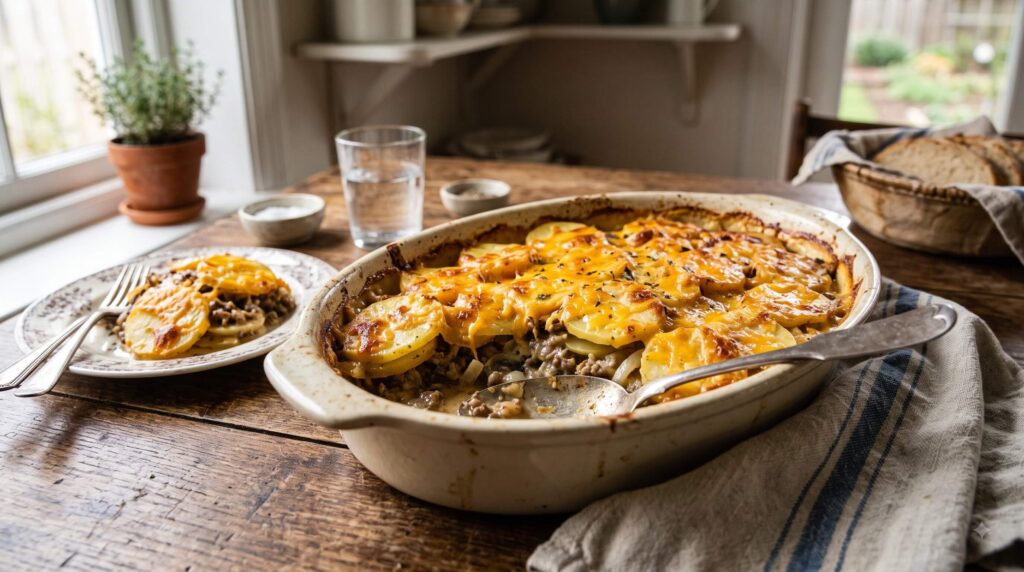
A classic version starts with thinly sliced potatoes layered with browned ground beef, onions, and seasonings. A simple creamy white sauce made with butter, flour, and milk brings everything together before the casserole goes into the oven.
As it bakes, the potatoes become tender while the sauce thickens around the beef.
The finished casserole is warm, creamy, hearty, and satisfying.
How to Make It Today
You can make this dish in a traditional style with homemade white sauce, or use canned cream of mushroom soup if convenience is your priority.
For an extra-rich modern version, add shredded cheese to the top before baking.
You can also adjust the vegetables depending on what you already have in the refrigerator. That’s part of the appeal of this kind of vintage cooking: the recipe doesn’t have to be treated as a rigid formula.
Why It Still Works
Potatoes provide bulk, ground beef provides savory flavor, and the creamy sauce brings everything together.
It is exactly the kind of meal that can make a small amount of meat feel like a complete family dinner.
2. The Classic Skillet Dinner
One-pan dinners may feel like a modern convenience-food invention, but the basic idea goes much further back.
For families trying to conserve ingredients, fuel, and cleanup, cooking an entire dinner in one skillet simply made sense.
A classic skillet dinner could include ground beef or sausage, potatoes or rice, onions, and whatever vegetables were available.
Corn, tomatoes, or other vegetables could be added depending on the pantry or garden.
The beauty of the skillet dinner is its flexibility.
There isn’t necessarily one single version.
Instead, the basic formula is:
protein + starch + vegetables + seasoning + one skillet.
The ingredients cook together, allowing their flavors to combine.
The Secret to a Great Skillet Dinner
A cast-iron skillet is especially useful because it handles steady heat well and can help create browned, crispy edges.
Start by browning the meat. Then add onions and vegetables before incorporating the potatoes, rice, or other starch.
If you have vegetables that need to be used soon, this is an excellent recipe style for them.
Carrots, corn, peas, tomatoes, peppers, and other vegetables can all help turn a simple skillet meal into a more complete dinner.
Why This Vintage Idea Is Still Useful
Modern cooks have the same problem Depression-era cooks had: nobody wants to spend all evening washing dishes.
A one-pan dinner solves that problem beautifully.
3. Beef and Potato Stew
Few meals demonstrate the power of slow cooking better than beef and potato stew.
When inexpensive cuts of beef were all that a family could afford, slow simmering was an excellent way to make them tender and flavorful.
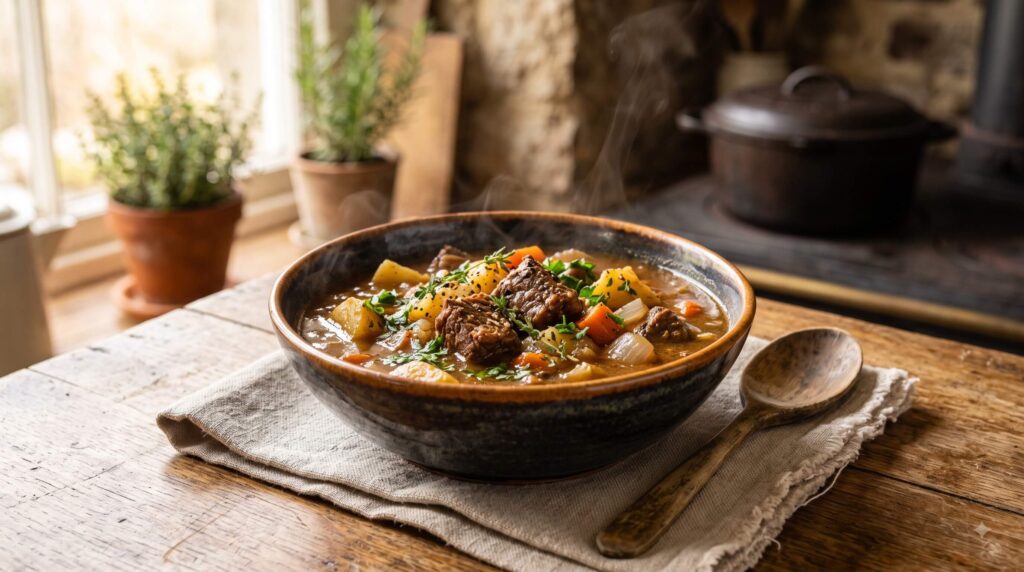
A small amount of beef could be combined with potatoes, carrots, onions, and a rich broth to create a large pot of filling stew.
The potatoes also help give the broth body as they cook.
Why Slow Cooking Matters
The key to a satisfying beef stew isn’t necessarily expensive meat.
It is patience.
Tougher cuts of beef can become tender when cooked slowly over time. Browning the beef before simmering also adds another layer of flavor.
If you brown the beef in a Dutch oven, take a moment to scrape up the browned bits from the bottom of the pan when you add your liquid.
Those browned bits contain plenty of flavor.
Modern Shortcut
A slow cooker can make this type of dinner especially convenient.
You can prepare the ingredients, let everything cook slowly, and return to a hearty dinner later.
Beef and potato stew is also useful for meal planning because leftovers can be refrigerated or frozen for another meal.
That combination of affordability, convenience, and leftovers makes it one of the most practical vintage comfort foods.
4. Amish Chicken Casserole
Simple chicken casseroles fit naturally into the same cooking philosophy as many Depression-era meals.
Instead of allowing leftover chicken to go to waste, cooks could combine it with noodles or rice, a creamy sauce, and a simple topping to create an entirely new meal.
An Amish-style chicken casserole is a good example of this approach.
The basic combination includes shredded or diced chicken, egg noodles or rice, a creamy sauce, and a crunchy breadcrumb or cracker topping.
Once baked, the top becomes golden while the filling stays creamy and comforting.
A Great Way to Use Leftover Chicken
This is one of those recipes where leftovers become an advantage.
Instead of eating the same chicken dinner two nights in a row, leftover chicken can be transformed into a casserole that feels like a completely different meal.
For a faster modern version, rotisserie chicken works well.
You can also assemble the casserole ahead of time and refrigerate it until you’re ready to bake.
The Crunchy Topping
Crushed butter crackers are an easy way to add texture.
Breadcrumbs work too.
That contrast between the creamy filling and crisp topping is part of what makes casseroles so satisfying.
5. Creamy Noodle Bake
Egg noodles were another useful pantry ingredient because they were inexpensive, shelf-stable, and easy to combine with other foods.
A creamy noodle bake could turn a basic package of noodles into a filling family dinner.
The noodles can be combined with a simple white sauce, a small amount of ground beef or leftover ham, and vegetables.
Cheese can also be added when available.
The result is rich, creamy, and comforting without requiring an expensive ingredient list.
Make It More Balanced
A modern version can easily include frozen peas, corn, or other vegetables.
This is especially useful when you’re trying to make a comfort-food dinner feel a little more complete.
You can also add a small amount of paprika for color or a touch of nutmeg to the creamy sauce for additional depth.
Why Noodle Bakes Remain Popular
There is a reason casserole-style noodle dishes continue to appear in family kitchens.
They are affordable, easy to customize, make generous portions, and usually reheat well.
For busy households, those qualities are difficult to beat.
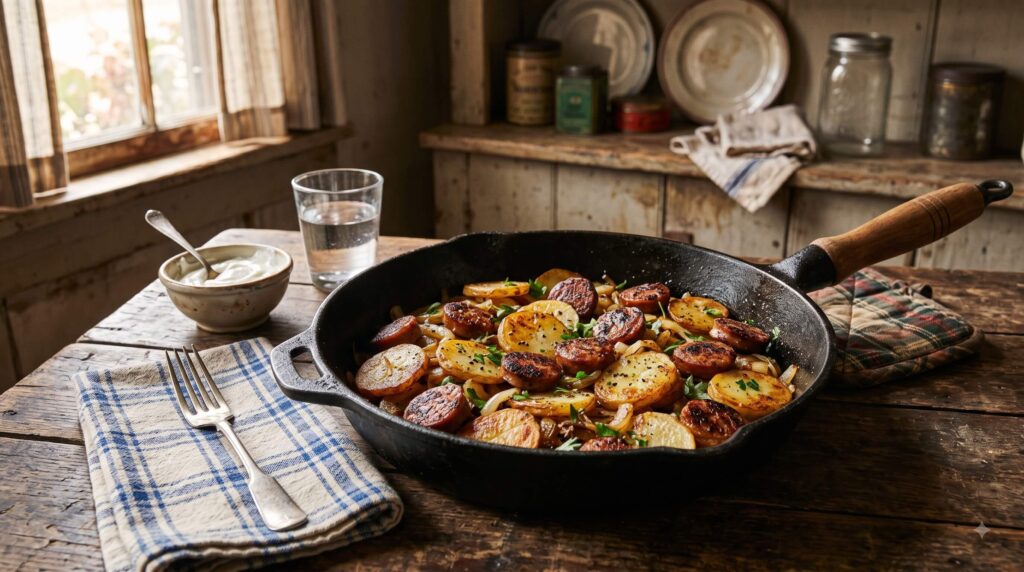
6. Potato and Sausage Skillet
Potatoes and sausage make another excellent combination for a budget-friendly dinner.
Smoked or cured sausage can provide a lot of flavor without requiring a large quantity of meat.
The sausage is sliced and browned with potatoes and onions. Bell peppers or other vegetables can be added when available.
As everything cooks together, the potatoes absorb some of the savory flavor from the sausage.
The edges of the potatoes can become golden and slightly crispy, creating one of the best parts of the entire dish.
A Simple Potato Trick
If your potatoes usually take too long to cook in the skillet, try parboiling them for a few minutes first.
This gives them a head start.
After that, they can finish cooking in the skillet alongside the sausage and vegetables.
The result is tender potatoes with browned edges instead of potatoes that are still hard in the middle while the outside has already become too dark.
Why Sausage Works So Well
Smoked sausage adds substantial flavor to simple ingredients.
That means you don’t need a complicated sauce or a long ingredient list.
This is also one of the quickest dinners on the list, making it particularly useful for busy weeknights.
7. The 5-Minute Dump-and-Bake Casserole
The name “dump-and-bake” is much more modern than the Depression era, but the basic philosophy behind the meal is surprisingly old-fashioned.
The idea is simple:
Use inexpensive ingredients, combine them in one dish, and let the oven do most of the work.
A modern dump-and-bake casserole might combine rice or pasta, ground beef or canned chicken, canned vegetables, and broth, milk, or another liquid.
Everything goes into one baking dish and cooks together.
It is minimal-prep cooking at its most practical.
Why This Style Fits a Frugal Kitchen
The original cooks of the 1930s were not necessarily using the exact ingredients or terminology we associate with today’s dump-and-bake recipes.
But the underlying idea — make a satisfying meal with minimal waste, minimal dishes, and inexpensive ingredients — fits perfectly with the resourceful cooking philosophy of the era.
Make It a Freezer Meal
One modern advantage is meal prep.
You can assemble several casseroles ahead of time and freeze them unbaked.
That gives you homemade dinners available for busy nights when cooking from scratch feels impossible.
Always follow safe thawing and cooking practices when preparing frozen casseroles, and make sure the finished dish reaches a safe internal temperature.
Why Are Depression Era Recipes Coming Back?
There are several reasons vintage recipes continue to attract attention.
The first is practicality.
Modern grocery shoppers are looking for ways to make affordable meals without sacrificing flavor. Recipes based on potatoes, pasta, rice, vegetables, and modest amounts of meat naturally fit that goal.
The second is simplicity.
Many modern recipes contain long ingredient lists and multiple cooking steps. Vintage-style dinners often follow a much simpler approach.
You don’t need twenty ingredients to make dinner satisfying.
You need a few ingredients that work well together.
The third reason is nostalgia.
A bubbling casserole coming out of the oven can evoke memories of family dinners, grandparents’ kitchens, cold evenings, and the comforting smell of food cooking at home.
Even if you never grew up eating these exact dishes, the style of cooking feels familiar.
And finally, these recipes are adaptable.
If you don’t have one vegetable, use another.
If you have leftover chicken, use it.
If ground beef is expensive, use a smaller amount and increase the potatoes, noodles, or vegetables.
That flexibility is part of the original philosophy.
How to Make Vintage Budget Recipes Taste Better
Affordable cooking doesn’t mean you have to sacrifice flavor.
A few basic techniques can make simple ingredients taste significantly better.
Brown Your Meat
Don’t immediately add liquid after putting meat in the pan.
Allow it to brown first.
Those browned surfaces create deeper savory flavor.
Cook Your Onions Properly
Onions are inexpensive but incredibly useful.
Give them enough time to soften and develop flavor before adding the remaining ingredients.
Season in Layers
Don’t wait until the very end to season a large pot of food.
Season throughout the cooking process so the flavors develop together.
Use Browning to Your Advantage
Whether you’re making beef stew, potatoes, sausage, or a casserole topping, browned surfaces add texture and flavor.
Don’t Underestimate Simple Sauces
Butter, flour, and milk can become a creamy sauce with just a few ingredients.
That basic technique can turn noodles, vegetables, potatoes, and meat into a satisfying casserole.
How to Build a Budget-Friendly Pantry
If you want to cook more vintage-style budget dinners, it helps to keep a few versatile ingredients on hand.
Consider stocking basics such as:
- Potatoes
- Onions
- Flour
- Rice
- Egg noodles
- Pasta
- Canned tomatoes
- Canned vegetables
- Broth
- Butter
- Milk
- Cheese
- Ground beef
- Sausage
- Chicken
You don’t need every ingredient at once.
The goal is simply to have several inexpensive building blocks that can be combined in different ways.
With potatoes, onions, a protein, and a few pantry staples, you can create multiple completely different dinners.
How to Stretch a Small Amount of Meat
One of the biggest lessons from these vintage recipes is that meat doesn’t have to dominate the plate.
Instead of serving a large piece of meat to each person, combine a smaller amount with filling ingredients.
Ground beef works particularly well in casseroles and skillet dinners.
Chicken can be stretched through noodles or rice.
Sausage can flavor an entire skillet of potatoes.
Beef can become a large pot of stew.
This isn’t about making dinner feel restrictive.
It is about making each ingredient work harder.
Frequently Asked Questions
What are poor man’s dinners?
“Poor man’s dinners” generally refers to inexpensive meals built around affordable pantry staples such as potatoes, noodles, rice, vegetables, flour, and modest amounts of meat.