
Most advice about earning on Pinterest starts with the same instruction: start a blog. Write posts, design pins, and send traffic to your site. It works, but it also means paying for hosting, learning WordPress, and waiting months before a single article ranks.
The good news is that you do not need any of that. Pinterest is a visual search engine, not a social network, and it lets you link a pin directly to a product page, a digital download, a sign-up form, or a service you offer. If you want to make money on Pinterest without a blog, you can start with just a free account, a free design tool, and a clear plan.
In this guide, you will learn seven practical ways to earn money on Pinterest without a blog, how to set up your account for sales, how Pinterest SEO works, and the mistakes that keep most beginners stuck. Whether you have an hour a day or a full week, you will find a method that fits.
Why Pinterest Works So Well Without a Blog
Pinterest behaves differently from Instagram, TikTok, or Facebook. People go there to plan and shop. They search for recipes, outfits, home ideas, budgeting templates, wedding plans, and gift ideas. That planning mindset is exactly what makes it valuable for anyone selling or recommending something.
Here is why the platform suits bloggerless creators:
- Pins have a long lifespan. A social post may vanish within hours. A well-optimised pin can keep getting views for months because Pinterest surfaces content through search and recommendations rather than a timeline.
- You can link anywhere. A pin can point to a product page, a landing page, a storefront, or an affiliate offer, depending on the rules of the program you are using.
- You do not need a large following. Distribution depends mainly on keywords and pin quality, not follower count. A brand-new account can get impressions if it targets the right searches.
- Search intent is high. Someone searching for “printable meal planner” is often ready to download or buy one.
Because of this, Pinterest marketing for beginners can be far less intimidating than building a content website from scratch.
Before You Start: Set Up Your Pinterest Account to Earn
A few setup steps make everything easier later.
1. Create a business account. It is free, and it gives you access to analytics and tools that personal accounts do not have. You can convert an existing personal account in your settings.
2. Choose one niche. Pick a topic where people spend money and where you can create or find products easily. Strong niches include personal finance, home organisation, fitness, parenting, wedding planning, productivity, healthy recipes, and digital design.
3. Optimise your profile. Use a clear profile photo or logo, a name that includes your main keyword (for example, “Sara | Budgeting Tips and Printables”), and a bio that says who you help and what you offer.
4. Claim your website or storefront if possible. If you sell through a platform that gives you a shop URL, claiming it can add credibility and unlock analytics.
5. Create keyword-focused boards. Name boards after phrases people actually search, such as “Budget Planner Printables” or “Small Apartment Organisation Ideas”. Add a short, keyword-rich description to each one.
6. Read the rules. Pinterest has spam and disclosure policies, and every affiliate program or platform has its own terms. Always check them before you pin.
With that foundation in place, let us look at the seven money-making methods.
Method 1: Pinterest Affiliate Marketing Without a Blog
Affiliate marketing means you recommend a product and earn a commission when someone buys through your unique link. Many creators assume they need a blog to do this, but you can often pin an affiliate link directly, provided the program allows it.
How to do it:
- Join affiliate programs in your niche. Look at big retailers, software companies, and course platforms that publish affiliate terms.
- Check that the program permits direct linking on Pinterest. Some programs do, some require you to disclose clearly, and some prohibit it entirely.
- Design a pin that solves a specific problem, such as “Best Budget Planner for Beginners” or “5 Kitchen Gadgets That Save Time”.
- Add your link and a short description with relevant keywords.
- Disclose that the link is an affiliate link. Disclosure is both a Pinterest requirement and a legal expectation in many countries.
Tip: Pins that compare, rank, or demonstrate a product usually perform better than generic product photos. Video pins that show a product in use can build trust faster.
Watch out for: Sending people straight to a sales page can lower click-through quality. If a program does not allow direct links, use one of the alternatives below, such as a free landing page or lead magnet.
Method 2: Sell Digital Products on Pinterest
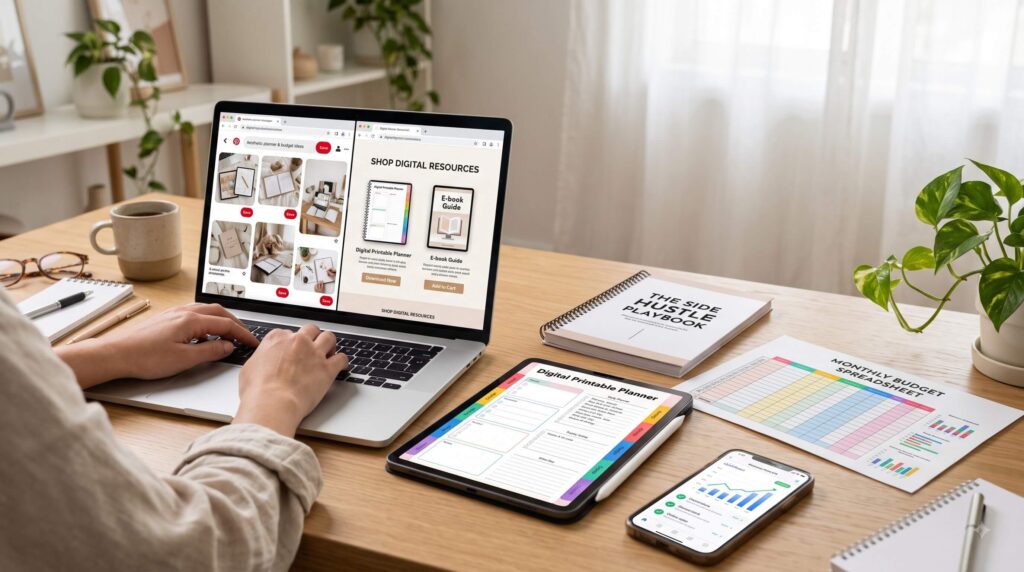
Digital products have no shipping, no inventory, and high profit margins, which makes them a favourite for beginners. Once created, you can sell the same file hundreds of times.
Popular digital products:
- Printable planners, trackers, and checklists
- Budget spreadsheets and templates
- Canva templates for social media, resumes, or invitations
- E-books and short guides
- Meal plans and workout plans
- Wall art and printable posters
- Notion templates and productivity systems
How to sell without a blog:
Upload your product to a platform such as Gumroad, Payhip, Etsy, or Shopify. Each gives you a product page that checks out and delivers the file automatically. Then create pins that link straight to that page.
For example, if you sell a debt payoff tracker, make a pin titled “Debt Payoff Tracker Printable” with text overlay that reads “Pay Off Debt Faster”. Add a description with phrases like “debt snowball worksheet” and “budgeting printable”.
Because you are targeting buyers who are already searching, this is often the quickest route from zero to your first sale.
Method 3: Open an Etsy or Print-on-Demand Shop
If you prefer physical or semi-physical products without handling inventory, print-on-demand can work well. You design the artwork, a supplier prints it on a mug, t-shirt, tote bag, or poster, and ships it when a customer orders.
Steps to get started:
- Choose a niche with a passionate audience, such as pet lovers, teachers, nurses, gardeners, or hobbyists.
- Create designs using a free or low-cost design tool.
- List them in a shop on Etsy or a print-on-demand platform.
- Create multiple pins for each product, using different images and keyword variations.
Pinterest is particularly strong for gift and home-decor searches, so seasonal items can perform well when you publish them a few weeks ahead of peak demand. Always review the platform’s policies on intellectual property so your designs are original and legal to sell.
Method 4: Build an Email List With a Lead Magnet
If you want a durable business, owning an audience matters. An email list lets you promote products and affiliate offers again and again, without depending on a single platform.
You do not need a blog for this. Most email service providers offer free or low-cost landing pages where people can enter their email address in exchange for a free resource.
How it works:
- Create a lead magnet, such as a free checklist, mini-guide, template, or challenge.
- Build a simple landing page with your email provider.
- Create pins that promote the free resource and link to the landing page.
- Set up an automated welcome sequence that introduces you, delivers the freebie, and recommends relevant products or affiliate offers.
This method is slower at the start, but it compounds. A subscriber who joins today can buy from you months from now, even if your pin has stopped getting traffic.
Method 5: Offer Pinterest Management Services
Many businesses know they should be on Pinterest but have no time to manage it. If you learn the platform well, you can get paid to do it for them.
Services you can offer:
- Pin design and scheduling
- Keyword research and board optimisation
- Account audits and strategy sessions
- Full Pinterest management for small businesses, bloggers, and online shops
Start by building a small portfolio. Create a sample account in a niche, grow it for a few weeks, and screenshot the results. Alternatively, offer a discounted trial to one or two friendly businesses in exchange for a testimonial.
Find clients through freelance platforms, LinkedIn, local business groups, and by pinning your own services. Pricing varies widely by skill and market, so research what others charge and start with a package you can deliver confidently.
This is one of the fastest ways to earn money from Pinterest, because you are trading skills for payment instead of waiting for pin traffic to build.
Method 6: Create Content for Brands (UGC and Partnerships)
Brands increasingly pay creators to produce visual content for them, including pin designs, short videos, and product photos. You do not need a large audience for this. What matters is your ability to create scroll-stopping visuals that fit a brand’s style.
To pursue this route:
- Build a portfolio of pins and short video samples in your niche.
- Pitch small and mid-sized brands that already use Pinterest.
- Explain how your content can help them reach more people and drive clicks.
- Be clear about usage rights and payment terms in writing.
As your account grows and shows real engagement, brands may also approach you for sponsored content. Always follow disclosure rules when you publish paid partnerships.
Method 7: Drive Leads for Local or Service-Based Offers
If you already run a service, such as photography, coaching, tutoring, interior styling, baking, or event planning, Pinterest can bring in customers without a blog.
Create pins that showcase your work and link to a booking page, a contact form, or your social profile. Wedding, home, beauty, and event niches tend to do especially well because people use Pinterest for inspiration before they hire someone.
For local services, include your city or region in your pin descriptions and board names so you appear in more relevant searches.
Pinterest SEO: How to Get Your Pins Seen
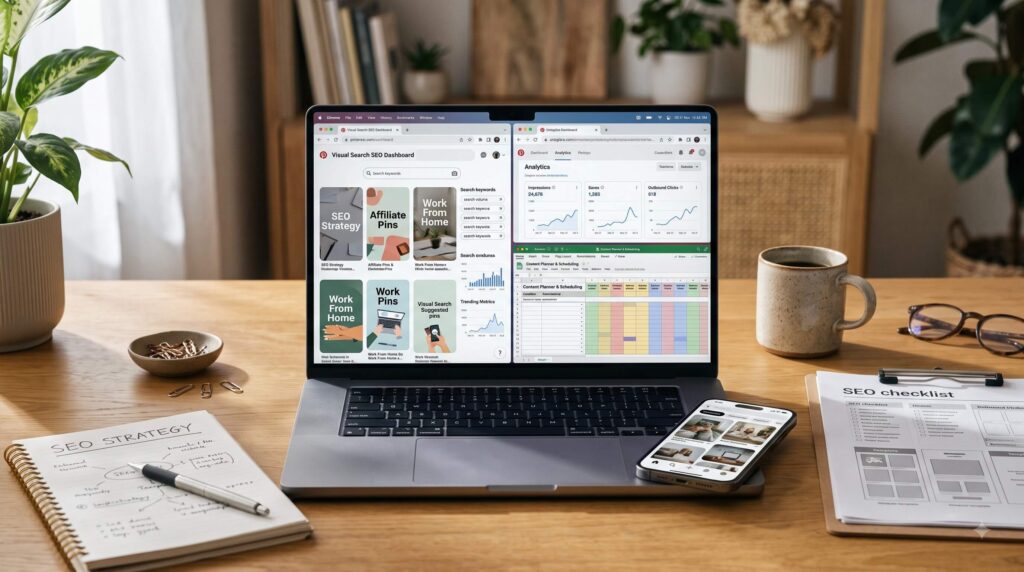
No matter which method you choose, your results depend on being found. Pinterest SEO is the practice of using the right keywords, in the right places, so the platform understands what your content is about.
Step 1: Do keyword research. Type a broad topic into the Pinterest search bar and note the autocomplete suggestions. Those are real searches. You can also click the guided search bubbles under results to find related terms.
Step 2: Use keywords in key locations. Include your main phrase naturally in:
- The pin title
- The pin description
- The text overlay on the image
- The board name and board description
- Your profile name and bio
Step 3: Write helpful descriptions. Avoid stuffing keywords. Write one or two clear sentences that describe what the pin offers and who it helps, with your main keyword near the beginning.
Step 4: Use hashtags sparingly, if at all. Pinterest has said that keywords in titles and descriptions matter far more than a long list of tags, so focus your effort there.
Step 5: Choose the right board. Save each pin to the most relevant board first, since this helps Pinterest categorise it.
How to Design Pins That Get Clicks
Strong design can double or triple your results.
- Use vertical images. A 2:3 ratio, such as 1000 x 1500 pixels, is the standard.
- Keep text readable. Use bold, high-contrast fonts and short headlines. Many people browse on phones.
- Show the benefit. “Save $500 a Month” works better than a vague title.
- Stay consistent. Use a recognisable colour palette and font so people begin to associate your pins with your brand.
- Test variations. Create several pins for the same product with different images and headlines, then see which gets the most saves and clicks.
- Try video pins. Short videos can stand out in the feed and help you reach more people.
Free design tools make this possible even if you have no design background.
A Simple Posting Strategy for Beginners
Consistency beats intensity. Here is a manageable routine:
- Pin one to five fresh pins per day, or batch-create them once a week and schedule them.
- Focus on fresh content, meaning new images or videos rather than repeated uploads of the same file.
- Spend a few minutes each week checking your analytics to see which pins earn impressions, saves, and outbound clicks.
- Double down on the topics and designs that work, and drop the ones that do not.
Be patient. Pinterest results often build over weeks and months rather than overnight, so give each strategy a fair trial of at least two to three months before judging it.
Common Mistakes to Avoid
Choosing too many niches. A mixed account confuses both viewers and the algorithm. Stay focused.
Ignoring the rules. Violating affiliate terms or Pinterest policies can get your account limited or your commissions cancelled. Read the fine print.
Skipping disclosure. Always label affiliate links and sponsored content clearly.
Using poor-quality images. Blurry, cluttered, or horizontal images rarely perform well.
Giving up too early. Many beginners post for two weeks, see little action, and quit just before momentum builds.
Relying only on Pinterest. Platforms change. Building an email list gives you a safety net.
How Much Can You Earn, and How Long Does It Take?
Earnings vary enormously. Someone selling a well-priced digital product in a strong niche may make their first sales within weeks. Affiliate income and shop traffic usually take longer, often a few months, as your pins build visibility. Service-based income can begin as soon as you land your first client.
Because results depend on your niche, product quality, pricing, and consistency, treat any income claims you see online with caution. Focus on the actions you control: publishing helpful pins, improving your designs, and testing your offers.
Frequently Asked Questions
Can I really make money on Pinterest without a blog? Yes. You can link pins directly to product pages, landing pages, storefronts, and booking pages, so a blog is optional rather than required.
Do I need a lot of followers to earn on Pinterest? No. Pinterest distributes pins through search and recommendations, so a small account with well-optimised pins can still reach many people.
Is Pinterest affiliate marketing allowed? Pinterest permits affiliate links, but you must follow its policies and the rules of each affiliate program. You should also disclose affiliate relationships clearly.
What is the easiest way to start? For most beginners, selling a simple digital product or offering Pinterest services provides the quickest path to a first payment, because you control the offer from start to finish.
How many pins should I post per day? A few high-quality fresh pins per day is a sensible target. Quality and consistency matter more than volume.
Do I need to pay for anything? You can begin with a free business account, free design tools, and free tiers on many selling and email platforms. Paid upgrades can help later but are not required to start.
Conclusion: Start Small, Stay Consistent
Learning how to make money on Pinterest without a blog is less about having the perfect setup and more about choosing one method and executing it well. You can recommend products as an affiliate, sell digital downloads, open a print-on-demand shop, build an email list, offer Pinterest services, create content for brands, or attract local customers, all without publishing a single blog post.
Here is a simple action plan to begin today:
- Create or convert to a Pinterest business account.
- Pick one niche and one money-making method from this guide.
- Research ten keywords using Pinterest search.
- Create your first five pins and link them to a real offer.
- Track your results for 60 to 90 days and improve as you go.
Pinterest rewards people who show up consistently with useful, searchable content. Pick your method, publish your first pin, and let the platform start working for you.