
Introduction
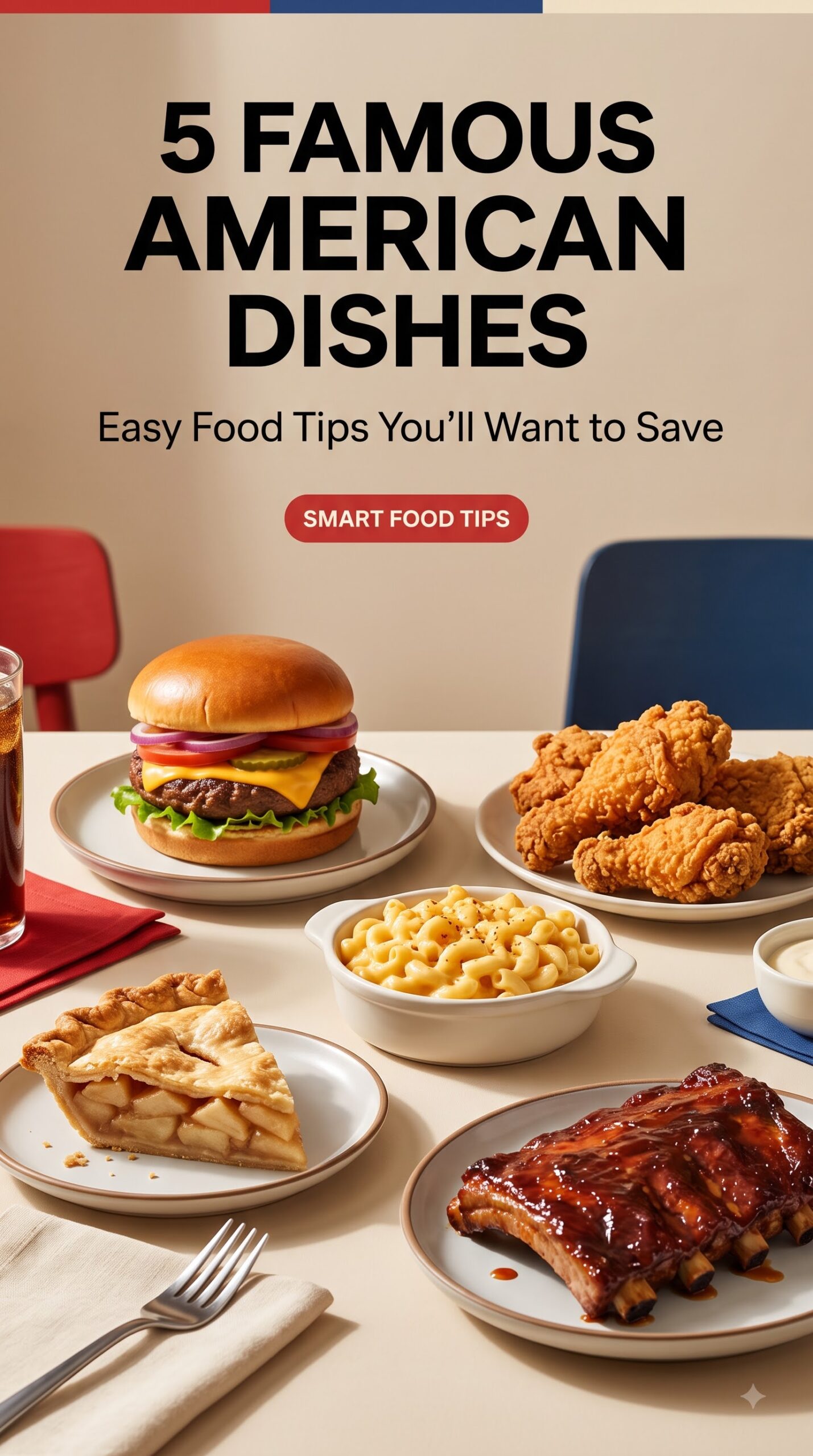
American food is incredibly diverse. From burgers and fried chicken to macaroni and cheese and apple pie, many dishes have become familiar favorites across the United States.
What makes these foods especially interesting is that there isn’t just one style of American cooking. Regional ingredients, family traditions, local history, and different cultural influences have all helped shape American cuisine.
If you’re preparing these dishes at home, a few simple food tips can also make a noticeable difference in texture, flavor, preparation, and presentation.
In this guide, we’ll look at five famous American dishes and share practical tips that can help you prepare and serve them successfully.


6
1. Cheeseburger
The cheeseburger is one of America’s best-known foods. While burgers can be prepared in countless ways, the basic combination of a seasoned beef patty, cheese, bun, and toppings remains a classic.
A great burger doesn’t necessarily require complicated ingredients. Paying attention to the basics can make a big difference.


6
Smart Cheeseburger Tips
Don’t overwork the meat.
When forming burger patties, handle the meat gently. Overworking it can result in a denser texture.
Season shortly before cooking.
Seasoning the outside of the patty before cooking helps keep the preparation simple and consistent.
Toast the bun.
A lightly toasted bun can provide texture and help it hold up better against juicy ingredients.
Balance your toppings.
Too many toppings can make a burger difficult to eat. Choose complementary flavors and textures.
Easy Burger Topping Ideas
- Lettuce and tomato
- Pickles and onions
- Cheddar cheese
- Caramelized onions
- Avocado
- Mustard and ketchup
- Grilled mushrooms
2. Fried Chicken
Crispy fried chicken is another popular American comfort food. It is especially associated with Southern cooking, although versions of fried chicken are enjoyed throughout the country.
The key is creating a flavorful exterior while properly cooking the chicken.


7
Smart Fried Chicken Tips
Prepare Pieces Consistently
Using chicken pieces of similar size can make cooking more consistent.
Don’t Overcrowd the Cooking Vessel
When frying, overcrowding can make temperature management more difficult and may affect the crispness of the coating.
Use a Food Thermometer
For poultry, don’t rely only on the outside appearance. Use a food thermometer to verify that the chicken has reached a safe internal temperature.
The USDA recommends cooking poultry to 165°F measured with a food thermometer.
Let the Chicken Rest
Allowing freshly cooked chicken to rest briefly can make serving easier and gives excess surface oil a chance to drain.
3. Macaroni and Cheese
Macaroni and cheese is a classic American comfort food made with pasta and cheese sauce. It can be prepared simply on the stovetop or baked with a crispy topping.
The beauty of this dish is its flexibility.


5
Smart Mac and Cheese Tips
Cook pasta carefully.
Avoid cooking the pasta excessively soft before combining it with the sauce, particularly if you’re planning to bake the dish afterward.
Use freshly prepared cheese when appropriate.
Grating cheese yourself can be useful when preparing a smooth cheese sauce.
Don’t make the sauce excessively thick.
Remember that the sauce may become thicker as the dish cools.
Add texture.
A light breadcrumb topping can provide contrast to creamy pasta.
Simple Add-In Ideas
- Broccoli
- Roasted vegetables
- Pulled chicken
- Bacon
- Jalapeños
- Caramelized onions
4. Barbecue Ribs
Barbecue is deeply connected with American food culture, especially in regions such as the South and Midwest. Different parts of the country have their own approaches to sauces, seasonings, cooking methods, and preferred cuts.
Ribs are a popular choice for backyard gatherings and summer meals.


6
Smart BBQ Rib Tips
Don’t Rush the Cooking Process
Tender barbecue often benefits from a controlled cooking process rather than simply using very high heat.
Apply Sauce Strategically
If using a sugary barbecue sauce, applying it toward the end of cooking can help reduce the chance of excessive browning or burning.
Let the Meat Rest
Resting the ribs briefly before slicing can make serving easier.
Slice Between the Bones
A sharp knife and careful cutting can help produce neat portions.
5. Apple Pie
Apple pie is one of the most recognizable American desserts and is closely associated with American home baking.
A successful apple pie combines a flavorful filling with a pastry crust that provides texture and structure.


6
Smart Apple Pie Tips
Choose apples that hold their shape.
Different apple varieties behave differently when baked, so consider using varieties suitable for baking.
Avoid excessive liquid.
Too much moisture in the filling can make the bottom crust soggy.
Don’t slice immediately.
Allow the pie to cool before cutting so the filling has time to settle.
Use a balanced amount of spice.
Cinnamon is classic, but excessive spice can overpower the apples.
Quick Comparison of These American Favorites
| Dish | Category | Popular Serving Occasion | Key Tip |
|---|---|---|---|
| Cheeseburger | Main dish | Cookouts & casual meals | Don’t overwork the meat |
| Fried Chicken | Main dish | Family meals & gatherings | Check internal temperature |
| Mac & Cheese | Side/Main | Family dinners & holidays | Avoid overcooking pasta |
| BBQ Ribs | Main dish | Cookouts & summer gatherings | Cook patiently |
| Apple Pie | Dessert | Holidays & family meals | Allow it to cool before slicing |
6 Smart Food Tips for Cooking American Favorites
Beyond individual dishes, several simple habits can improve your cooking.
1. Read the Entire Recipe First
Before starting, look through all ingredients and instructions.
This helps you identify:
- Required cooking times
- Ingredients that need preparation
- Equipment you’ll need
- Resting or cooling periods
2. Prepare Ingredients Before Cooking
Having ingredients measured and ready can make cooking much easier.
This is especially helpful when recipes require several ingredients in quick succession.
3. Use a Food Thermometer
A thermometer is one of the most useful kitchen tools for checking whether meat and poultry have reached appropriate internal temperatures.
For food-safety guidance, use current USDA recommendations rather than relying on color or cooking time alone.
4. Don’t Automatically Increase the Heat
Higher heat doesn’t always mean faster or better cooking.
Many foods need controlled temperatures to develop the desired texture without burning the outside.
5. Taste When Appropriate
For dishes where tasting is safe and practical, adjust seasoning gradually rather than adding a large amount at once.
6. Store Leftovers Properly
Refrigerate perishable leftovers promptly and follow recommended food-storage practices. USDA guidance is a useful reference for safe storage and handling.
How to Make American Comfort Food Look Better
Food presentation doesn’t need to be complicated.
Use the Right Serving Dish
Choose a plate or bowl that gives the food enough room without making the portion look lost.
Add Color
Fresh herbs, vegetables, fruit, or colorful toppings can create visual contrast.
Keep the Plate Clean
Wipe away unwanted sauce or crumbs around the edge of the plate before serving.
Don’t Overdecorate
A few thoughtful details usually look better than excessive garnishes.


6
How American Food Varies by Region
One of the most interesting things about American cuisine is its regional variety.
For example:
- Southern cooking is known for dishes such as fried chicken and a wide range of barbecue traditions.
- Texas barbecue has its own distinctive traditions and techniques.
- New England is associated with foods such as clam chowder and lobster dishes.
- Louisiana is famous for Creole and Cajun culinary traditions.
- The Midwest is known for many hearty comfort foods and casseroles.
- The Southwest incorporates strong Mexican and Indigenous influences into many regional food traditions.
There is no single list that can capture all of American cuisine. The country’s food culture is much broader than a handful of famous dishes.