
Why Meal Prep Mason Jar Salads for Work Are Worth Your Time
It is 12:45 p.m. You have skipped breakfast, a meeting ran long, and the only options nearby are a greasy takeaway or a vending machine. Sound familiar? For millions of office workers, lunch is the meal that falls apart first.
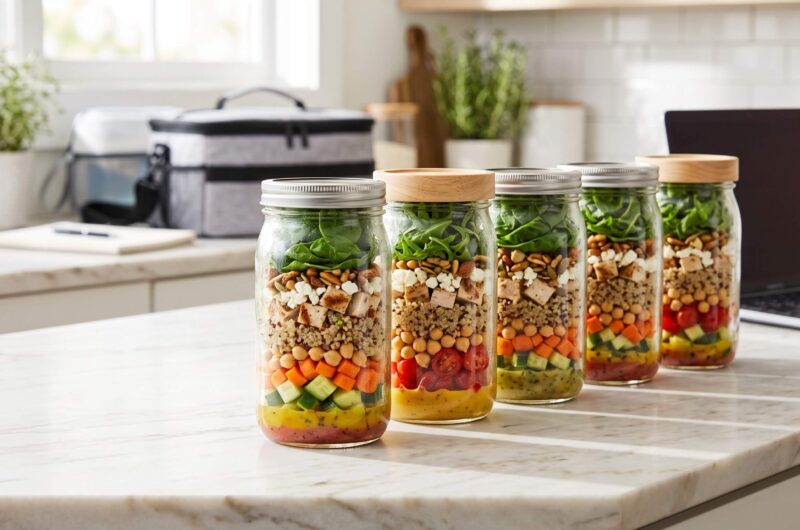
That is exactly where meal prep mason jar salads for work come in. Instead of scrambling at midday, you spend about 30 to 45 minutes on a Sunday afternoon and walk into the week with five crisp, colourful, protein-packed lunches lined up in your fridge. No soggy lettuce, no last-minute spending, and no guilt.
Mason jar salads have become one of the most popular make-ahead lunch ideas for a simple reason: they work. The jar’s airtight seal keeps ingredients fresh, the vertical layering keeps wet ingredients away from delicate greens, and the clear glass lets you see exactly what you are about to eat. Best of all, you simply shake the jar into a bowl and lunch is ready.
In this complete guide, you will learn:
- What mason jar salads are and why they stay fresh
- The exact layering order that prevents sogginess
- The best ingredients (and the worst ones) for jar salads
- Five easy mason jar salad recipes for the workweek
- A step-by-step meal prep plan you can finish in under an hour
- How long mason jar salads last and how to store them safely
- Common mistakes and how to avoid them
Let’s get started.
What Is a Mason Jar Salad?
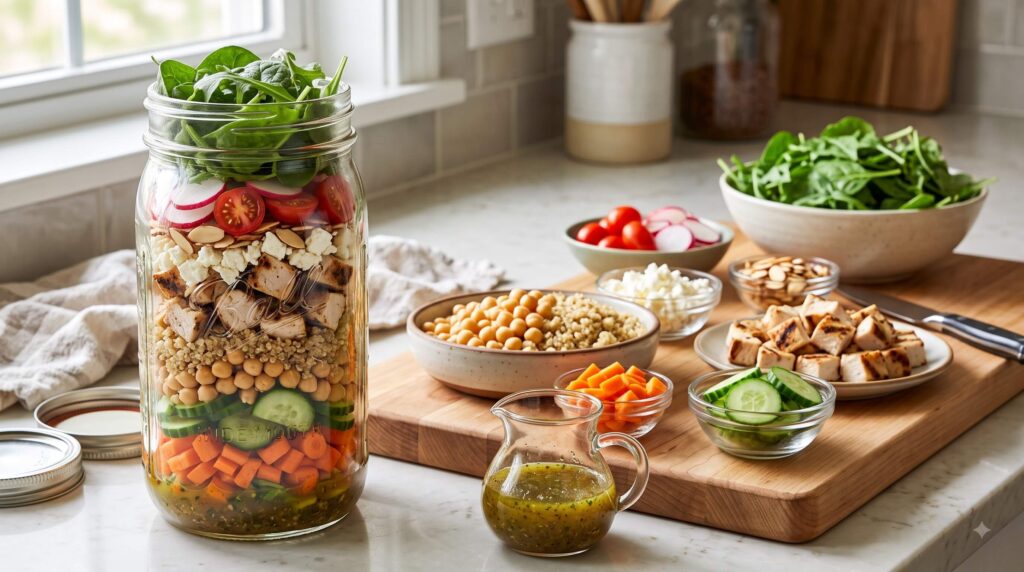
A mason jar salad is a salad assembled in layers inside a wide-mouth glass jar, usually a 32-ounce (1-litre) jar, with the dressing at the bottom and the leafy greens at the top. When you are ready to eat, you shake the jar to coat everything in dressing and pour it into a bowl or eat it straight from the jar.
The idea is simple. Gravity and smart ingredient placement keep moisture away from the greens. Dressing sits at the bottom, hardy vegetables and grains form a protective barrier above it, and the tender leaves stay dry and crisp at the top until you are ready to eat.
Because the jar is sealed, it also protects against oxygen and fridge odours, which helps keep your salad tasting fresh for days.
The Benefits of Mason Jar Salads for Work Lunches
Before we get into the how-to, it helps to understand why this method has such a loyal following among busy professionals.
1. They Save Time During the Week
Batch prepping five salads at once is far faster than making one lunch every morning. Once the work is done on the weekend, your weekday routine is simply grab, go and shake.
2. They Save Money
Buying lunch out can easily cost several times more than a homemade salad. Over a year, packing a jar salad each workday adds up to meaningful savings, especially when you buy ingredients in bulk and use seasonal produce.
3. They Support Healthy Eating Goals
When the healthy option is already prepared and waiting, you are far less likely to grab fast food. You also control the portion sizes, the dressing, the sodium and the quality of ingredients, which makes it easy to build balanced meals around lean protein, fibre and healthy fats.
4. They Are Portable and Mess-Free
A sealed glass jar slides into a lunch bag without leaking. There are no flimsy plastic containers, no separate dressing cups to lose, and no spills on your laptop bag.
5. They Reduce Food Waste
Planning your salads for the week means you use up vegetables before they wilt. Leftover roasted vegetables, cooked grains and half-used herbs all find a home in a jar.
6. They Are Endlessly Customisable
Vegetarian, vegan, gluten-free, high-protein, low-carb? Mason jar salads adapt to nearly any eating style. Swap the ingredients, keep the layering method, and you are set.
What You Need to Get Started
You do not need fancy equipment. Here is a short shopping and equipment list.
Equipment
- Wide-mouth mason jars (32 oz / 1 litre): Wide-mouth jars are much easier to fill, pack and eat from than regular-mouth jars. A 32-ounce jar fits a full-size lunch salad.
- Airtight lids: Make sure the lids seal properly. Replace any that are rusty or warped.
- A funnel or large spoon: Helpful for layering neatly and keeping the jar rim clean.
- Cutting board and sharp knife: Uniform chopping makes jars look better and packs them more tightly.
- A salad spinner or clean tea towels: Dry greens are the secret to long-lasting salads.
- A lunch bag with an ice pack: Keeps your salad cool on the commute and until lunch.
Pantry and Fridge Staples
Stock up on a mix of greens, crunchy vegetables, proteins, grains or legumes, nuts and seeds, and a few homemade dressings. We cover the best options below.
How to Layer a Mason Jar Salad: The Golden Order
This is the single most important part of the process. If you remember only one thing from this article, make it this: dressing first, greens last, and a barrier of sturdy ingredients in between.
Here is the layering order from bottom to top:
Layer 1: Dressing (Bottom)
Pour 2 to 4 tablespoons of dressing into the bottom of the jar. Keeping it at the base means nothing absorbs it until you shake the jar.
Layer 2: Hard, Non-Absorbent Vegetables
Add sturdy vegetables that can sit in dressing without turning mushy, such as carrots, cucumbers, bell peppers, radishes, celery, red onion or cherry tomatoes (whole or halved).
Layer 3: Beans, Legumes and Grains
Chickpeas, black beans, lentils, quinoa, brown rice, farro and barley go next. They add fibre and staying power, and they absorb a little dressing without losing texture.
Layer 4: Protein
Add cooked chicken, hard-boiled eggs, tuna, tofu, tempeh, turkey or shrimp. Keep protein above the sturdy vegetables so it stays moist but not soaked.
Layer 5: Cheese, Nuts and Seeds
Feta, parmesan, mozzarella pearls, almonds, walnuts, pumpkin seeds and sunflower seeds sit here. Placing them above the wetter layers helps them stay crunchy.
Layer 6: Delicate Produce
Berries, avocado (with lemon juice), soft herbs and sliced soft fruit like apple or pear belong near the top, away from the dressing.
Layer 7: Leafy Greens (Top)
Pack the greens in loosely but fill the jar to the top. Spinach, romaine, kale, arugula and mixed salad leaves all work well. A fuller jar means less air, and less air means a fresher salad.
Pro tip: Place a folded paper towel between the greens and the lid. It absorbs excess moisture and can add a day or more to the salad’s life.
Best Ingredients for Meal Prep Mason Jar Salads
Not every ingredient survives five days in a jar. Choose wisely.
Greens That Last
- Romaine: Crunchy and sturdy, the top performer for jar salads.
- Kale: Massaged kale actually improves with time.
- Baby spinach: Lasts well if kept dry.
- Cabbage and shredded Brussels sprouts: Excellent for days four and five.
Vegetables That Hold Up
Carrots, cucumbers, celery, bell peppers, radishes, broccoli florets, cauliflower, snap peas, red cabbage and cherry tomatoes all stay crisp and flavourful.
Proteins That Keep Well
Grilled chicken, hard-boiled eggs, canned tuna or salmon, chickpeas, edamame, lentils, baked tofu and cooked turkey are all reliable. Aim for 20 to 30 grams of protein per jar to keep you full through the afternoon.
Healthy Carbs and Fibre
Quinoa, brown rice, farro, couscous, whole wheat pasta, sweet potato cubes and beans make your salad a filling meal rather than a light snack.
Ingredients to Add Fresh on the Day
Some foods do not hold up in a jar for long. Keep these separate and add them at lunchtime:
- Avocado (unless tossed in lemon juice and eaten within two days)
- Croutons, crackers and tortilla strips
- Sliced bananas and apples (if not treated with lemon)
- Fresh, soft herbs like basil
- Crispy toppings such as fried onions
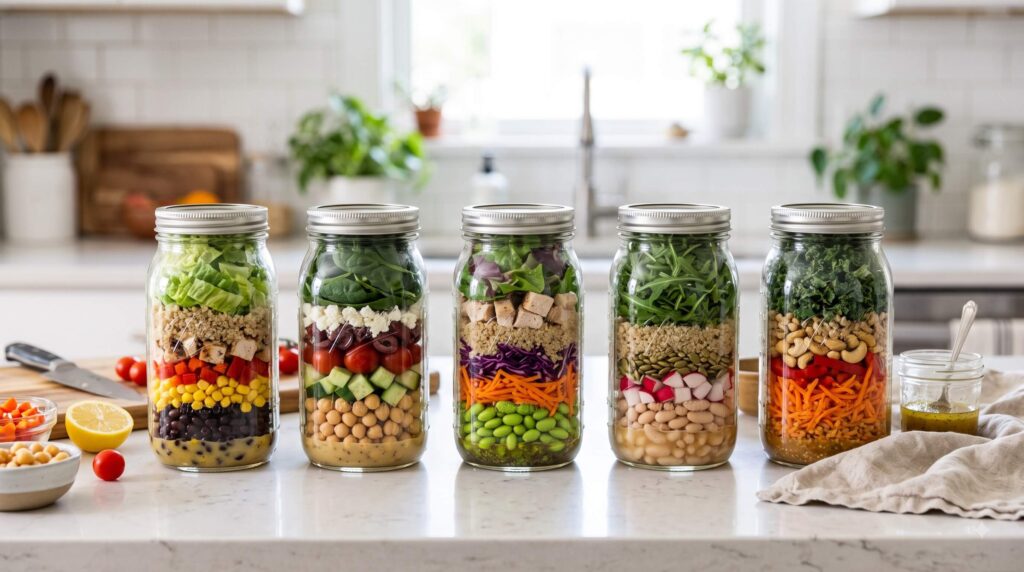
5 Easy Mason Jar Salad Recipes for the Workweek
Each recipe below makes one 32-ounce jar. Layer in the order listed, from bottom to top.
1. Greek Chickpea Mason Jar Salad
Dressing: 3 tablespoons olive oil, 1 tablespoon lemon juice, 1 teaspoon dried oregano, pinch of salt and pepper.
Layers:
- Dressing
- Diced cucumber and halved cherry tomatoes
- Sliced red onion and Kalamata olives
- Chickpeas (about ½ cup)
- Crumbled feta
- Chopped romaine and baby spinach
This vegetarian jar is bright, tangy and packed with about 15 grams of protein and plenty of fibre.
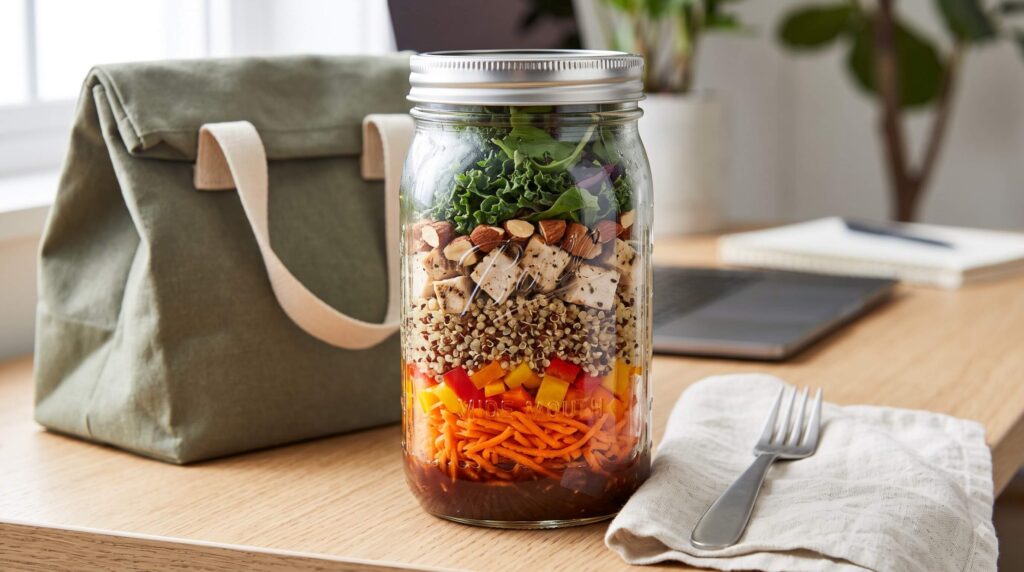
2. Chicken Quinoa Power Salad
Dressing: 2 tablespoons olive oil, 1 tablespoon balsamic vinegar, 1 teaspoon Dijon mustard, 1 teaspoon honey.
Layers:
- Dressing
- Shredded carrots and diced bell pepper
- Cooked quinoa (about ½ cup)
- Grilled chicken breast, diced
- Toasted almonds
- Kale and mixed greens
A high-protein favourite, this one keeps you energised through back-to-back meetings.
3. Asian Sesame Noodle Salad
Dressing: 1 tablespoon sesame oil, 2 tablespoons soy sauce or tamari, 1 tablespoon rice vinegar, 1 teaspoon grated ginger, 1 teaspoon maple syrup.
Layers:
- Dressing
- Shredded red cabbage and julienned carrots
- Edamame
- Cooked soba or whole wheat noodles
- Baked tofu or cooked shrimp
- Sesame seeds and sliced spring onions
- Shredded romaine or napa cabbage
This salad tastes even better after a day or two as the flavours develop.
4. Southwest Black Bean and Corn Salad
Dressing: 2 tablespoons olive oil, juice of 1 lime, ½ teaspoon cumin, ½ teaspoon chilli powder, pinch of salt.
Layers:
- Dressing
- Diced red bell pepper and sweetcorn
- Black beans (about ½ cup)
- Brown rice or quinoa
- Shredded chicken or crumbled paneer
- Pumpkin seeds and grated cheese
- Chopped romaine
Add fresh avocado and coriander just before eating for a restaurant-quality finish.
5. Tuna and White Bean Mediterranean Salad
Dressing: 2 tablespoons olive oil, 1 tablespoon red wine vinegar, 1 garlic clove (minced), pinch of dried basil.
Layers:
- Dressing
- Diced cucumber and cherry tomatoes
- Cannellini beans
- Canned tuna, drained
- Chopped olives and parmesan shavings
- Arugula and baby spinach
This one needs no cooking at all, making it perfect for the busiest prep days.
Homemade Dressings That Make Jar Salads Shine
Store-bought dressings can be high in sugar and sodium. Making your own takes two minutes and keeps costs down. A reliable ratio is three parts oil to one part acid, plus seasoning.
- Classic lemon vinaigrette: Olive oil, lemon juice, Dijon mustard, salt and pepper.
- Creamy yoghurt ranch: Greek yoghurt, lemon juice, garlic powder, dried dill and a splash of milk.
- Tahini dressing: Tahini, lemon juice, water, garlic and a pinch of salt.
- Peanut-lime dressing: Peanut butter, lime juice, soy sauce, honey and warm water.
Make a jar of dressing at the start of your prep session and portion it into your salad jars as you go.
Step-by-Step: Your 30-Minute Mason Jar Salad Meal Prep Plan
Follow this workflow to prep five jars in about half an hour.
- Plan your menu. Choose two or three recipes and write a shopping list. Variety prevents lunch boredom.
- Cook your proteins and grains first. While chicken bakes or quinoa simmers, you can wash and chop vegetables. Let cooked items cool completely before jarring.
- Wash and dry your greens thoroughly. Moisture is the enemy. Use a salad spinner, then pat dry with a clean towel.
- Chop all vegetables. Cut them into bite-sized, uniform pieces so they pack neatly and are easy to eat.
- Make your dressings. Whisk or shake in a small jar.
- Set up an assembly line. Line up five jars and add each layer to all jars before moving to the next. This is much faster than building one jar at a time.
- Pack greens tightly, seal and label. Add the date and recipe name using masking tape or a marker.
- Refrigerate immediately. Store jars upright in the fridge.
How Long Do Mason Jar Salads Last?
When layered correctly and stored in the fridge at or below 4°C (40°F), most mason jar salads stay fresh for 4 to 5 days. Here is a simple guide:
- Days 1 to 3: Any recipe, including those with delicate ingredients like berries or soft cheese.
- Days 4 to 5: Choose sturdy recipes with cabbage, kale, beans and grains.
- Salads with seafood or cooked eggs: Eat within 3 days for best quality and safety.
If you want to prep for a full week, consider making half your jars on Sunday and the rest on Wednesday. Always trust your senses: if a salad smells off, looks slimy or has visible mould, throw it out.
Common Mason Jar Salad Mistakes (and How to Fix Them)
Mistake 1: Putting Greens at the Bottom
Greens soaked in dressing wilt within hours. Always keep them at the top.
Mistake 2: Not Drying Ingredients
Water creates sogginess and speeds up spoilage. Dry every ingredient, especially greens and washed vegetables.
Mistake 3: Overpacking Dressing
Too much dressing makes the lower layers soggy and the salad heavy. Start with 2 to 3 tablespoons and add more at lunch if needed.
Mistake 4: Using Warm Ingredients
Hot or warm food raises the temperature inside the jar and creates condensation. Cool everything completely first.
Mistake 5: Leaving Too Much Air in the Jar
A half-empty jar means more oxygen and faster wilting. Pack it full without crushing the greens.
Mistake 6: Choosing the Wrong Jar Size
Pint jars are too small for a main meal. Go for 32 ounces (1 litre) for a satisfying lunch-sized salad.
How to Eat a Mason Jar Salad at Work
There are two easy ways to enjoy your lunch:
- Shake and pour. Shake the sealed jar for 10 to 15 seconds to coat everything in dressing, then pour it into a bowl or plate.
- Shake and eat from the jar. If you do not have a bowl handy, shake, open and eat directly from the jar with a long fork.
If your office has a fridge, store the jar there until lunch. If not, pack an ice pack in your insulated bag to keep it below 4°C until you eat.
Nutrition Tips: Building a Balanced Work Lunch Salad
A satisfying salad is more than a pile of leaves. Use this simple formula for every jar:
- Protein (20 to 30 g): Chicken, eggs, tofu, beans, fish
- Fibre-rich carbs (½ to 1 cup): Quinoa, brown rice, beans, sweet potato
- Healthy fats (1 to 2 tablespoons): Olive oil, nuts, seeds, avocado
- Vegetables (2 or more cups): A variety of colours for vitamins and antioxidants
- Flavour boosters: Herbs, citrus zest, spices, pickled onions
Following this structure keeps blood sugar steady and helps you avoid the 3 p.m. energy crash.
Budget and Sustainability Tips
- Buy seasonal produce. It is cheaper, fresher and tastier.
- Cook grains and beans in bulk. Dried beans and whole grains are inexpensive and freeze well.
- Use leftovers. Roasted vegetables and cooked proteins from dinner are perfect jar fillers.
- Reuse jars. Glass jars last for years and cut down on single-use plastic.
- Grow herbs at home. A small windowsill pot of mint, basil or coriander pays for itself quickly.
Frequently Asked Questions About Mason Jar Salads
Can you freeze mason jar salads?
No. Fresh greens and raw vegetables lose their texture when frozen. However, you can freeze cooked components like grains, beans and chicken separately and assemble the jars later.
Do mason jar salads get soggy?
Not if you layer them correctly. Keep the dressing at the bottom, use sturdy vegetables as a barrier, and keep greens dry and on top.
What size mason jar is best for salads?
A wide-mouth 32-ounce (1-litre) jar is ideal for a full meal. Pint-sized jars (16 oz) work well for side salads or snacks.
Can I add avocado to a mason jar salad?
Yes, but only if you toss it in lemon or lime juice and plan to eat the salad within one to two days. For longer storage, add avocado fresh at lunchtime.
Is it safe to eat a mason jar salad after 5 days?
Most salads are best within 4 to 5 days. Salads with seafood, eggs or soft cheese should be eaten sooner. Always check smell and appearance before eating.
How do I keep greens from wilting?
Dry them thoroughly, keep them away from the dressing, pack the jar full to limit air, and add a paper towel under the lid.
Can I make vegan or gluten-free mason jar salads?
Absolutely. Use chickpeas, lentils, tofu or tempeh for protein, swap in quinoa or brown rice for gluten-free grains, and choose a dairy-free dressing such as tahini or lemon vinaigrette.
Final Thoughts: Make Lunch the Easiest Part of Your Day
Meal prep mason jar salads for work are one of the simplest, smartest habits you can build. They take less than an hour a week, cost far less than eating out, and keep you fuelled with fresh, balanced, delicious food.
Start small. Pick two recipes from this guide, grab a few wide-mouth jars, and prep just three lunches this week. Once you see how convenient it is to open the fridge and find lunch already waiting, you will wonder why you did not start sooner.
Which recipe will you try first? Share your favourite jar combinations and tips with your colleagues and friends, and help make healthy work lunches the new normal.