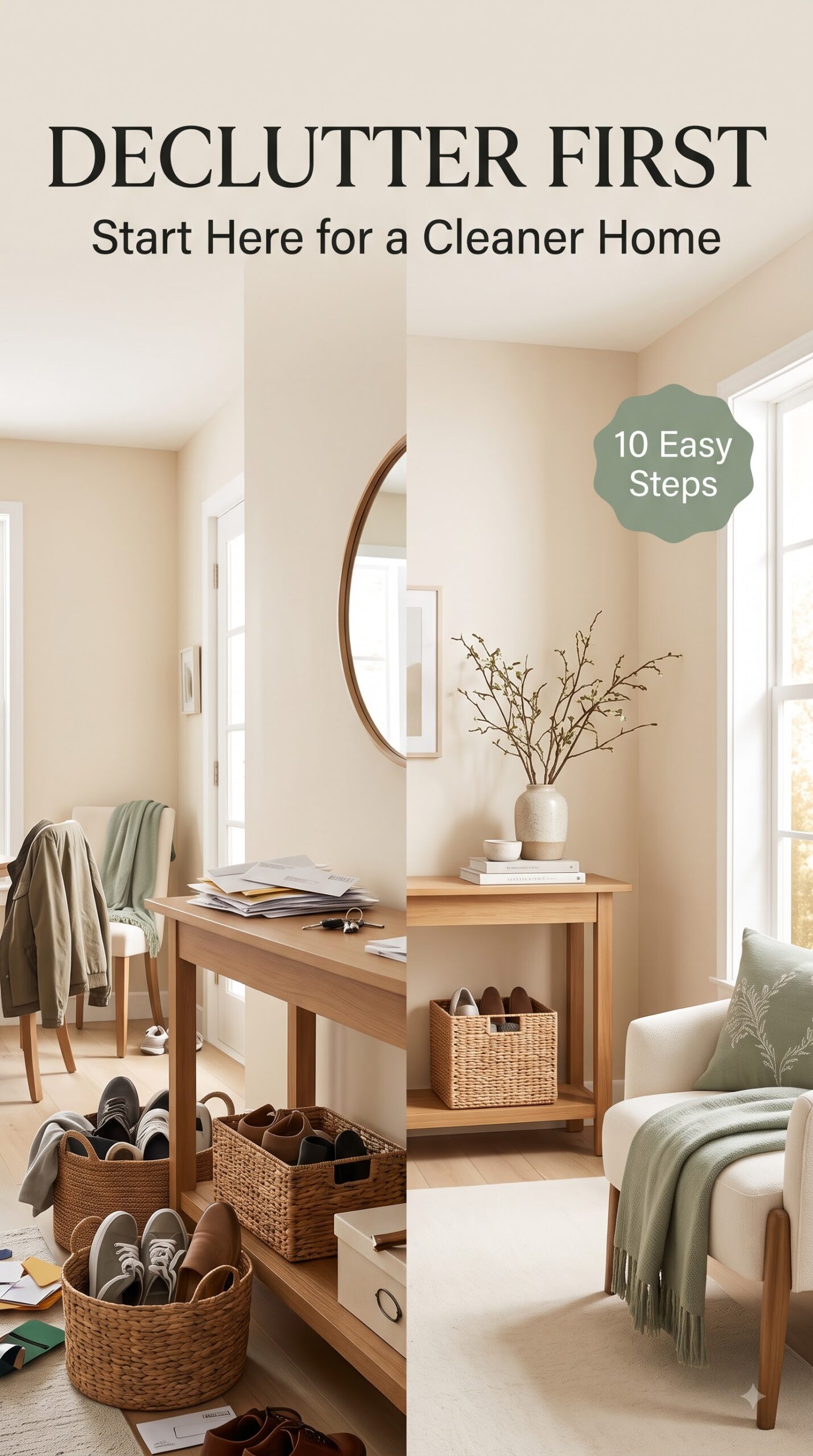

Introduction: Why You Should Declutter First
When your home feels messy, the first instinct may be to buy more baskets, bins, shelves, and organizers.
But there’s a better place to start: declutter first.
Before organizing your belongings, decide what you actually want to keep. Removing unnecessary items creates more usable space and makes the organization process much easier.
The good news? You don’t have to declutter your entire house in one weekend. A few small areas at a time can make a noticeable difference.


5
Image Prompt:
Premium realistic editorial photograph of a modern American living room showing a tasteful before-and-after decluttering concept, one side slightly cluttered with everyday household items and the other side clean, organized, bright and inviting, neutral beige and cream interior, natural window light, realistic furniture, sophisticated lifestyle magazine photography, no text, no watermark.
What Does “Declutter First” Mean?
The declutter first method means removing things you no longer need before trying to organize everything you own.
Instead of asking:
“Where can I store this?”
Ask:
“Do I actually need to keep this?”
This simple change can prevent you from filling every available cabinet, drawer, and closet with items you rarely use.
Decluttering Is Not the Same as Minimalism
You don’t have to become a minimalist to have an organized home.
A decluttered home can still contain:
- Family photographs
- Books
- Decorations
- Collections
- Children’s belongings
- Seasonal items
- Sentimental objects
The goal is simply to make your home functional, comfortable, and easier to maintain.
10 Easy Steps to Declutter Your Home
1. Start With One Small Area
Don’t begin by trying to declutter the entire house.
Choose one manageable space:
- A kitchen drawer
- Bathroom cabinet
- Entryway table
- Nightstand
- Closet shelf
- Coffee table
- Pantry section
Finishing a small area gives you a sense of progress without making the project overwhelming.


5
Image Prompt:
Realistic premium lifestyle photograph of a woman decluttering a single kitchen drawer in a modern American home, items spread neatly on the countertop for sorting, bright natural daylight, white and warm wood kitchen, calm organized atmosphere, editorial home organization photography, realistic details, no text.
2. Take Everything Out
Once you’ve selected an area, remove its contents.
Seeing everything together makes it easier to notice:
- Duplicates
- Broken items
- Things that belong elsewhere
- Items you forgot you owned
- Things you no longer use
For a small drawer or shelf, this process can take only a few minutes.
3. Create Five Simple Categories
Don’t overcomplicate the sorting process.
Use five categories:
| Category | What It Means |
|---|---|
| Keep | Items you use or genuinely value |
| Donate | Useful items you no longer need |
| Trash | Broken or unusable items |
| Relocate | Items that belong somewhere else |
| Maybe | Items you’re genuinely unsure about |
Try to keep the Maybe pile small.
If everything becomes a “maybe,” you’re not really making decisions.
4. Ask Yourself the Right Questions
When you’re unsure whether to keep something, ask:
Do I use it?
If you regularly use it, there’s a good reason to keep it.
Would I buy it again?
Imagine seeing the item in a store today. Would you spend money on it again?
Do I own something similar?
Duplicates often take up more space than expected.
Does it still work?
Broken items that you’ve been meaning to repair for years may deserve an honest decision.
Does it fit my current life?
Your belongings should support the way you live now.


5
Image Prompt:
Premium realistic photograph of a person thoughtfully sorting household belongings into keep and donate categories during a home decluttering session, modern American bedroom, natural light, neutral colors, authentic lifestyle photography, clean composition, no text.
5. Remove the Clutter From Your Home
One common mistake is putting unwanted items into a corner and forgetting about them.
Once you’ve decided what you’re removing, create an exit plan.
Donation Items
Put usable items into a designated donation box or bag.
Trash
Dispose of unusable items responsibly.
Recycling
Separate recyclable materials according to your local recycling guidelines.
Items to Give Away
If you know someone who could genuinely use something, set it aside for them—but avoid creating a permanent “give away someday” pile.


7
Image Prompt:
Realistic editorial photograph of neatly packed donation boxes and reusable bags after a home decluttering project, modern American home interior, clean neutral setting, natural daylight, practical lifestyle aesthetic, premium photography, no text.
6. Clean the Empty Space
Now that you’ve removed unnecessary items, clean the area.
Depending on the space, you might:
- Wipe shelves
- Vacuum drawers
- Dust corners
- Clean cabinet doors
- Wash containers
- Remove crumbs and debris
Cleaning before reorganizing makes the finished space feel much fresher.
7. Put Frequently Used Items Within Easy Reach
Not everything needs to be stored at the same level of accessibility.
Keep frequently used items easy to reach.
For example:
Kitchen: Everyday plates, glasses, and cooking tools.
Bathroom: Daily skincare and personal-care products.
Bedroom: Frequently worn clothing.
Entryway: Keys, bags, and commonly worn shoes.
Less frequently used belongings can be stored in less accessible areas.


6
Image Prompt:
High-end realistic interior photograph of a beautifully organized modern American home showing practical storage zones, everyday items within easy reach, neutral colors, natural sunlight, clean shelves and tasteful baskets, realistic editorial home organization photography.
8. Give Everything a Home
One of the simplest ways to prevent clutter from returning is to give frequently used items a designated place.
For example:
| Item | Designated Home |
|---|---|
| Keys | Entryway tray or hook |
| Mail organizer | |
| Chargers | Technology drawer |
| Cleaning supplies | Cleaning cabinet |
| Shoes | Entryway rack |
| Important documents | Filing system |
| Toys | Toy basket or shelf |
| Remote controls | Small living-room tray |
When something has a clear home, putting it away becomes much easier.


6
Image Prompt:
Premium realistic editorial photograph of a stylish organized entryway in an American home, woven storage baskets, wall hooks, small tray for keys, neatly arranged shoes, warm neutral palette, natural daylight, sophisticated but practical interior design, no text.
9. Don’t Buy Storage Too Soon
This is one of the most important rules of the declutter first approach.
Don’t buy ten storage containers before you know how much you actually need to store.
First:
Declutter → Sort → Clean → Organize → Then Buy Storage
Once you’ve removed unnecessary belongings, you may discover that you need far fewer organizers than you expected.
Useful Storage Options
Depending on your space, you might consider:
- Drawer dividers
- Clear containers
- Baskets
- Shelf risers
- File organizers
- Storage bins
- Hooks
- Labeling systems
The storage should support your belongings—not encourage you to keep more unnecessary things.
10. Create a Simple Daily Reset
Decluttering works best when you prevent clutter from building up again.
A simple daily reset can take around 10 minutes.
Try this quick routine:
- Put misplaced items back.
- Clear kitchen counters.
- Put away clothing.
- Sort incoming mail.
- Return shoes and bags to their places.
- Remove obvious trash.
- Reset the living room.


5
Image Prompt:
Warm realistic lifestyle photograph of a woman doing a quick evening reset in a beautiful modern American living room, putting household items back in their places, soft natural evening light, cozy neutral interior, calm organized atmosphere, premium editorial photography.
Declutter Room by Room
Living Room
The living room is one of the best places to begin because it’s highly visible.
Look for:
- Old magazines
- Broken decorations
- Unused electronics
- Excess throw pillows
- Toys that are no longer used
- Items that belong in another room
- Cluttered coffee tables


6
Image Prompt:
Premium realistic photograph of a clean, comfortable American living room after decluttering, neutral sofa, uncluttered coffee table, tasteful decor, soft beige and cream palette, natural window light, cozy but sophisticated, high-end interior editorial photography.
Kitchen
Kitchens can accumulate duplicates surprisingly quickly.
Check for:
- Duplicate utensils
- Unused appliances
- Excess mugs
- Old food containers
- Broken kitchen tools
- Gadgets you never use
- Expired food
Keep everyday cookware and utensils accessible while moving rarely used items to appropriate storage.


6
Image Prompt:
High-end realistic American kitchen after decluttering, clean countertops, organized cabinets, neutral modern cabinetry, minimal countertop appliances, natural sunlight, warm wood accents, realistic lifestyle interior photography, no text.
Bedroom
Bedrooms should feel restful rather than crowded.
Start with:
- Clothing
- Shoes
- Nightstand items
- Accessories
- Old bedding
- Unused bags
If you haven’t worn something in a long time, consider whether it still fits your lifestyle and whether you genuinely want to keep it.


6
Image Prompt:
Realistic premium photograph of a peaceful decluttered American bedroom, neatly organized clothing, clean nightstand, neutral bedding, soft natural light, warm beige and cream colors, cozy sophisticated atmosphere, editorial interior photography.
Bathroom
Bathrooms often contain products that are expired, empty, duplicated, or simply unused.
Check:
- Cosmetics
- Skincare products
- Hair products
- Towels
- Cleaning supplies
- Travel-size products
- Empty containers
Group similar products together so you can see what you already have.


7
Image Prompt:
Premium realistic photograph of a clean organized modern American bathroom, uncluttered countertop, neatly arranged toiletries, attractive storage baskets, neutral stone and wood textures, soft natural light, sophisticated editorial photography.
Entryway
The entryway is often where clutter first enters the home.
Create simple homes for:
- Keys
- Shoes
- Bags
- Jackets
- Umbrellas
A small basket, tray, hooks, or shoe rack can make this area easier to maintain.


7
Image Prompt:
Stylish realistic American home entryway with organized shoes, wall hooks, woven basket, small key tray, clean console table, neutral colors, natural daylight, modern practical interior design, premium editorial photography.
Simple Decluttering Checklist
Use this checklist whenever you start a new area:
- Choose one small area
- Remove everything
- Sort belongings
- Separate donations
- Remove trash
- Relocate misplaced items
- Clean the empty space
- Return useful and meaningful items
- Give everything a designated home
- Add storage only if necessary
- Remove donation items from the house
- Schedule a quick reset
Common Decluttering Mistakes
Trying to Declutter the Entire House in One Day
Large projects can quickly become exhausting.
Start small and build momentum.
Buying Too Many Organizers
Storage doesn’t solve excess clutter. Declutter before buying containers.
Keeping Things Because They Were Expensive
The purchase price is already spent. Keeping something you don’t use doesn’t recover that money.
Creating a Huge “Maybe” Pile
A small undecided category is fine. A huge one can prevent progress.
Trying to Make Everything Perfect
Your home is meant to be lived in. The goal is a functional and comfortable space, not constant perfection.
10-Minute Decluttering Routine
Short sessions can make the process easier.
Minute 1–2
Walk through one room and identify obvious clutter.
Minute 3–5
Put misplaced belongings back where they belong.
Minute 6–7
Collect trash and recycling.
Minute 8–9
Clear one visible surface.
Minute 10
Choose one small area to tackle next.
Repeat the routine regularly rather than waiting until clutter becomes overwhelming.
Frequently Asked Questions
What should I declutter first?
Start with a small, visible area such as a kitchen drawer, bathroom cabinet, entryway table, or coffee table.
Should I declutter or organize first?
Declutter first. Removing unnecessary items helps you understand what actually needs to be organized.
How do I declutter my home quickly?
Work in small areas, use simple sorting categories, set a timer, and remove unwanted items from the house as soon as possible.
What should I do with unwanted belongings?
Depending on their condition, usable items may be donated or given away, while unusable items should be disposed of responsibly.
Do I need to get rid of sentimental items?
No. Sentimental belongings can be meaningful. The goal is to make thoughtful decisions rather than eliminate everything that isn’t used daily.
How often should I declutter?
There is no universal schedule. Small regular resets can help prevent clutter from accumulating, while larger decluttering sessions can be done when needed.
Final Thoughts: Declutter First, Organize Second
A more organized home doesn’t necessarily require expensive storage products or a complete lifestyle change.
Start with one simple principle:
Declutter first.
Remove what you no longer need, organize what remains, and give frequently used belongings a clear home.
You don’t have to finish your entire house today. Start with one drawer, one shelf, or one countertop.
Small improvements can create momentum—and eventually turn into a home that feels more spacious, functional, and comfortable.