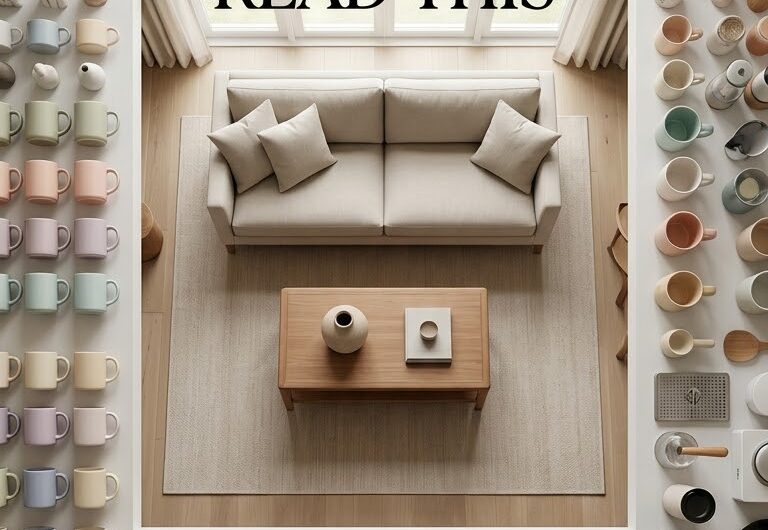

11 Things in Your Home You Should Stop Buying in 2026
Your home doesn’t need more stuff.
It probably needs better stuff, less stuff, and more intentional choices.
Every year brings another wave of home trends, viral products, decorative objects, clever-looking organizers, and “must-have” items. The problem is that many of them look exciting when you buy them but end up sitting unused, taking up space, or making your home feel more cluttered.
And in 2026, the design conversation is moving toward homes that feel more personal, layered, practical, and intentional rather than rooms filled with identical trendy objects. Designers are also warning against buying simply because something is fashionable or visually appealing.
So before your next home-shopping trip, look at these 11 things you may want to stop buying in 2026.
Some of them may already be sitting in your home.
1. Matching Decor Sets
A perfectly matching set can feel like the easiest way to decorate.
Matching vases.
Matching frames.
Matching cushions.
Matching furniture.
But when everything looks exactly the same, your room can start feeling more like a showroom than a real home.
What to Buy Instead
Choose pieces that coordinate without being identical.
Try mixing:
- Different textures
- Different shapes
- Natural wood
- Metal
- Glass
- Handmade-looking pieces
- Vintage or secondhand finds
The goal is coordinated—not cloned.
Current 2026 design coverage is also moving away from overly coordinated interiors and toward more personal combinations of materials and styles.
2. Tiny Decorative Objects You Don’t Actually Need
That cute little tray.
That miniature sculpture.
That tiny decorative jar.
That funny little sign.
One doesn’t seem like a problem.
But ten or twenty of them can make every surface in your home look busy.
The Better Rule
Before buying a decorative object, ask:
“Where exactly will I put this?”
If you can’t answer immediately, don’t buy it.
Instead of purchasing five small decorative pieces, consider buying one interesting statement object.
One large vase can have more visual impact than a shelf full of tiny objects.
3. Cheap “Luxury” Decor That Looks Artificial
Some products are designed to look luxurious in a photograph but don’t actually look convincing in person.
Think:
- Fake marble finishes
- Extremely shiny faux materials
- Plastic pretending to be wood
- Cheap-looking metallic finishes
- Artificial decorative objects with unrealistic textures
The problem isn’t that inexpensive decor is bad.
The problem is when the material is trying too hard to imitate something else.
What to Choose Instead
Look for simple materials that look good naturally:
- Wood
- Ceramic
- Glass
- Linen
- Cotton
- Stone
- Metal
A simple real material often looks more sophisticated than an exaggerated imitation.
4. Trendy Decor You’ll Get Tired of Quickly
You see something everywhere.
Pinterest has it.
Instagram has it.
Stores have it.
Suddenly you feel like your home needs it too.
Six months later, you don’t even like it anymore.
This is one of the easiest ways to spend money repeatedly on home decor.
The 48-Hour Rule
When you want a trendy piece, don’t buy it immediately.
Save it.
Wait 48 hours.
Then ask:
“Would I still buy this if it wasn’t trending?”
If the answer is no, leave it.
A timeless home doesn’t need to be updated every time the internet discovers another trend.
Experts discussing 2026 home shopping similarly recommend being cautious about trend-driven purchases and prioritizing pieces that can remain useful and attractive longer.
5. Decorative Signs With Generic Quotes
“Live Laugh Love.”
“Home Sweet Home.”
“Good Vibes Only.”
You know the type.
These signs can be tempting because they’re inexpensive and easy to find.
But generic wall quotes can make a room feel less personal because they don’t actually tell your story.
Try This Instead
Use your walls for things that mean something to you.
For example:
- Family photographs
- Artwork
- Travel memories
- Vintage finds
- Handmade pieces
- Interesting mirrors
- Large-scale prints
- Personal collections
Your home should look like you live there, not like you copied a furniture-store display.
6. Too Many Artificial Plants
One artificial plant can look perfectly fine.
But filling every corner with fake greenery can quickly make a room feel artificial.
Current design advice increasingly favors homes with natural materials, meaningful objects, and a more curated appearance rather than simply adding decorative items for the sake of filling empty space.
What to Do Instead
Choose fewer plants.
Make them more intentional.
You can use:
- One large indoor plant
- A small herb garden
- Fresh branches
- Dried natural arrangements
- A few real plants suited to your space
And remember:
An empty corner doesn’t always need decoration.
Sometimes empty space makes a room look better.
7. Organizers for Things You Don’t Even Use
This is a sneaky one.
You buy an organizer to solve clutter.
Then you buy another organizer.
Then another.
Eventually you have a beautifully organized collection of things you never needed.
Stop Organizing Before You Declutter
Before buying a storage box, ask:
“Do I need to organize this—or should I get rid of it?”
Decluttering first can make storage much easier.
Professional organizers also recommend concentrating on the home’s genuine problem areas rather than trying to reorganize every single object.
The Better Approach
Remove → Group → Store
Not:
Buy organizer → Fill organizer → Buy another organizer
8. Single-Purpose Gadgets That Do One Tiny Job
Your kitchen and home can quickly fill up with gadgets that sounded brilliant at the time.
A device that slices one specific vegetable.
A gadget that performs one tiny cleaning task.
A tool you use twice a year.
Before buying another viral gadget, ask:
“Can something I already own do this job?”
If yes, you probably don’t need another object taking up cabinet space.
The Better Buy
Prioritize products that solve multiple problems.
A good item should earn its storage space.
9. Seasonal Decor for Every Single Holiday
Halloween.
Christmas.
Valentine’s Day.
Easter.
Spring.
Summer.
Autumn.
Winter.
Suddenly you have boxes and boxes of decorations that spend most of the year hidden in storage.
You Don’t Have to Stop Decorating
Just stop buying decorations that have almost no use outside one short season.
Instead, create a small collection of versatile pieces.
For example:
- Neutral candles
- Natural greenery
- Simple textiles
- Reusable tableware
- Neutral decorative objects
Then add a few temporary seasonal details.
This gives you the seasonal feeling without turning your storage room into a holiday warehouse.
Minimalist home advice similarly emphasizes reusable, versatile pieces over accumulating seasonal decorations and themed textiles.
10. Cheap Furniture You Know You’ll Replace Soon
The cheapest option isn’t always the cheapest choice.
Suppose you buy a very inexpensive side table because it’s only a little cheaper than a better-quality one.
A year later, you replace it.
Then you replace it again.
The original “saving” disappears.
Before Buying Furniture, Ask:
Will I still like this in three years?
Is it sturdy enough for regular use?
Does the size actually fit my room?
Would I rather save a little longer for something better?
You don’t have to buy luxury furniture.
You simply want to avoid buying something you’ll immediately want to replace.
A longevity-focused approach is also increasingly emphasized in sustainable home design: use fewer products and choose pieces that can remain useful longer.
11. Anything You Only Want Because “Everyone Has It”
This might be the biggest one.
You see it everywhere.
Someone posts it.
A video goes viral.
Then suddenly it feels like your home is missing something.
But your home doesn’t have to follow every internet trend.
Ask Yourself One Question
“Would I want this if I had never seen it online?”
That question can save you a surprising amount of money.
Your home should be based on:
Your lifestyle + your space + your taste
Not the algorithm.
What Should You Buy Instead?
Stopping unnecessary purchases doesn’t mean turning your home into an empty box.
It means becoming more selective.
When buying something for your home, prioritize:
1. Function
Does it genuinely solve a problem?
2. Quality
Will you use it long enough to justify the purchase?
3. Versatility
Can it work in more than one room or situation?
4. Personality
Does it actually feel like you?
5. Longevity
Will you still want it when the current trend disappears?
These questions can dramatically change the way you shop.
The “One In, One Out” Rule
Here’s a simple rule that can prevent your home from slowly filling up again.
Whenever you buy something new, consider removing something similar.
Buy a new cushion?
Choose an old one to donate.
Buy a new mug?
Remove one you never use.
Buy a new decoration?
Find an old piece that no longer works.
This keeps your total amount of stuff under control.
The 30-Second Shopping Test
Before pressing Buy Now, ask these five questions:
Do I need it?
Where will I put it?
Do I already own something similar?
Will I use it regularly?
Would I still want it if it weren’t trending?
If you hesitate on several answers, close the shopping page.
Wait.
You can always buy it later.
11 Things to Stop Buying — Quick Recap
- Matching decor sets
- Tiny decorative objects
- Artificial-looking “luxury” decor
- Short-lived trendy pieces
- Generic quote signs
- Excessive artificial plants
- Organizers for things you don’t use
- Single-purpose gadgets
- Too much seasonal decor
- Cheap furniture you’ll replace quickly
- Things you only want because they’re viral
Frequently Asked Questions
What should I stop buying for my home in 2026?
Start by avoiding unnecessary duplicates, overly trendy decor, generic decorations, excessive organizers, single-purpose gadgets, and items that don’t have a clear place or purpose.
Are home decor trends bad?
Not at all. Trends can be fun. The problem starts when you buy something only because it is trending and then quickly lose interest in it.
Should I stop buying decorations completely?
No. The goal isn’t to have an empty home. Choose fewer pieces that have visual impact, function, or personal meaning.
Are expensive home items always better?
No. Price alone doesn’t determine quality or style. A simple, well-made and appropriately sized item can be a better choice than an expensive but poorly suited one.
How can I stop impulse-buying home decor?
Create a waiting period. Save the item and revisit it after 48 hours. Also ask yourself where it will go and whether you already own something similar.
What makes a home look outdated?
An overreliance on short-lived trends, excessive matching, generic decor, clutter, and pieces that no longer fit the homeowner’s taste can make a space feel dated. Current 2026 design coverage is emphasizing more personal, curated interiors rather than overly coordinated rooms.
Final Thoughts
Your home doesn’t become better every time you add something.
Sometimes it becomes better when you stop adding.
The next time you see a viral home product, don’t immediately ask:
“How can I get this?”
Ask:
“Does my home actually need this?”
That tiny change in thinking can save money, reduce clutter, and help you create a home that feels much more personal.
In 2026, the goal doesn’t have to be having the most decorated home.
It can simply be having a home where everything you own earns its place.
And honestly, that might be the best home upgrade of all.