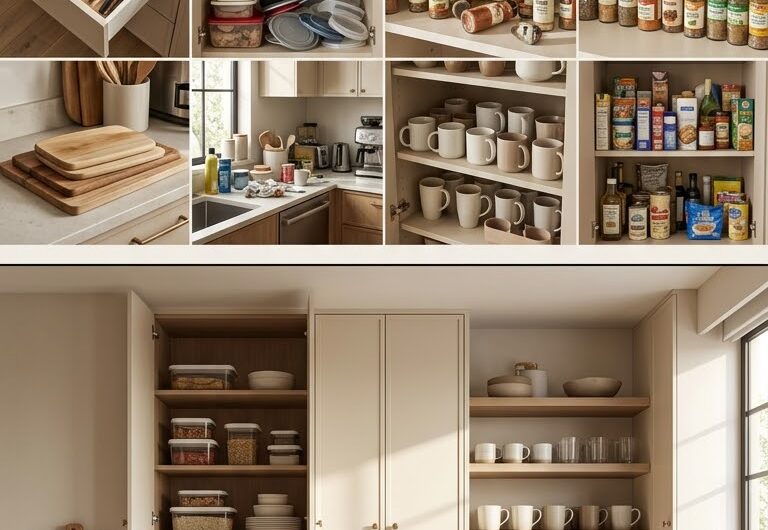

12 Things in Your Kitchen You’re Probably Organizing Wrong
You clean your kitchen, put everything away, and somehow it still looks cluttered.
Sound familiar?
The problem may not be that you need more cabinets or a bigger kitchen. You might simply be organizing a few everyday items in the wrong way.
From overcrowded drawers and badly arranged spices to food containers with missing lids, small organization mistakes can make your kitchen feel much more chaotic than it needs to be.
The good news is that most of them are incredibly easy to fix.
Here are 12 things in your kitchen you’re probably organizing wrong—and the smarter way to organize them instead.
1. You’re Keeping Spices in Alphabetical Order
Alphabetical organization sounds logical.
But in a real kitchen, it isn’t always the fastest system.
When you’re cooking, you usually remember the type of spice or the recipe you’re making—not necessarily where “Cumin” falls alphabetically.
Try This Instead
Organize spices by frequency and category.
For example:
Everyday spices: salt, pepper, chili powder, cumin
Baking: cinnamon, nutmeg, vanilla
Herbs: oregano, basil, thyme
Specialty: less frequently used spices
Keep the spices you use most often at the front.
Extra Tip
Use matching containers with clear labels when practical. A quick glance should tell you exactly what you’re reaching for.
2. Your Food Containers Are All Mixed Together
One of the biggest sources of kitchen clutter is the container drawer.
Containers are stacked randomly. Lids disappear. Different sizes get mixed together.
And every time you need one, you have to search through the entire drawer.
The Better System
Separate containers by size and shape.
Keep:
Small containers together
Medium containers together
Large containers together
Then store lids vertically in a divider or dedicated section.
This makes it much easier to grab the correct container without disturbing everything else.
Golden Rule
Never keep containers without matching lids unless you have a specific use for them.
3. You’re Storing Cutting Boards Flat in a Pile
Stacking cutting boards horizontally may seem normal, but it makes grabbing the board underneath unnecessarily annoying.
You have to lift the whole stack every time.
Try This Instead
Store cutting boards vertically using a simple divider.
This allows you to pull out one board without moving the others.
The same system can work for:
- Baking sheets
- Serving trays
- Cooling racks
- Large platters
Small Kitchen Hack
Vertical storage can make a surprisingly big difference because it turns dead space into usable space.
4. Your Most-Used Appliances Are Buried
Do you keep your blender, toaster, coffee machine, or air fryer hidden away even though you use it almost every day?
That can make your kitchen feel harder to use.
Try a “Daily Zone”
Keep frequently used appliances in an easy-access area.
For example:
Coffee machine → coffee station
Toaster → breakfast area
Blender → smoothie station
Less-used appliances can go into deeper cabinets.
The Rule
The more often you use something, the easier it should be to reach.
You shouldn’t have to perform a mini workout every morning just to find your toaster.
5. Your Pantry Is Organized by Package Size
Many people organize pantry shelves according to the size of the packaging.
That creates a visually messy shelf because tall boxes, short packets, cans, and bags are mixed randomly.
Try This Instead
Organize food by category.
For example:
Breakfast
Snacks
Baking
Pasta & grains
Canned foods
Cooking essentials
Tea & coffee
This makes shopping, cooking, and restocking easier.
Make It Even Better
Use a few clearly labeled bins for loose packets and small products.
6. You’re Keeping Expiry Dates Hidden
A perfectly organized pantry is not helpful if you constantly forget what you already have.
When newer products get pushed to the front, older items remain hidden at the back.
Use the “Oldest First” Method
When restocking:
Older items → front
Newer items → back
This simple habit can help reduce forgotten food and unnecessary duplicate purchases.
Pantry Reset Trick
Every few weeks, pull everything forward and quickly check what needs to be used soon.
7. Your Kitchen Drawers Are Giant Junk Drawers
One drawer contains scissors, batteries, takeout menus, measuring spoons, rubber bands, random tools, and objects nobody can identify.
Sound familiar?
A large empty drawer often becomes a dumping ground.
The Fix
Create separate zones.
For example:
Cooking tools
Measuring tools
Utensils
Food wraps
Small accessories
Use drawer dividers to keep each category contained.
Important
Don’t organize the drawer around the shape of the drawer.
Organize it around how you use the items.
8. You’re Storing Cleaning Products With Food Items
Under-sink cabinets can become chaotic very quickly.
Sprays, cloths, sponges, dishwasher products, trash bags, and random household items can all end up together.
The Better System
Create separate categories using bins.
For example:
Cleaning sprays
Dishwashing supplies
Sponges & brushes
Trash bags
Extra supplies
Keep products in a way that makes leaks or spills easier to manage, and follow product-label storage instructions.
Small Upgrade
Use a small handled bin for frequently used cleaning supplies so you can pull them out together.
9. Your Mugs Are Taking Up Too Much Shelf Space
Mugs often consume more cabinet space than people realize.
Stacking them may work for certain designs, but it can become unstable and inconvenient.
Try This Instead
Use shelf risers or under-shelf hooks where appropriate.
This creates an additional storage level inside the same cabinet.
You can also organize mugs by:
- Daily-use mugs
- Travel mugs
- Special mugs
- Seasonal mugs
Keep your favorites easiest to reach.
10. You’re Using Every Inch of Counter Space
Counter space isn’t storage space.
One of the quickest ways to make a kitchen feel small is to leave every possible appliance and object sitting on the countertop.
The Better Approach
Create intentional countertop zones.
For example:
Coffee zone: machine + small tray
Cooking zone: a few daily tools
Breakfast zone: toaster + bread basket
Everything else should have a home inside cabinets or drawers whenever practical.
The Luxury Kitchen Trick
Leave some counter space empty.
Empty space makes even a modest kitchen feel more open and organized.
11. You’re Storing Everything at the Same Height
Kitchen organization isn’t just about where things go.
It’s also about how easy they are to reach.
Create Three Storage Levels
Eye level: everyday items
Waist level: frequently used heavier items
High shelves: rarely used or lightweight items
For example, don’t put your everyday plates on a shelf you need a stool to reach.
Think in Terms of Effort
The easier an item is to access, the more appropriate the space is for frequent use.
12. You’re Keeping Too Many “Just in Case” Items
This is probably the biggest kitchen organization mistake of all.
You keep:
- Containers you never use
- Duplicates of tools
- Chipped mugs
- Old gadgets
- Too many reusable bags
- Random serving dishes
- Appliances you haven’t touched in years
Eventually, your storage fills up and everything becomes harder to organize.
Ask Yourself These 3 Questions
Do I use it?
Would I buy it again today?
Do I have another item that does the same job?
If the answers raise doubts, the item may not deserve valuable kitchen space.
The “Reach Test” That Can Fix Your Kitchen
Here’s a simple way to rethink your storage.
Stand in front of each cabinet and ask:
“How often do I use what’s inside?”
Then place items accordingly.
Daily
Keep them closest and easiest to reach.
Weekly
Keep them in normal cabinet or drawer positions.
Monthly
Move them farther back or higher.
Rarely
Use higher shelves, back cabinets, or dedicated storage areas.
This turns your kitchen into a system based on real-life habits rather than random storage space.
7-Minute Kitchen Organization Reset
Don’t have time for a complete kitchen makeover?
Try this quick reset.
Minute 1
Clear your countertops.
Minute 2
Put away everything that doesn’t belong there.
Minute 3
Straighten your utensil drawer.
Minute 4
Group similar food items together.
Minute 5
Match your food containers and lids.
Minute 6
Remove one obvious duplicate or unused item.
Minute 7
Put the things you use every day in the easiest-to-reach locations.
Seven minutes won’t completely reorganize a kitchen, but it can make the room feel noticeably calmer.
Small Kitchen Organization Formula
A well-organized kitchen usually follows one simple principle:
Store things where you naturally use them.
Coffee items near the coffee machine.
Cooking utensils near the cooking area.
Food containers near the refrigerator.
Plates near the dining area.
Cleaning products under or near the sink.
Baking supplies together.
This reduces unnecessary movement and makes everyday routines easier.
What to Remove From Your Kitchen First
When your kitchen feels overcrowded, start with the easiest decisions.
Get rid of or relocate:
- Broken tools
- Duplicate utensils
- Empty containers
- Chipped items you don’t use
- Expired food
- Gadgets you never use
- Excess packaging
- Items that belong somewhere else
You don’t need to throw away useful things just to make your kitchen look minimalist.
The goal is simply to make sure everything has a reason and a place.
FAQ
What is the biggest kitchen organization mistake?
One of the biggest mistakes is organizing items based only on available cabinet space instead of how frequently you actually use them.
How do I organize a small kitchen?
Prioritize vertical storage, drawer dividers, shelf risers, door organizers, and multifunctional storage. Keep frequently used items easiest to reach.
How should I organize my pantry?
Group food by category, keep older items toward the front, and use bins to control small or loose packages.
Should kitchen counters be completely empty?
Not necessarily. Keep useful everyday items accessible, but avoid filling every available surface. A few intentional zones can look much cleaner.
How do I organize kitchen containers?
Separate them by size and shape, and keep lids grouped vertically or in a dedicated section.
How often should I reorganize my kitchen?
A small reset every week and a deeper decluttering session every few months can help prevent clutter from building up.
Final Thoughts
A better-organized kitchen doesn’t always require new cabinets or expensive organizers.
Sometimes you simply need to change where things live.
Move everyday items closer.
Group similar things together.
Use vertical space.
Control your container collection.
Clear unnecessary countertop clutter.
And stop giving your best storage space to things you barely use.
Once your kitchen is organized around your real habits, cooking and cleaning can become much easier—and the entire room can feel bigger and calmer.
Before buying another storage product, look at what you’re already storing. The real problem might not be a lack of space. It might be the way you’re using it.