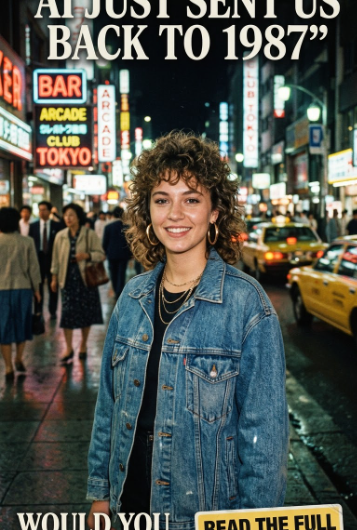

SEO Title: What Would You Look Like in 1987? Viral AI 80s Photo Prompt Guide
Meta Description: The viral 1980s AI photo trend can turn a modern selfie into a convincing retro photograph. Learn how it works, what prompt details matter, and how to create an authentic 80s look.
Focus Keyword: 1980s AI photo trend
Secondary Keywords:
80s AI photo prompt, 1980s photo prompt, AI retro photo, ChatGPT 80s photo, AI yearbook photo, vintage AI photo, 80s photo trend, retro photo generator
URL Slug:/1980s-ai-photo-trend-prompt/
What Would You Look Like in 1987?
Here’s a strange question:
What if the photo on your phone had actually been taken in 1987?
Not with an Instagram filter.
Not with an obvious “vintage effect.”
But as a believable photograph from the actual 1980s—with period clothes, authentic hair, analog film texture, old-school lighting and the slightly imperfect look of a photograph from a family album.
That’s exactly what people are experimenting with right now.
Across Instagram and X, users have been posting AI-generated portraits that transform modern photographs into convincing 1980s images. Recent September 2026 coverage describes the trend as a viral retro-photo phenomenon, with users experimenting with oversized hairstyles, vintage clothes, dramatic accessories, warm lighting and grainy analog textures.
And the reason people keep trying it is incredibly simple:
Everyone wants to know what they would have looked like in another decade.
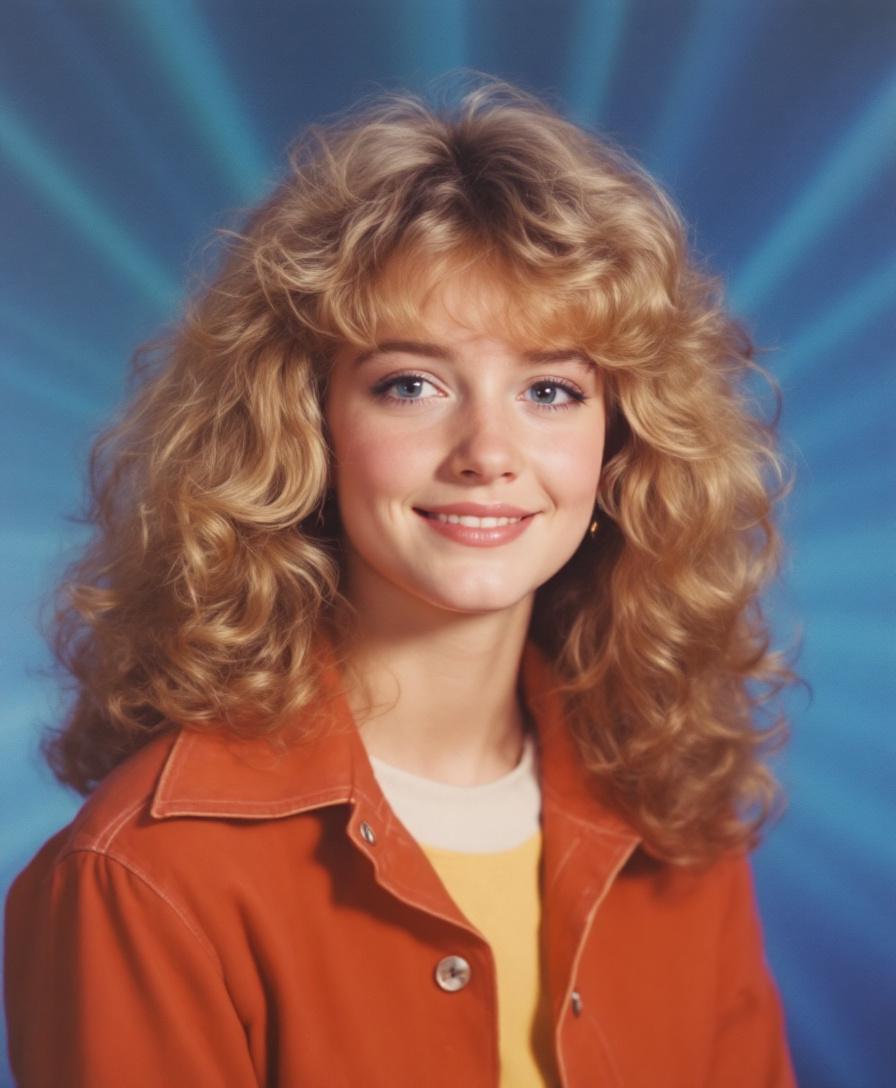
An example of the visual language behind the trend: classic yearbook posing, voluminous hair, studio lighting and a retro backdrop.
What Is the 1980s AI Photo Trend?
The concept is simple.
You upload a photograph of yourself to an AI image tool and ask it to recreate the photograph as though it were captured during the 1980s.
The AI can change:
- Hair
- Clothing
- Accessories
- Background
- Lighting
- Color grading
- Camera characteristics
- Film texture
- Era-specific styling
The important part is making the result look like a real photograph from that decade, rather than a modern picture with a sepia filter.
Recent guides describing the trend emphasize that a good prompt needs a clear era, period-specific styling, appropriate lighting and an “identity lock” so the transformed person still resembles the source photo.
Why Does It Look So Convincing?
This is the part that makes people stare.
A modern photograph has recognizable clues:
smartphone clarity
modern haircuts
current clothing
contemporary lighting
modern backgrounds
The AI changes those clues.
Suddenly the same face might have:
- Feathered hair
- Oversized glasses
- Vintage jacket
- Analog flash
- Faded colors
- Slight film grain
- Old studio backdrop
Your brain sees all those details together and starts interpreting the photograph as belonging to another period.
📸 IMAGE — ADD HERE
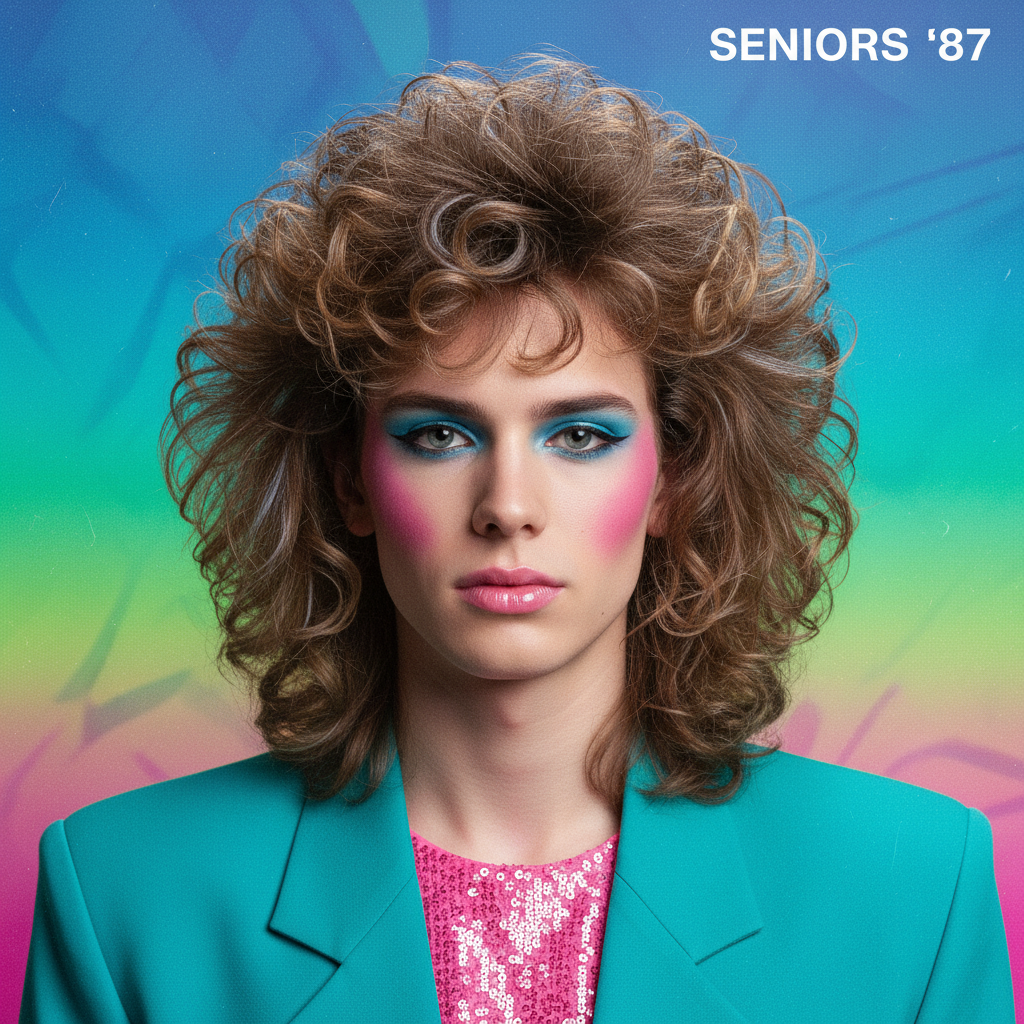
Hair, makeup, clothing and studio styling are major parts of the 1980s illusion.
The Most Important Part: Keep the Face Looking Like You
This is where many AI transformations go wrong.
The result can look beautifully retro…
…but suddenly it looks like a completely different person.
Recent 80s-prompt guides identify identity drift as one of the biggest problems when generating these images. Their recommended solution is to explicitly tell the image model to preserve the person’s facial identity while changing the surrounding styling.
Try Including This Instruction
“Preserve the person’s exact facial identity, facial proportions and recognizable features. Change only the era, styling, clothing, hair, lighting and environment.”
That gives the model a much clearer boundary.
The Secret Is Saying the Year
This sounds almost too simple.
But there’s a difference between saying:
“Make this look vintage.”
and:
“Make this look like a real photograph taken in 1987.”
The second instruction gives the AI a specific historical target.
Recent prompt guides recommend explicitly naming the year because otherwise image models can produce a generic retro aesthetic rather than a convincing period photograph.
Try:
1983
1985
1987
1989
The exact year can influence clothing, hairstyles, backgrounds and photographic styling.
Don’t Just Ask for “80s Style”
This is another common mistake.
“80s style” is extremely broad.
One person’s idea of the 1980s might be:
high-school yearbook
Another:
Miami nightlife
Another:
family photo album
Another:
mall portrait studio
Another:
rock concert
Another:
1980s office portrait
The more specific the scene, the more distinctive the final result can become.
7 Different 1980s Looks You Can Try
1. 1987 Yearbook
Classic studio portrait.
Blue or pastel backdrop.
Direct camera angle.
Big hair.
Soft flash.
Simple clothing.
2. 1980s Family Album
Less polished.
More candid.
Warm indoor lighting.
Slightly imperfect framing.
Authentic everyday clothing.
3. 1980s Mall Portrait
Bright studio backdrop.
More exaggerated posing.
Period fashion.
Glossy hair.
Slightly cheesy—but in the best possible way.
4. 1980s Teen Bedroom
Create a bedroom filled with period details.
Posters.
Cassette player.
Old television.
Desk.
Colorful bedding.
The person sits naturally in the environment.
5. 1980s Night Out
Neon lights.
Vintage car.
Nighttime city.
Flash photography.
Bold jacket.
This creates a completely different mood from the yearbook version.
6. 1980s Vacation Snapshot
Think:
beach
arcade
road trip
hotel
family vacation
The image should look slightly accidental rather than professionally staged.
7. 1980s Professional Portrait
Think corporate America in the late 1980s.
Simple studio background.
Formal clothing.
Period glasses.
Conservative hairstyle.
Soft flash.
This can be surprisingly convincing.
📸 IMAGE — ADD HERE
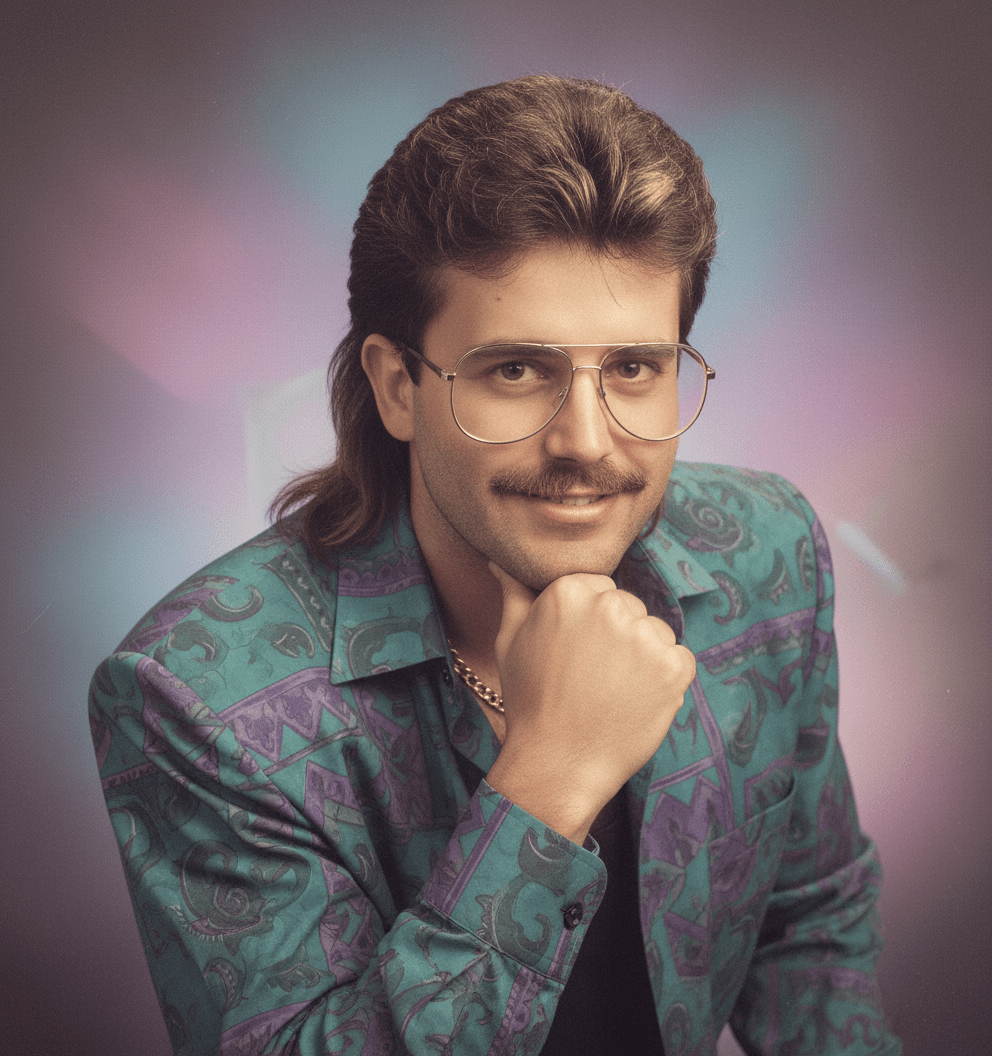
Specific wardrobe, hairstyle and posing can dramatically change the perceived decade.
A Copy-and-Paste 1987 AI Photo Prompt
Use your chosen image as the reference image and then add:
Transform this photograph into an authentic 1987 photograph while preserving the exact facial identity and recognizable features of the person. Make it look like a genuine photograph actually captured in 1987, not a modern photo with a retro filter. Use period-accurate 1987 hairstyle, clothing, accessories, studio lighting, analog camera characteristics, realistic 35mm film grain, subtle color fading, gentle highlight halation, natural skin texture and slight photographic imperfections. Avoid modern fashion, modern technology and contemporary styling. Keep the face recognizable and unchanged while transforming only the era, environment, wardrobe, hair and photographic characteristics.
The important ingredients are:
year + identity preservation + period styling + analog photography.
Want It to Look Even More Real?
Add photographic imperfections.
Real old photographs aren’t perfectly sharp.
They can have:
- Fine film grain
- Slight softness
- Mild color fading
- Flash hotspots
- Small exposure variations
- Tiny dust marks
- Slight lens softness
- Warm or cool color shifts
But don’t overdo it.
Too much grain makes the image look artificially “retro.”
The goal is:
subtle imperfection.
Why the Hair Matters So Much
Hair is one of the fastest visual indicators of an era.
Compare:
Modern haircut
versus
1980s feathered hair
Your brain immediately notices the difference.
That’s why the most convincing transformations often spend a lot of attention on:
- Hair volume
- Bangs
- Curls
- Mullet variations
- Side volume
- Hair accessories
The current viral images commonly feature exaggerated 1980s hairstyles as one of the strongest signals of the transformation.
📸 IMAGE — ADD HERE
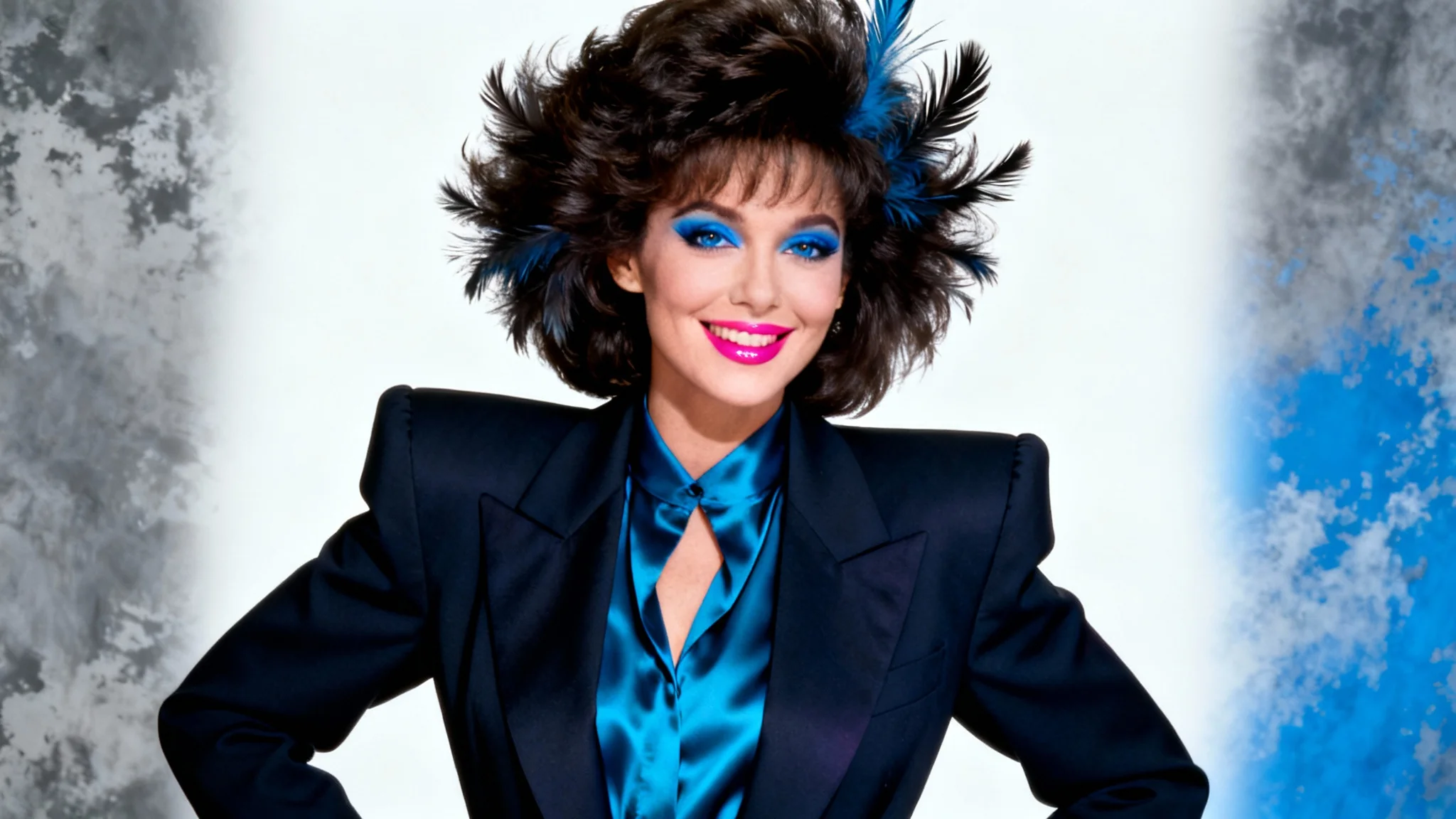
Big hair, bold styling and period-specific clothing instantly communicate the decade.
What Clothes Make the Image Look Truly 1980s?
Don’t simply tell the AI:
“Put me in 80s clothes.”
Describe the clothing.
For example:
Casual
High-waisted jeans + tucked graphic tee + denim jacket.
Glam
Structured blazer + bold accessories + voluminous hair.
Preppy
Sweater + collared shirt + pleated trousers.
Sporty
Color-blocked tracksuit + retro sneakers.
Formal
Oversized suit jacket + patterned shirt + vintage accessories.
Specificity creates a much stronger result.
The Background Can Make or Break the Image
Imagine the person looks perfectly 1980s…
but they’re standing next to a modern electric car.
Instantly ruined.
Look for period details such as:
- Analog televisions
- Cassette players
- Older cars
- Retro furniture
- Vintage signage
- Old stores
- Film-era photography studios
- Period interiors
The more elements that agree with the same year, the more convincing the image becomes.
Try a “Then vs. Now” Image
This is one of the strongest formats for Pinterest.
Show the same person twice.
Top:
2026
Modern clothing.
Modern lighting.
Modern photo quality.
Bottom:
1987
Period hairstyle.
Period clothing.
Analog film.
Vintage environment.
Then put:
“WOULD YOU LOOK LIKE THIS?”
across the Pin.
This creates an instant visual comparison.
📸 IMAGE — ADD HERE

The strongest transformations make the viewer compare the modern source with the imagined historical photograph.
5 Prompts You Can Try
The Yearbook Prompt
“Make this look like an authentic 1987 American high-school yearbook portrait, preserving my exact facial identity…”
The Family Album Prompt
“Turn this into a candid family photograph taken in 1986 on consumer 35mm film…”
The Miami Night Prompt
“Recreate this as a believable 1987 nighttime photograph in a neon-lit American city…”
The Bedroom Prompt
“Place the same person naturally inside a realistic 1985 teenage bedroom…”
The Professional Portrait Prompt
“Create a realistic late-1980s professional studio portrait from 1988…”
Why People Can’t Stop Sharing These Images
The appeal isn’t really the AI itself.
It’s the question behind the AI:
“What would my life have looked like in another decade?”
That’s a much more emotional question.
A person can imagine:
What would my hairstyle have been?
What clothes would I have worn?
What would my school photo look like?
Would I have looked completely different?
Would my parents recognize me?
Would this picture look like it belonged in their old photo album?
That’s why the trend is much more interesting than simply “another AI filter.”
A Small Privacy Reminder Before You Upload Photos
A photo can contain more information than just your face.
Before uploading personal photographs to any AI service, check the service’s current privacy settings and terms, and avoid using sensitive documents, private identification images or photographs containing information you would not want processed by a third-party service.
Recent reporting around the viral trend has also raised questions about what users should consider before uploading personal photographs to AI platforms. ([turn842921news36])
For a fun trend experiment, a normal, non-sensitive photograph is a much better choice than an image containing personal documents or private information.
The 1980s AI Trend Doesn’t Have to Stop at 1987
Once you’ve created one convincing image, try different years.
1980
1983
1985
1987
1989
Then compare them.
You might discover that changing just a few years dramatically changes:
- Hair
- Clothing
- Colors
- Background
- Photography style
- Accessories
And that gives you an entire series of Pinterest content from one idea.
FAQ
What is the 1980s AI photo trend?
It is a viral image-generation trend in which modern photographs are transformed into realistic-looking 1980s portraits using AI. Recent September 2026 coverage describes the trend spreading across social media platforms including Instagram an
How do I make an 80s photo with AI?
Upload a clear reference photograph and describe the exact year, hairstyle, clothing, environment and photographic characteristics you want. Explicitly ask the AI to preserve the person’s facial identity.
Why do AI 80s photos sometimes look like a different person?
Generative image models can alter facial features while changing the overall style. Explicitly requesting identity preservation can help reduce that problem, although results can vary by tool and reference im
What year should I use?
Try a specific year such as 1983, 1985, 1987 or 1989 rather than just saying “the 80s.” A specific target gives the image model a clearer historical direction.
What makes an AI photo look genuinely 1980s?
Period-accurate clothing, hairstyles, environments, lighting and analog photographic characteristics usually matter more than simply adding a heavy vintage filter.
Can I create an 80s yearbook photo from a selfie?
Yes. A clear, front-facing photograph can be used as a reference for a yearbook-style transformation.
Should I upload private photos to AI tools?
Use caution. Review the platform’s current privacy policies and settings before uploading personal photographs, and avoid sensitive images or documents.
Final Thoughts
The fascinating thing about this trend isn’t really the technology.
It’s the imagination.
For a few seconds, AI lets you look at your own face and wonder:
“What if this photo had been taken 40 years ago?”
And that’s why the images are so shareable.
A normal selfie becomes a yearbook portrait.
A modern bedroom becomes a teenager’s 1980s room.
A current outfit becomes vintage fashion.
A phone photo becomes something that looks like it has been sitting in a family album since 1987.
That’s a much stronger hook than simply saying:
“Here’s an AI filter.”
The real question is: