

How many times have you bought fresh vegetables, put them in the refrigerator, and then discovered them hiding behind newer groceries a few days later?
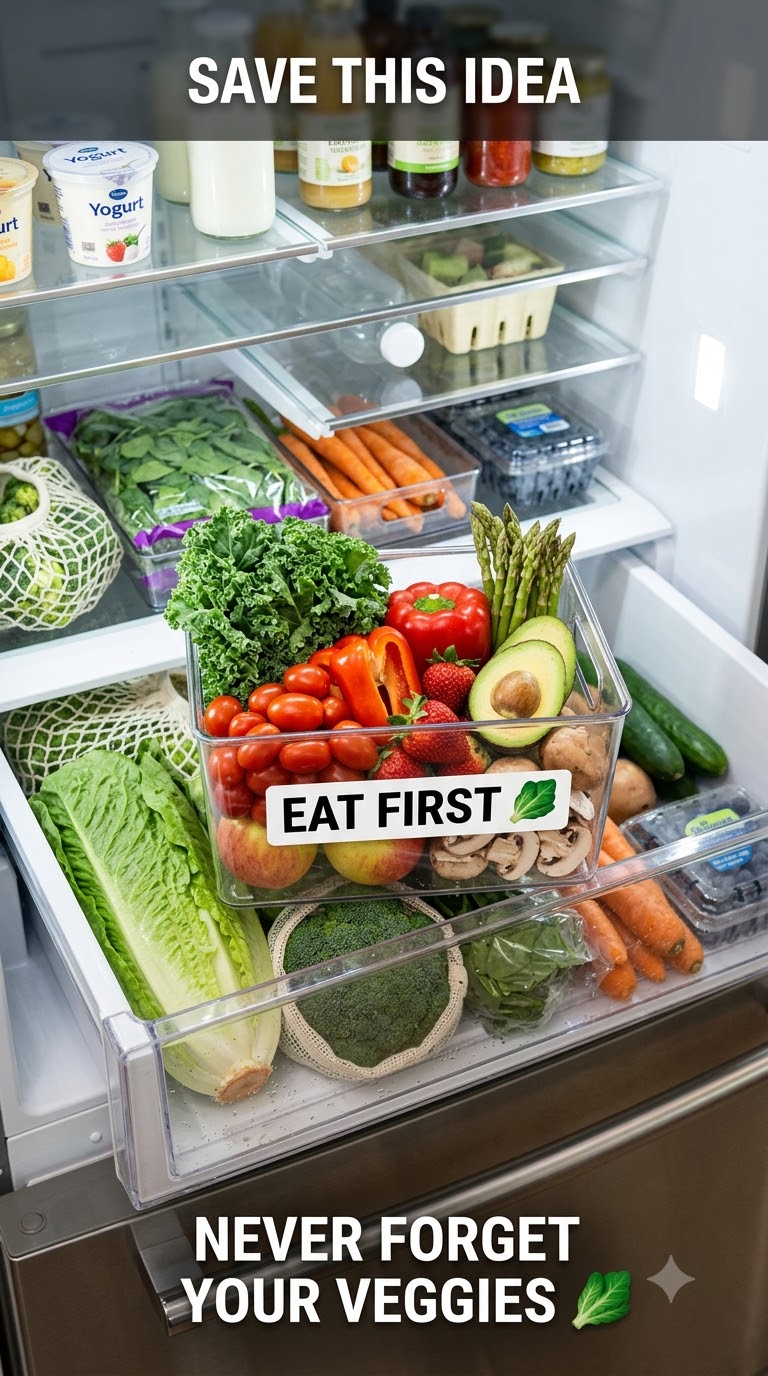
The Vegetable “Eat First” Box is a simple solution.
Instead of allowing older vegetables to disappear into the back of the refrigerator, create one clearly labeled container where vegetables that need attention are placed front and center.
It turns your refrigerator into a simple first-use system.
🥕 What Is a Vegetable “Eat First” Box?
It’s a dedicated refrigerator container labeled:
🥕 EAT FIRST
Whenever you have vegetables that should be prioritized for use, move them into this container.
For example:
- Cut vegetables
- Opened packages
- Vegetables approaching their quality peak
- Leftover prepared vegetables
- Smaller quantities that are easy to forget
The box becomes a visual reminder:
Check this container before opening a new vegetable package.
🧊 1. Choose the Right Container
Look for a container that is:
- Transparent
- Easy to clean
- Food-safe
- Refrigerator-friendly
- Large enough for your household
- Easy to remove
A clear container is particularly useful because you can see the contents without opening it.


🏷️ 2. Add a Big “EAT FIRST” Label
Make the label impossible to miss.
🥕 EAT FIRST
Check here before using fresh vegetables
You can use:
- Waterproof sticker
- Magnetic label
- Chalkboard label
- Removable vinyl
- Printed label
A large label works better than a tiny one because everyone in the household immediately understands the purpose.
🥦 3. What Goes Inside?
The box isn’t meant to contain every vegetable in your refrigerator.
It is specifically for vegetables that should be prioritized.
Examples include:
🥬 Leafy Greens
If they’re approaching the end of their expected quality period.
🥕 Cut Carrots
Especially once opened or prepared.
🫑 Chopped Bell Peppers
Easy to forget when stored in small containers.
🍅 Cut Tomatoes
Keep appropriately refrigerated according to your food-storage practices.
🥒 Cut Cucumber
Useful for quick salads and snacks.
🥦 Cooked Vegetables
Move leftovers here so they aren’t forgotten.
🔄 4. Follow the “First In, First Out” Rule
The basic principle is simple:
Older suitable-to-use food → front
Newer food → behind
When you buy new vegetables, don’t automatically put them at the front.
Place older items where they’re easiest to see and use.
This approach can help reduce forgotten food.
🥗 5. Turn It Into a Salad Box
The Eat First Box can become your salad starter box.
When you see vegetables that need using, combine them into an easy meal:
🥕 Carrot
🫑 Bell pepper
🥒 Cucumber
🌽 Corn
🥬 Lettuce
Add dressing and you’ve got a quick salad.
Instead of throwing away vegetables, you’re turning them into lunch.
🍳 6. Create an “Eat First” Stir-Fry
Another easy solution is a weekly vegetable stir-fry.
Take suitable vegetables from the box.
Chop them.
Add:
- Garlic
- Ginger
- Soy sauce or another preferred sauce
- Spices
Cook until done.
This is an excellent way to use several small quantities at once.
🍲 7. Make a Vegetable Soup
Have several vegetables that need using?
Make soup.
Combine suitable vegetables with:
- Onion
- Garlic
- Stock
- Herbs
- Spices
The Eat First Box becomes your inspiration for the next meal.
📅 8. Add a Weekly “Fridge Rescue” Day
Choose one day each week.
For example:
🌱 SUNDAY FRIDGE RESCUE
Open the Eat First Box.
Look at what’s inside.
Then decide:
🥗 Salad
🍳 Stir-fry
🍲 Soup
🍝 Pasta
🥘 Curry
This turns fridge organization into a simple weekly routine.
🌈 9. Color-Code Your Vegetables
For a visually appealing system, organize the box loosely by color:
🟢 Green
🥕 Orange
🔴 Red
🟡 Yellow
But don’t prioritize appearance over safe storage.
The main goal is visibility and timely use.
🧺 10. Use a Shallow Container
A shallow container can actually be better than a deep box.
Why?
Because vegetables don’t get buried.
You can see almost everything immediately.
A deep container can recreate the same problem you’re trying to solve:
vegetables hiding underneath vegetables.
✨ 11. Add a Small “Meal Idea” Card
Here’s a clever extra.
Attach a small reusable card to the container:
🥕 EAT FIRST IDEAS
Salad
Soup
Stir-Fry
Pasta
Omelette
Wrap
When you’re tired and don’t know what to cook, simply open the box and choose one.
🥬 12. Keep the Box at Eye Level
Don’t hide the Eat First Box in the back of the refrigerator.
Place it where you can see it immediately.
The best location depends on your refrigerator design, but the principle is:
If you can see it, you’re more likely to use it.
💧 13. Keep Moisture Under Control
Some vegetables deteriorate faster when stored with excess moisture.
Use storage methods appropriate for the particular vegetable.
For leafy greens, for example, excess moisture can contribute to deterioration.
A clean, dry container and appropriate produce storage practices can help maintain quality.
Don’t seal every type of vegetable in exactly the same way.
⚠️ Food-Safety Reminder
The Eat First Box is an organization system—not a safety test.
If vegetables are slimy, moldy, unusually discolored, have an off smell, or otherwise appear spoiled, don’t assume they are safe simply because they’re in the box.
When in doubt, discard them.
For cut or cooked vegetables, follow appropriate refrigeration and food-safety practices.
🥕 14. Family-Friendly Version
Make the box easy for children to understand.
Use a big label:
⭐ EAT FIRST ⭐
Add simple pictures:
🥕 🥒 🍅 🫑
You can even create a family rule:
“Before opening a new vegetable, check the Eat First Box.”
This turns food organization into a household habit.
🧊 15. The Ultimate Fridge Setup
Imagine opening your refrigerator.
At eye level is a transparent container:
🥕 EAT FIRST
Inside:
🥒 Cut cucumber
🫑 Bell pepper
🥕 Prepared carrots
🥬 Leafy greens
🍅 Suitable cut vegetables
Next to it is a small card:
TODAY’S OPTIONS
🥗 Salad
🍳 Stir-Fry
🍲 Soup
Everything that needs attention is visible.
Nothing gets lost behind a mountain of newer groceries.


💡 Why This Hack Works
The idea is incredibly simple:
Without the box:
Buy → Store → Forget → Discover later
With the box:
Buy → Store → Prioritize → See → Use
The biggest advantage isn’t the container itself.
It’s the visual reminder.
🌱 Turn It Into a Zero-Waste Habit
The box can become part of a broader kitchen routine:
New groceries → regular storage
Older vegetables → Eat First Box
Eat First Box → meal planning
Empty box → refill
This creates a simple cycle that can help reduce unnecessary food waste.
📸 Pinterest-Worthy Version
For a beautiful kitchen organization setup, use a clear acrylic refrigerator container with a minimalist white label:
EAT FIRST 🥕
Arrange colorful vegetables inside:
🥕 Orange carrots
🫑 Red and yellow peppers
🥒 Green cucumber
🥬 Fresh greens
Place the box at the front of the refrigerator.
The result is not only practical—it becomes a visually satisfying fridge organization idea.


🥕 Final Thoughts
The Vegetable “Eat First” Box is one of those tiny kitchen ideas that can make a surprisingly big difference.
You don’t need a smart refrigerator, expensive gadgets, or complicated meal-planning software.
Just create one clearly labeled container and give your most easily forgotten vegetables a front-row seat.
See it → remember it → cook it → enjoy it. 🥕🥬✨
And that’s the beauty of this simple fridge hack: the best food-storage system is often the one that makes you notice what you already have.