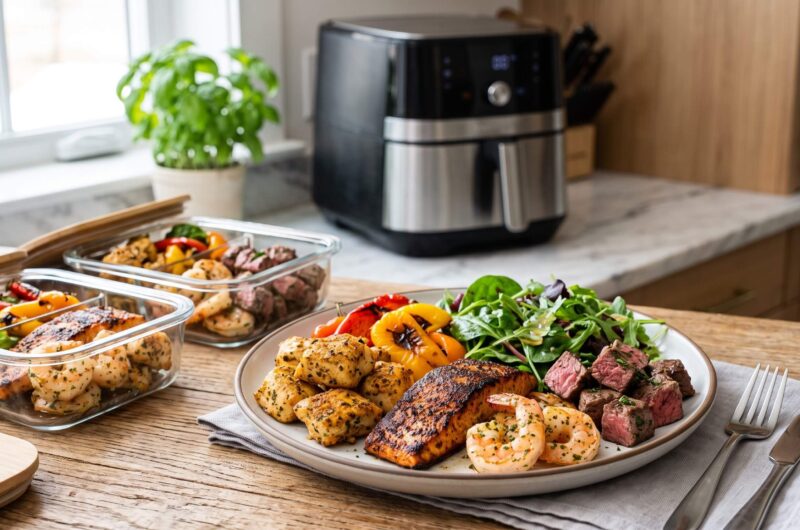

Batch Prepping & Food Safety
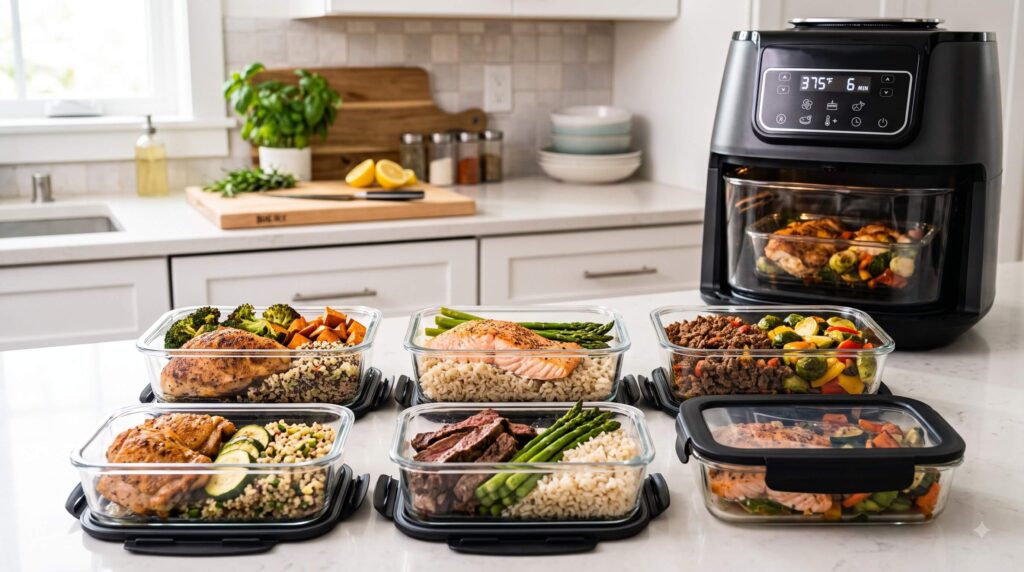
Meal prepping air fryer proteins safely starts with hitting USDA minimum internal temperatures every time: 165°F for all poultry (chicken and turkey), 145°F for beef, and 145°F for fish, each followed by a 3-minute rest before cutting or serving. Always verify with a thermometer rather than color or cook time alone, since air fryer variance between units can shift doneness by several degrees at identical settings.
Once cooked, cool proteins to room temperature within 30–45 minutes (never leave food out longer than 2 hours) before transferring to glass meal containers. Glass is preferable to plastic for weekly prep because it doesn’t absorb odors or stain from spice-heavy marinades like Cajun or buffalo seasoning, and it reheats evenly in both microwave and air fryer without leaching. Properly stored at or below 40°F, most of these proteins stay fresh and safe for up to 4 days in the refrigerator; label containers with the prep date to track freshness.
To reheat without sacrificing the crisp exterior that made these meals appealing in the first place, skip the microwave. Return the protein to the air fryer at 350°F for 3–4 minutes — this re-crisps the surface using the same convection principle that cooked it originally, rather than steaming it soft as a microwave would.
Expert FAQ & Troubleshooting
Why does my chicken breast keep coming out dry? Chicken breast has minimal intramuscular fat, so even 1–2 minutes of overcooking pushes it past done into dry. Pull it at 160°F internal and let carryover heat finish the last 5 degrees during the rest period, rather than cooking straight to 165°F in the basket.
Why is my basket smoking during cooking? Smoking almost always means excess oil or marinade drippings are hitting the heating element below. Use a light mist rather than a pour-on marinade, and check that the drip tray underneath the basket is clean and properly seated.
Why does my seasoning taste burnt instead of crisp? Sugar-based rubs (brown sugar, honey, maple) and high heat above 400°F are a common combination for scorching before the interior finishes cooking. Drop temperature by 15–20°F for sweet marinades, or add sugary glazes only in the final 2 minutes of cooking.
How do I scale these for a family of four? Multiply ingredient quantities by four, but do not simply quadruple the basket load — cook in 2–3 batches to preserve the single-layer spacing that allows proper air circulation. Keep finished batches warm in a 200°F conventional oven while subsequent batches finish, rather than stacking them, which traps steam and softens the crust.