

Introduction: The Hardgainer Mindset & Non-Negotiable Pillars
Gaining quality weight requires more discipline than losing it. Stop eating like a bird and expecting to build an empire. If you’re a hardgainer, skinny-fat, or someone who’s tried “eating more” without a real system, this 30 day weight gain routine challenge is built for you — no vague advice, no guesswork, just a structured plan you execute daily.
Clean Bulking vs. Dirty Bulking: Clean bulking means a controlled caloric surplus (roughly 300–500 calories above maintenance) built from nutrient-dense whole foods, so you gain mostly lean tissue with minimal fat. Dirty bulking means eating anything and everything to hit a surplus — you’ll gain weight fast, but a large share of it is fat, and you’ll pay for it later with a longer cutting phase. This challenge follows the clean bulking approach.
The 3 Core Pillars
- Caloric Surplus — You cannot build tissue from nothing. Consistently eating more calories than you burn is the non-negotiable foundation.
- Progressive Resistance Training — A surplus without training becomes fat. Progressive overload (adding weight, reps, or sets over time) is what signals your body to build muscle instead.
- Recovery & Appetite Adaptation — Muscle is built during rest, not during the workout. This includes overcoming “eating fatigue” — the mental and physical resistance to eating in a surplus day after day — and prioritizing 8+ hours of sleep.
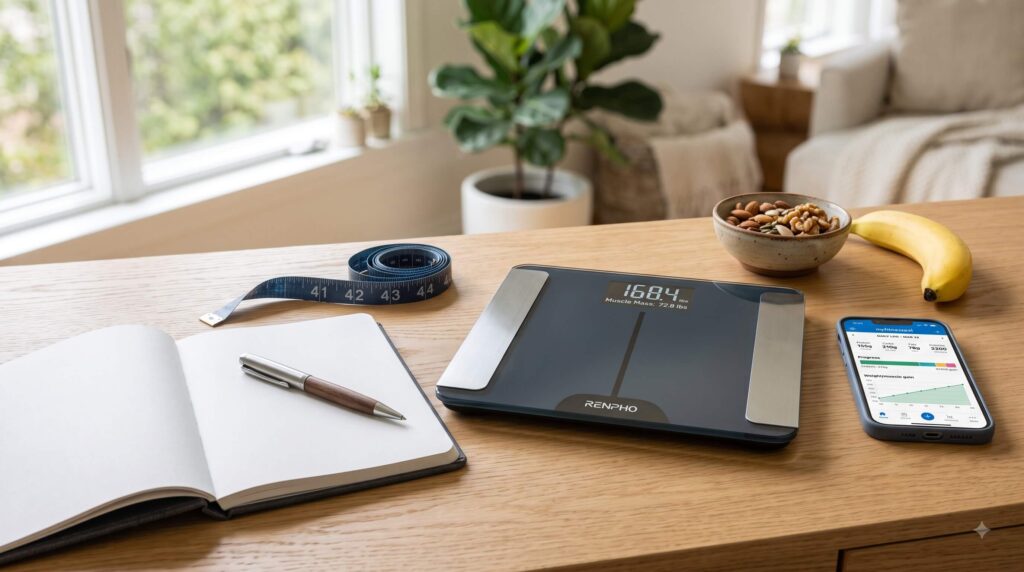
The Core Rules of the 30-Day Muscle Building Challenge
These are non-negotiable daily laws. Breaking them resets your consistency, not just your calories.
- Track every meal. What isn’t measured isn’t managed — log calories and protein daily.
- Drink your calories when appetite fails. Liquid meals (shakes, smoothies) are easier to consume than solid food when you’re too full to eat more.
- Hit progressive overload every session. Add a rep, a set, or a small amount of weight each week — standing still is regression.
- Sleep 8+ hours, non-negotiable. Growth hormone release peaks during deep sleep.
- Zero skipped workouts. Missing sessions breaks the stimulus-recovery-growth cycle this challenge depends on.
The Hour-by-Hour Daily Routine (Hydration, Meals & Movement)
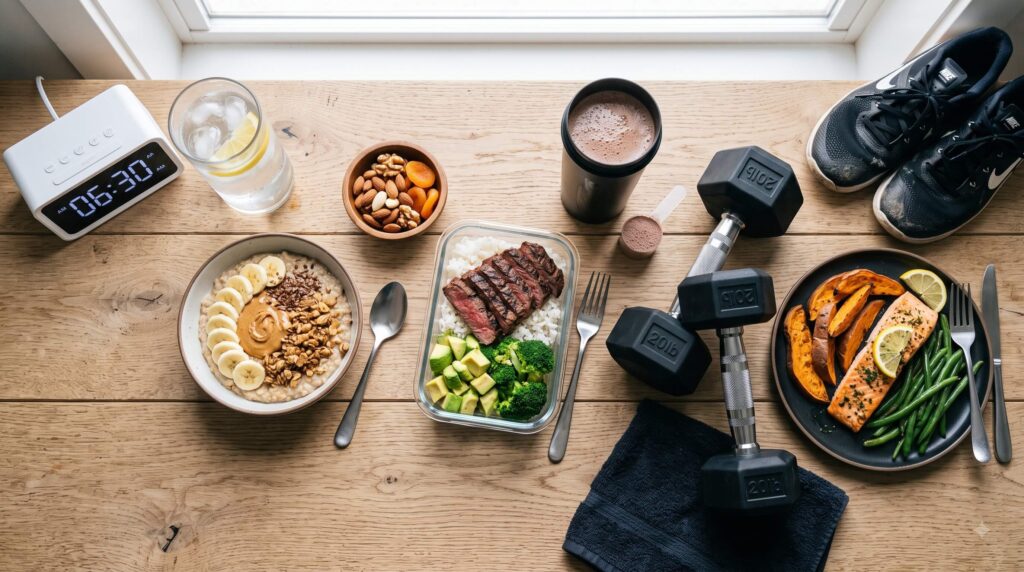
A precise 24-hour timeline for maximum nutrient absorption and muscle protein synthesis:
| Time | Activity |
|---|---|
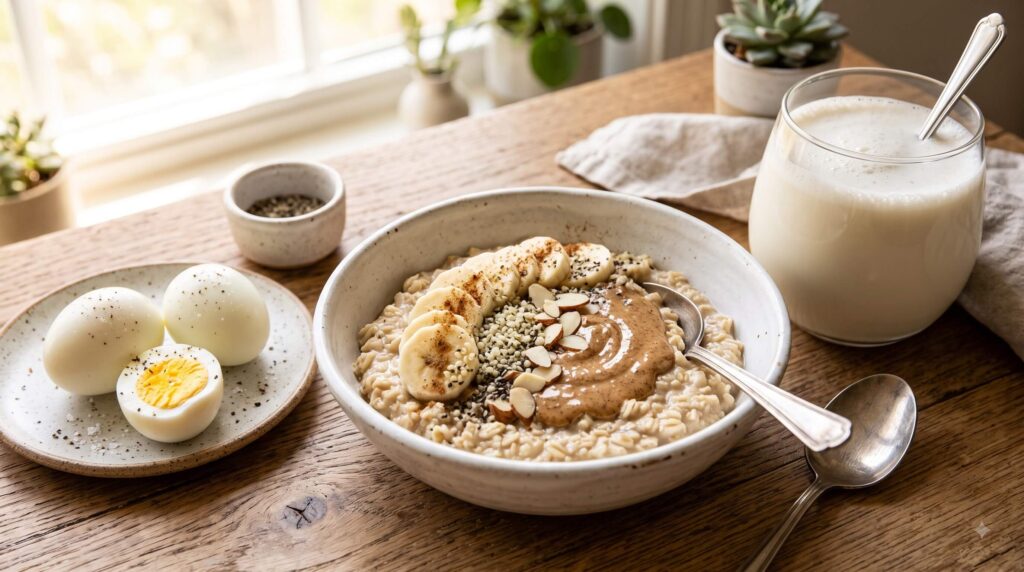
| 7:00 AM | Morning Anabolic Kickstart — Rehydrate immediately, then a high-calorie breakfast (500–700+ kcal) with high protein and complex carbs (eggs, oats, whole grain toast). |
| 10:30 AM | Mid-Morning Mass Gainer Snack/Shake — A dense nutrient hit (protein shake with nut butter and oats, or a full-fat yogurt bowl). |
| 1:30 PM | High-Carb, High-Protein Lunch — Complex carbs (rice, quinoa), lean meats or tofu/paneer, and healthy fats (olive oil, avocado). |
| 4:30 PM | Pre-Workout Fuel — Fast-acting carbs plus sodium (banana, a small amount of white rice, or fruit juice) for peak pumps and training energy. |
| 6:00 PM | Gym Workout Session — Structured resistance training (see the blueprint below). |
| 7:30 PM | Post-Workout Anabolic Window — A protein and simple-carb shake to replenish glycogen and kickstart recovery. |
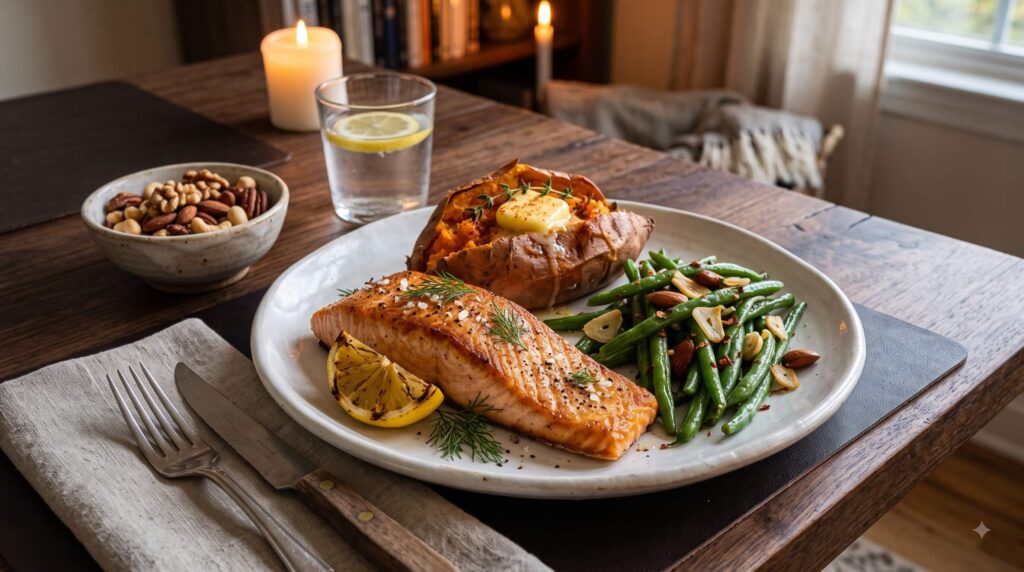
| 9:00 PM | Calorie-Dense Dinner — Your most complete, unhurried meal of the day. |
| 10:30 PM | Bedtime Slow-Digesting Protein — Casein, Greek yogurt, or cottage cheese with a small amount of healthy fat to fuel overnight muscle repair. |
Macro Breakdown, Calorie Formulas & High-Calorie Recipes
Calorie Surplus Formula
- Men: Bodyweight (lbs) × 16–18 = daily target calories
- Women: Bodyweight (lbs) × 14–16 = daily target calories
Example: A 150 lb man targets roughly 2,400–2,700 kcal/day.
Macro Ratios
- Protein: 1–1.2g per lb of bodyweight
- Carbohydrates: 45–55% of total calories
- Fats: 25–30% of total calories
High-Calorie Recipes
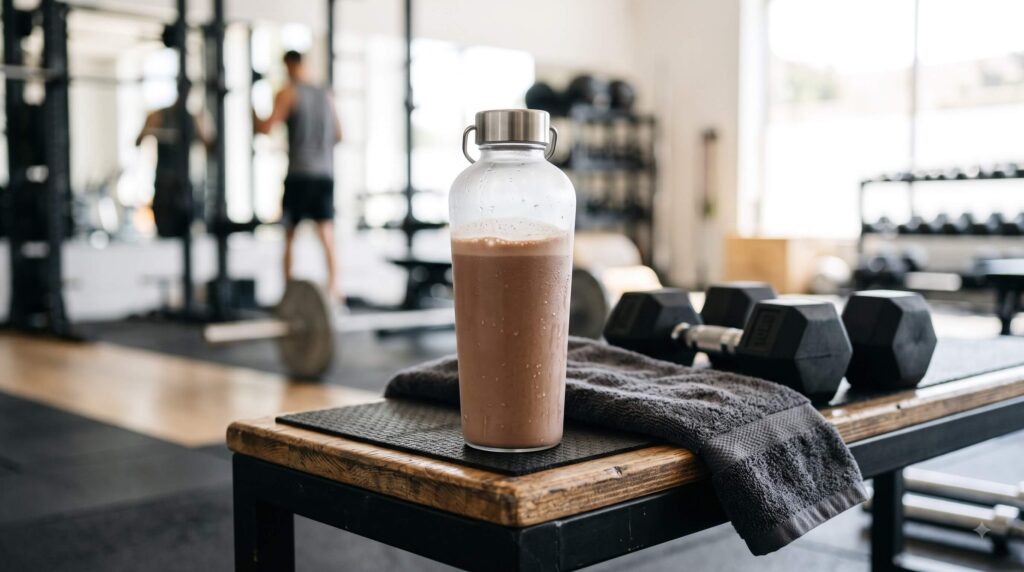
The Ultimate 800-Calorie High-Protein Smoothie
- 1 cup rolled oats
- 2 tbsp peanut butter
- 1 large banana
- 1–2 scoops whey or plant-based protein
- 1.5–2 cups whole milk (or fortified plant milk)
- 1 tbsp chia seeds
Blend until smooth — this single shake covers a major share of your daily surplus.
Meal Density Examples
- Non-vegetarian: Rice + grilled chicken + avocado + olive oil drizzle + roasted sweet potatoes
- Vegetarian: Rice + paneer or tofu + avocado + olive oil drizzle + roasted sweet potatoes

Dual-Gender Gym Workout Blueprint
Weekly Split: 4–5 days of gym training, 2 days of active recovery or full rest.
For Men
Focus on heavy compound lifts to maximize the hypertrophy and strength response:
- Squats
- Bench Press
- Deadlifts
- Overhead Press
- Heavy Barbell/Dumbbell Rows
For Women
Focus on targeted hypertrophy without excess midsection fat gain:
- Lower body emphasis: hip thrusts, Romanian deadlifts, walking lunges, leg press
- Upper body shaping: incline dumbbell press, lat pulldowns, seated rows
- Core stability: planks, cable woodchoppers, dead bugs
Progressive Overload Rules
- Log every set: weight, reps, and how many reps you had left in the tank (RIR).
- Add either one more rep or a small weight increase each week on your main lifts.
- If you fail to add anything for two consecutive sessions, check your recovery (sleep, calories) before assuming you’ve hit a plateau.
Mindset Shift: How to Overcome Appetite Fatigue & Plateaus
When you feel too full to eat:
- Switch to liquid calories — shakes and smoothies go down easier than solid food.
- Add calorie-dense toppers to meals you’re already eating: a spoon of nut butter, a drizzle of olive oil, or a handful of nuts.
- Split larger meals into smaller, more frequent ones if three big meals feel impossible.
If the scale stops moving at Day 14:
- Recalculate your calorie target against your current (heavier) bodyweight.
- Increase daily calories by 150–200 kcal and reassess after 5–7 days.
- Double-check your training log — a stalled scale combined with stalled lifts usually points to under-eating or under-recovering, not a “genetic plateau.”
FAQ Section
What if I start gaining belly fat? Some fat gain alongside muscle is normal in a surplus. If it feels excessive, trim your surplus by 100–200 calories rather than cutting altogether — this keeps muscle growth going while slowing fat accumulation.
Can I do this with bodyweight exercises at home? Yes, though progress will be slower without added external load. Prioritize high-rep bodyweight compound movements (push-ups, pistol squats, pull-ups, Bulgarian split squats) and add resistance bands or a weighted backpack as you advance.
How fast should the scale move per week? Aim for 0.25–0.5% of your bodyweight per week. Faster gains usually mean excess fat, not muscle.
Do I need mass gainer supplements? No — they’re a convenience tool, not a requirement. Whole food and homemade high-calorie shakes can fully replace commercial mass gainers if you’re consistent with tracking.
Your Next Step
Bookmark this page, print your daily routine, and post your Day 1 starting weight and your 30-day goal in the comments. Thirty days of consistency starts with today’s first meal — don’t skip it.