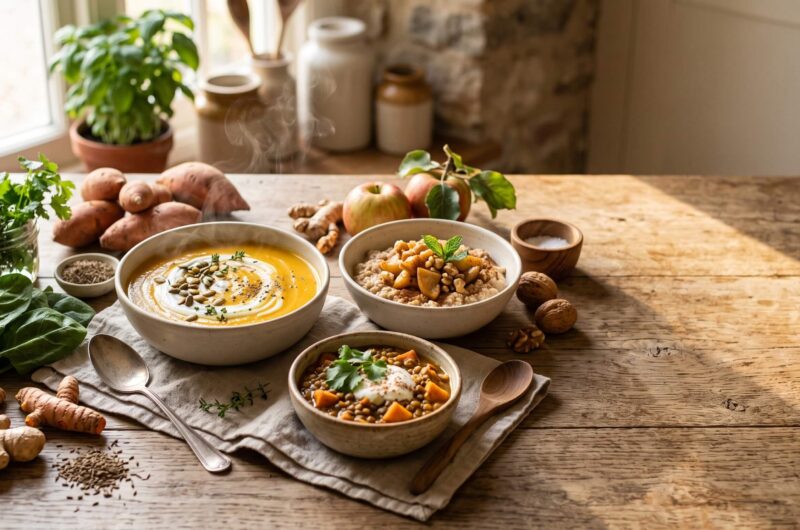

What If Your Meals Could Nourish More Than Your Body?
For many people, eating is more than simply getting food on the table. It can be a chance to slow down, practice gratitude, and bring more intention into an otherwise busy day.
In the Bhakti tradition and Krishna Consciousness, this idea takes on a particularly meaningful form through prasadam—food that has been lovingly prepared and offered to Krishna before it is eaten.
In this tradition, food is approached with care and devotion. Vegetarian ingredients are emphasized, and foods such as meat, fish, eggs, onion, and garlic are generally avoided in traditional ISKCON cooking.
The focus isn’t simply on what is on the plate. It’s also on the mindset behind preparing, offering, and eating the meal.
That’s where the idea of karma-free eating comes in. Within this spiritual tradition, consciously preparing vegetarian food, offering it to Krishna, and eating it as prasadam is understood as a way of cultivating devotion and reducing the karmic consequences associated with ordinary food consumption.
For someone used to rushed breakfasts, takeout lunches, and late-night dinners, this approach can also offer something wonderfully practical: an opportunity to make meals more intentional.
The Golden Window: Sattvic Meal Timing & Digestive Fire (Agni)
Traditional Ayurvedic teachings describe digestion through the concept of Agni, often translated as “digestive fire.” According to this traditional framework, digestion is influenced by daily rhythms and is generally considered stronger around midday than early in the morning or late at night.
These ideas are part of traditional Ayurvedic philosophy rather than established medical rules, so think of them as a mindful eating framework rather than a prescription.
| Meal | Traditional Timing | Traditional Approach |
|---|---|---|
| 🌅 Breakfast | 7:30–9:00 AM | Keep it warm, nourishing, and relatively light. |
| ☀️ Lunch | 12:00–1:30 PM | Make this the most substantial meal of the day. |
| 🌙 Dinner | 6:00–7:30 PM | Choose a lighter meal and avoid eating too close to bedtime. |
Breakfast (7:30–9:00 AM) — A Gentle Start
A warm bowl of oats, cooked grains, fresh fruit, or another simple breakfast can make an easy beginning to the day.
Rather than eating while scrolling through your phone or rushing out the door, try giving breakfast your full attention—even if you only have 10 minutes.
Lunch (12:00–1:30 PM) — The Main Meal
Traditional Ayurvedic thinking places particular importance on the midday meal.
This is a natural place for a more substantial combination of grains, legumes, vegetables, and healthy fats. For a busy American schedule, a simple lentil stew or grain-and-vegetable bowl can make this approach surprisingly easy.
Dinner (6:00–7:30 PM) — Keep It Comfortable
A lighter evening meal can be easier to fit into a mindful nighttime routine.
Warm soups, cooked vegetables, or simple grain-based dishes work well when you don’t want something overly heavy. If possible, give yourself plenty of time between dinner and bedtime.
3 Comforting American Classics, Made Sattvic & Pure
You don’t need exotic ingredients or a specialty grocery store to experiment with sattvic-inspired cooking.
These three recipes use familiar supermarket ingredients and skip onion, garlic, mushrooms, meat, fish, and eggs.
Note: Ingredient practices can vary among different Hindu, yogic, Ayurvedic, and Vaishnava traditions. These recipes are inspired by common ISKCON-style cooking practices and are not intended to represent every tradition.
🍎 1. Morning Sunshine Apple-Cinnamon Oats
Best enjoyed: Around 8:00 AM
Prep: 5 minutes
Cook: 10 minutes
Serves: 2
Warm, creamy, and lightly spiced, these apple-cinnamon oats are an easy breakfast for a busy weekday morning.

Ingredients
- 1 cup rolled oats
- 2 cups almond milk or whole milk
- 1 Honeycrisp apple, diced
- 1/2 teaspoon ground Ceylon cinnamon
- 1/4 teaspoon ground cardamom
- 1 tablespoon pure maple syrup
- A small handful of toasted walnuts
Instructions
- Add the milk and oats to a small saucepan and bring to a gentle simmer over medium heat.
- Stir in the diced apple, cinnamon, and cardamom.
- Reduce the heat and cook for 5–7 minutes, stirring occasionally, until the oats are creamy and the apple has softened.
- Divide between two bowls.
- Drizzle with maple syrup and finish with toasted walnuts.
Simple tip: If you prefer softer apples, add them at the beginning. For more texture, stir half of the apple in during cooking and use the rest as a topping.
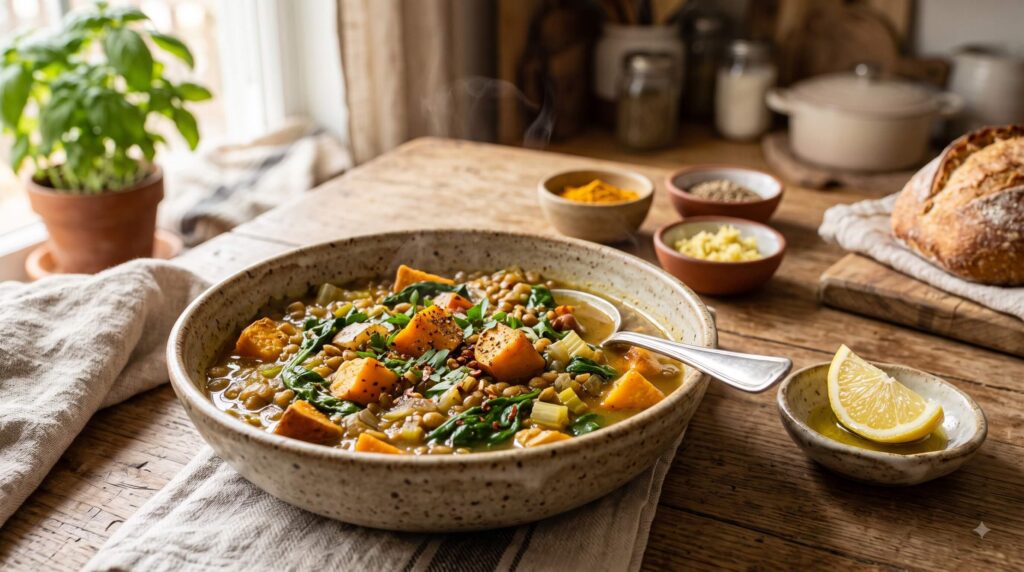
🍠 2. Hearty Midday Sweet Potato & Lentil Stew
Best enjoyed: Around 12:30 PM
Prep: 10 minutes
Cook: 25 minutes
Serves: 4
This cozy lentil stew gets plenty of flavor from ginger, cumin, turmeric, and sweet potatoes—without relying on onion or garlic.
Ingredients
- 1 cup brown or green lentils, rinsed
- 2 medium sweet potatoes, peeled and cubed
- 1 tablespoon ghee or coconut oil
- 1 teaspoon freshly grated ginger
- 1 teaspoon ground cumin
- 1/2 teaspoon ground turmeric
- 4 cups vegetable broth
- 2 cups baby spinach
- Salt, to taste
- Freshly ground black pepper, to taste
- Lemon juice, to finish
Instructions
- Warm the ghee or coconut oil in a Dutch oven over medium heat.
- Add the ginger, cumin, and turmeric. Cook for about 30 seconds, stirring constantly.
- Add the sweet potatoes, rinsed lentils, and vegetable broth.
- Bring everything to a boil, then reduce the heat.
- Cover and simmer for 20–25 minutes, or until the lentils and sweet potatoes are tender.
- Stir in the spinach and cook until just wilted.
- Season with salt and black pepper, then finish with a squeeze of fresh lemon juice.
Meal-prep tip: Store leftovers in airtight containers in the refrigerator and reheat gently when you’re ready for lunch.
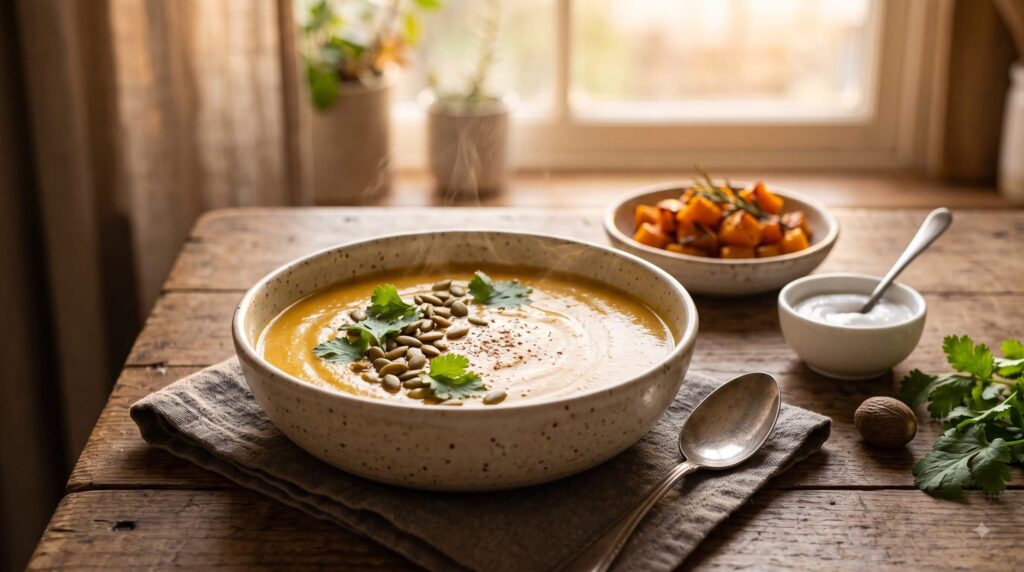
🎃 3. Sunset Creamy Roasted Butternut Squash Soup
Best enjoyed: Around 6:30 PM
Prep: 10 minutes
Cook: 20 minutes
Serves: 3
Silky butternut squash, warming spices, and creamy coconut milk make this an especially comforting dinner for a quiet evening.
Ingredients
- 1 medium butternut squash, peeled and cubed, or 1 bag of pre-cut squash
- 1 tablespoon olive oil
- 1/2 teaspoon ground coriander
- A pinch of freshly grated nutmeg
- 3 cups vegetable broth
- 1/3 cup coconut cream
- Salt, to taste
- Fresh cilantro or pumpkin seeds, for garnish
Instructions
- Warm the olive oil in a soup pot over medium-low heat.
- Add the coriander and nutmeg and cook for about 15 seconds.
- Add the cubed butternut squash and vegetable broth.
- Bring to a gentle simmer and cook for 15–20 minutes, until the squash is fork-tender.
- Blend the soup with an immersion blender until smooth. Use caution when blending hot liquids.
- Stir in the coconut cream and season with salt.
- Garnish with fresh cilantro or toasted pumpkin seeds before serving.
Easy shortcut: Pre-cut butternut squash from the grocery store can save significant prep time on busy evenings.
The Sacred Touch: The Spirit of Offering Prasadam
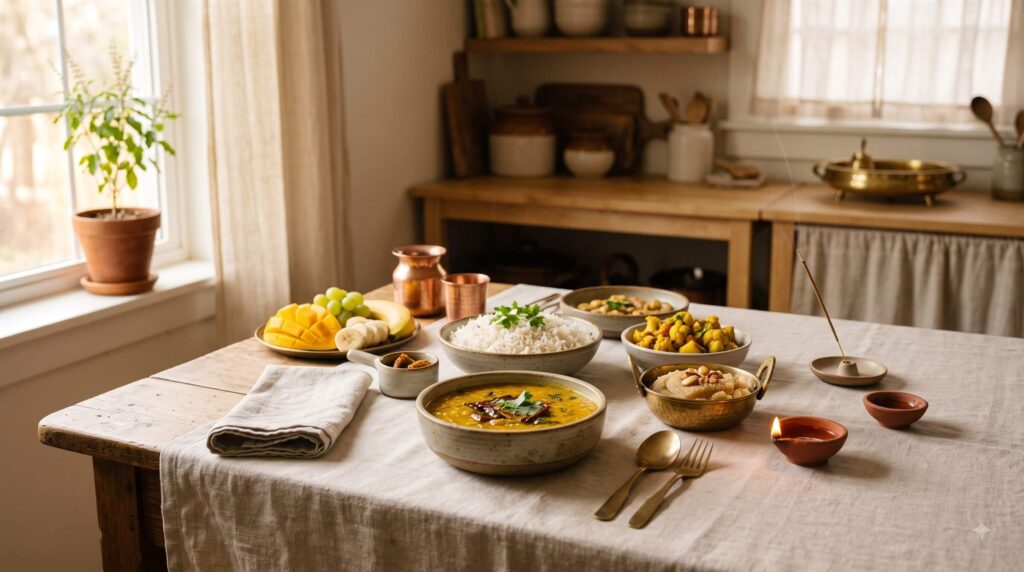
One of the most meaningful parts of prasadam is what happens before the meal is eaten.
In the ISKCON tradition, devotees prepare vegetarian food and offer it to Krishna with devotion before eating it. After the offering, the food is honored as prasadam, or Krishna’s mercy.
The practice is not simply about following a recipe. It is about changing the relationship we have with food.
Instead of thinking, I’m making dinner because I’m hungry, the process becomes an opportunity to practice service, gratitude, and mindfulness.
If you are exploring this tradition for the first time, you can simply begin by slowing down before a meal and taking a moment of gratitude.
For those following ISKCON practices, learning the traditional offering process and prayers from an authentic ISKCON teacher or center is the best way to understand the practice accurately.
Frequently Asked Questions
What is karma-free eating?
Within Krishna Consciousness, karma-free eating refers to the spiritual practice of preparing vegetarian food, offering it to Krishna with devotion, and accepting it as prasadam. It is a religious and philosophical concept rather than a medical or nutritional classification.
Why do sattvic recipes avoid onion and garlic?
In some yogic, Ayurvedic, and Vaishnava traditions, onion and garlic are avoided because they are classified as foods associated with qualities that can disturb or stimulate the mind. ISKCON-style cooking commonly avoids them as part of its devotional food practices.
What is Agni in Ayurveda?
Agni is an Ayurvedic concept commonly translated as “digestive fire.” Traditional Ayurveda describes Agni as an important part of digestion and overall well-being and connects its activity with daily rhythms. These ideas belong to traditional Ayurvedic philosophy and should not be confused with established medical guidance.
Can I make sattvic-inspired recipes with regular grocery-store ingredients?
Absolutely. You can make many simple sattvic-inspired meals with ingredients found at an ordinary American supermarket.
Oats, apples, lentils, sweet potatoes, spinach, butternut squash, ginger, cumin, turmeric, and other familiar ingredients can all become part of a simple vegetarian kitchen.
Are these recipes vegan?
Not all of them. The oatmeal can be made vegan with plant-based milk, and the lentil stew can use coconut oil instead of ghee. The butternut squash soup uses coconut cream but should be checked against the specific ingredients in your vegetable broth.
If you follow strict dietary or religious guidelines, always check packaged ingredients and adapt the recipes according to your tradition.
A More Mindful Way to Eat
You don’t have to completely change your kitchen overnight.
Start with one simple meal.
Cook it without rushing. Choose ingredients intentionally. Put your phone away for a few minutes. Take a moment of gratitude before eating. And if you are exploring Krishna Consciousness, learn more about the traditional practice of offering food to Krishna.
For many people, that simple shift—from eating automatically to eating intentionally—is where the deeper meaning of food begins.
Save this guide to your Mindful Eating or Sattvic Recipes board so you can return to these simple recipes whenever you need a peaceful, nourishing meal idea.