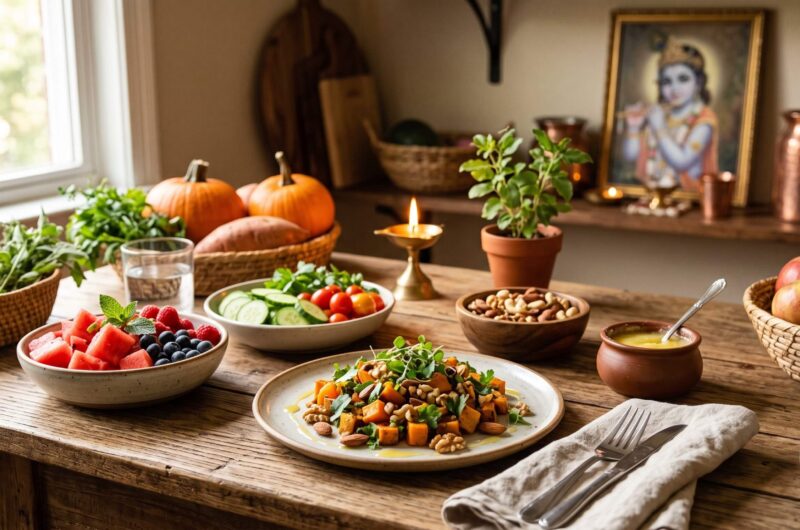

If you’ve ever wandered into an ISKCON temple room on a Sunday feast day and felt an inexplicable sense of calm wash over you before you even took a bite of prasadam, you already understand something that Vedic sages have taught for thousands of years: food is not just fuel — it’s consciousness.
This post is your practical, no-fluff guide to two pillars of a Krishna conscious kitchen: seasonal sattvic eating (Ritu-Charya) and Ekadashi fasting. Whether you’re a longtime bhakti practitioner or a curious plant-based eater looking to deepen your relationship with food, you’ll walk away with real recipes, real rules, and a real understanding of why this ancient system still makes so much sense today.
1. The Wisdom of the Seasons (Ritu-Charya): Why Eating With Nature Grounds You Spiritually
In Vedic thought, you are not separate from nature — you’re a small, dynamic expression of it. Ritu-Charya (literally, “seasonal conduct”) is the practice of aligning your plate with what the earth is naturally producing right now, in your climate, in this moment.
Here’s the simple American translation: your gut and your spirit both crave rhythm. When you eat a hothouse tomato in January or an imported mango in a New England winter, your body has to work overtime to process something out of sync with the season. When you eat what’s actually ripening outside your window, digestion becomes easier, energy becomes steadier, and — practitioners say — the mind becomes quieter and more available for japa, meditation, and seva (service).
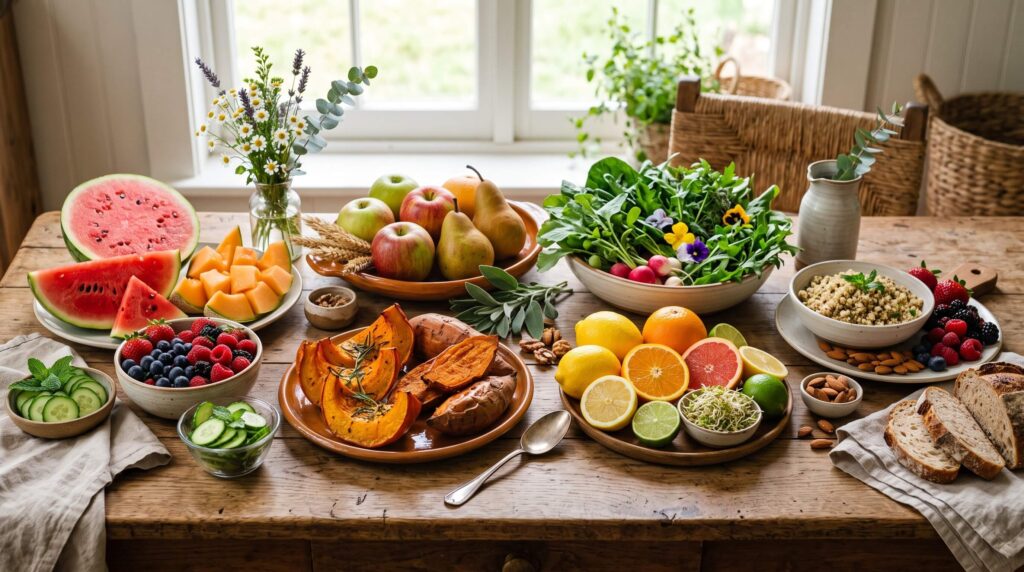
The core logic is beautifully simple:
- Summer (hot, expansive energy): Your body needs cooling, hydrating, light foods. Think watermelon, cantaloupe, cucumbers, berries, coconut water, and fresh mint. These foods calm excess heat (what Ayurveda calls pitta) and prevent that sluggish, irritable “too hot to function” feeling.
- Autumn & Winter (cold, contracting energy): Your body craves warmth, grounding, and healthy fat. Think winter squash, sweet potatoes, root vegetables, apples, pears, warming spices like cinnamon and ginger, and ghee. These foods build reserves and keep your digestive fire (agni) strong when the outside world turns cold and dry.
- Spring (damp, heavy energy after winter): Your body needs to shed winter’s density. Think bitter greens (dandelion, arugula, mustard greens), citrus, and light legumes. These foods gently detoxify and lift the heaviness that builds up over winter.
You don’t need to be a Sanskrit scholar to apply this. Next time you’re at the farmers market, ask yourself: “Is this what’s actually in season here, right now?” If yes — that’s Ritu-Charya in action, and it’s one of the simplest daily offerings you can make to both your body and Krishna.
2. Decoding Ekadashi for Beginners: The Twice-Monthly Reset
If seasonal eating is the rhythm, Ekadashi is the reset button — and it’s one of the most powerful, practical tools in the bhakti toolkit.
What Exactly Is Ekadashi?
Ekadashi simply means “the eleventh day.” It falls on the 11th day after both the new moon and the full moon, which means it comes around twice every lunar month — roughly every two weeks. On this day, devotees observe a special fast dedicated to Lord Vishnu/Krishna, using the day to redirect energy away from heavy digestion and toward spiritual focus.
Why the Grain-and-Bean Fast?
Here’s where it gets interesting for anyone into gut health: on Ekadashi, devotees abstain specifically from grains and beans (legumes). Traditional teachings explain this is because these foods are considered to harbor subtle negative influences on this particular lunar day, tying the mind more heavily to bodily/material consciousness. But there’s also a very tangible, modern wellness angle:
- Digestive rest: Grains and legumes are the most digestion-intensive foods in a typical plant-based diet. Skipping them for one day, twice a month, gives your gut a genuine break.
- Natural detox rhythm: Many nutritionists now independently recommend cyclical fasting patterns for metabolic health — Ekadashi essentially built this into spiritual practice thousands of years before “intermittent fasting” became a wellness buzzword.
- Mental clarity: Devotees consistently report sharper focus for meditation, mantra japa, and reading on Ekadashi, likely from the lighter digestive load freeing up energy.
The Exact Rules (No Guesswork)
To keep it simple and strict, on Ekadashi you completely avoid:
- ❌ Rice (all forms)
- ❌ Wheat (all forms — no bread, pasta, flour)
- ❌ Oats
- ❌ Lentils
- ❌ Beans (all varieties, including chickpeas)
- ❌ Mustard seeds
- ❌ Commercial/packaged starches (most contain hidden grain or bean derivatives)
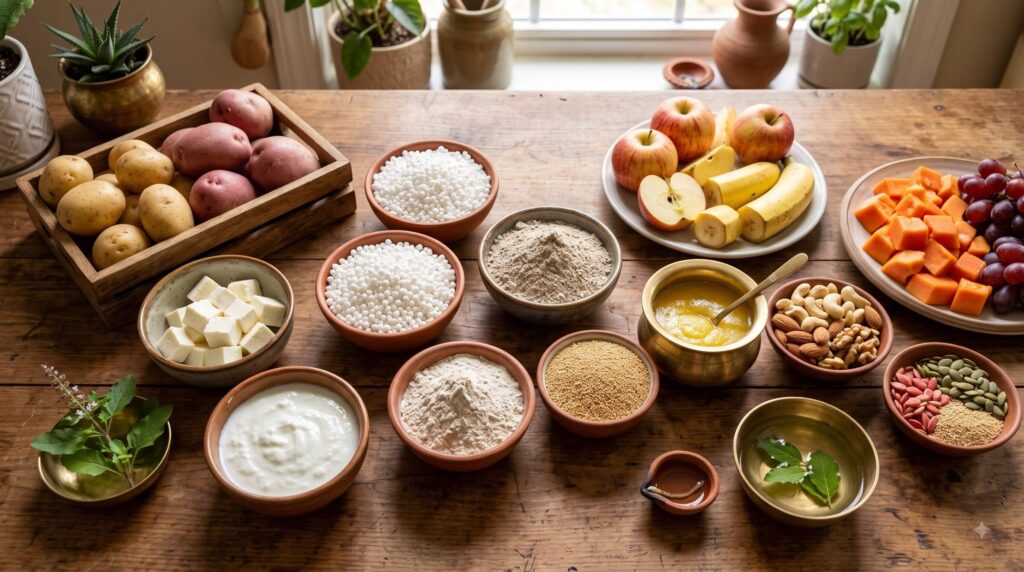
What’s allowed instead? Fruits, most vegetables, dairy (milk, yogurt, paneer, ghee), nuts, seeds, potatoes, and Ekadashi-approved starches like buckwheat (kuttu), tapioca (sabudana), water chestnut flour (singhara), and amaranth (rajgira). These aren’t true grains botanically, which is exactly why they’re the backbone of the recipes below.
3. Four Seasonal & Ekadashi-Friendly Recipes You’ll Actually Want to Make
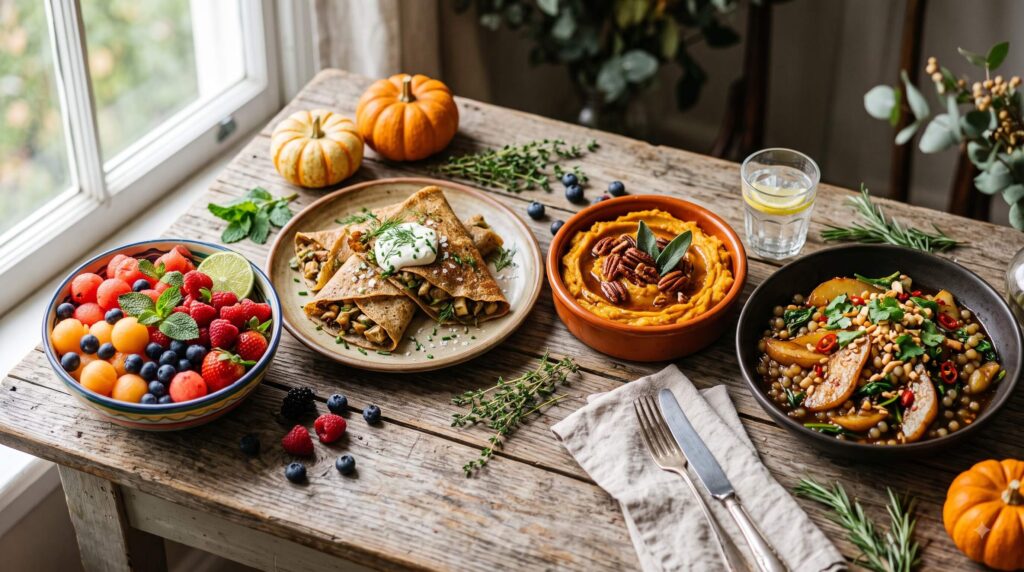
🍉 Recipe 1: High-Summer Hydration Bowl
Grain-free, cooling, and Ekadashi-safe — perfect for scorching afternoons.
Ingredients:
- 2 cups cubed watermelon
- 1 cup cubed cantaloupe
- 1 cup fresh blueberries or raspberries
- 2 tablespoons chia seeds or pumpkin seeds, soaked in water for 20 minutes
- ¼ cup fresh mint leaves, torn
- 1 tablespoon fresh lime juice
- 1 tablespoon raw honey
- Pinch of rock salt (optional, enhances sweetness)
Instructions:
- Layer the watermelon, cantaloupe, and berries in a wide bowl.
- Drain the soaked seeds and scatter them over the fruit.
- Whisk the lime juice, honey, and rock salt together in a small bowl until combined.
- Drizzle the lime-honey mixture generously over the fruit.
- Top with torn fresh mint and serve immediately, chilled.
Offer this bowl fresh — never after it’s sat out too long in summer heat, as freshness is part of the offering itself.
🥞 Recipe 2: Crispy Ekadashi Buckwheat (Kuttu) Crepes
Savory, satisfying, and 100% grain-free — a true Ekadashi staple.
Ingredients: For the crepes:
- 1 cup kuttu (buckwheat) flour
- 1 cup water (adjust for thin batter consistency)
- ½ teaspoon rock salt
- 1 tablespoon ghee, for cooking
For the filling:
- 3 medium potatoes, boiled and mashed
- 1 tablespoon ghee
- ½ teaspoon cumin seeds
- 1 teaspoon grated fresh ginger
- ¼ cup chopped cilantro
- ½ teaspoon black pepper
- Rock salt to taste
Instructions:
- Whisk the kuttu flour, water, and rock salt into a smooth, thin batter. Let it rest for 10 minutes.
- Heat ghee in a skillet for the filling; add cumin seeds and let them sizzle for 30 seconds.
- Stir in the ginger, then fold in the mashed potatoes, black pepper, and rock salt. Mix in the cilantro and set aside.
- Heat a nonstick or cast-iron pan and brush lightly with ghee.
- Pour a thin layer of batter, swirling to coat the pan like a crepe.
- Cook 2 minutes until the edges crisp and lift easily, then flip and cook 1 more minute.
- Spoon the potato filling onto one half, fold, and serve hot.
🎃 Recipe 3: Golden Sweet Pumpkin Mash with Spiced Ghee & Pecans
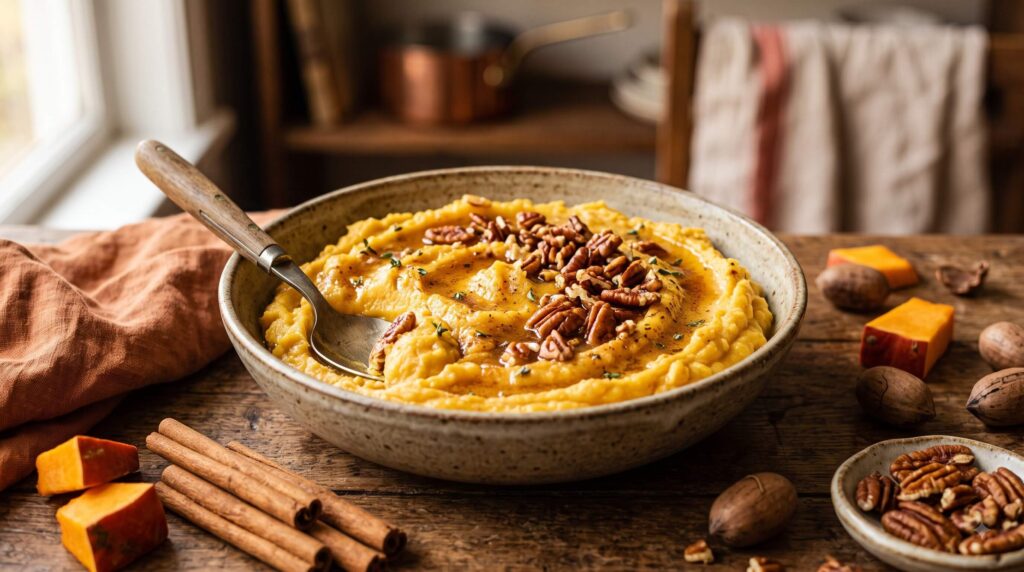
A warming, grounding autumn/winter classic.
Ingredients:
- 3 cups cubed sugar pumpkin or butternut squash
- 2 tablespoons ghee
- ½ teaspoon ground cinnamon
- ¼ teaspoon ground nutmeg
- ¼ teaspoon black pepper
- ¼ cup chopped pecans
- 1 tablespoon maple syrup
- Rock salt to taste
Instructions:
- Steam or boil the pumpkin cubes until fork-tender, about 15 minutes.
- Drain well and mash until smooth (a little texture is fine).
- Melt 1 tablespoon ghee in a small pan; toast the pecans for 2–3 minutes until fragrant, then set aside.
- In the same pan, melt the remaining ghee and bloom the cinnamon, nutmeg, and black pepper for 30 seconds.
- Fold the spiced ghee and maple syrup into the mashed pumpkin.
- Top with the toasted pecans and a light pinch of rock salt just before serving.
🍚 Recipe 4: Fasting Power Fuel — Tapioca (Sabudana) Pear Stir-Fry
Light, crisp, and deeply satisfying — the ultimate Ekadashi energy dish.
Ingredients:
- 1 cup sabudana (tapioca pearls), soaked overnight in just enough water to cover
- 2 tablespoons ghee
- ½ teaspoon cumin seeds
- 1 firm pear, diced small
- ¼ cup roasted peanuts, coarsely crushed
- 1 tablespoon lime juice
- 2 tablespoons chopped cilantro
- Rock salt (sendha namak) to taste
- Black pepper to taste
Instructions:
- Drain the soaked sabudana thoroughly — excess water will make it gummy, not crisp.
- Heat ghee in a wide skillet over medium heat; add cumin seeds and let them sizzle.
- Add the diced pear and sauté for 2 minutes until just softened at the edges.
- Add the drained sabudana, stirring gently and constantly for 5–7 minutes until the pearls turn translucent.
- Season with rock salt and black pepper as you stir.
- Fold in the crushed peanuts and lime juice off the heat.
- Garnish with fresh cilantro and serve warm.
4. Guidelines on Offering (Naivedya): The Small Details That Matter Most
Every sattvic dish you prepare — seasonal or Ekadashi — can become naivedya, food offered to Krishna before it’s eaten. A few key principles keep the offering authentic:
- Use rock salt (sendha namak), not sea salt or table salt. Rock salt is considered a “fasting-friendly” and purer mineral salt, unprocessed and free from additives.
- Use black pepper instead of chili flakes or chili powder for heat. Pepper is considered sattvic, while chili is often classified as rajasic (overly stimulating) in Ayurvedic and Vedic dietary frameworks.
- Place a single Tulasi (holy basil) leaf on or beside the offering before presenting it to Krishna. Tulasi is considered so sacred in Vaishnava tradition that no offering is considered complete without it.
Offer the food with a sincere heart, a short prayer of gratitude, and a moment of stillness — then honor it as prasadam, sanctified food, when you sit down to eat.
Bringing It All Together
Seasonal sattvic living and Ekadashi fasting aren’t rigid rulebooks — they’re an invitation to eat in rhythm with nature and in remembrance of the divine, twice a month and every day in between. Start small: pick one seasonal swap this week, try one Ekadashi-compliant recipe on the next fasting day, and notice how your body and mind respond.
Hare Krishna, and happy cooking! 🙏