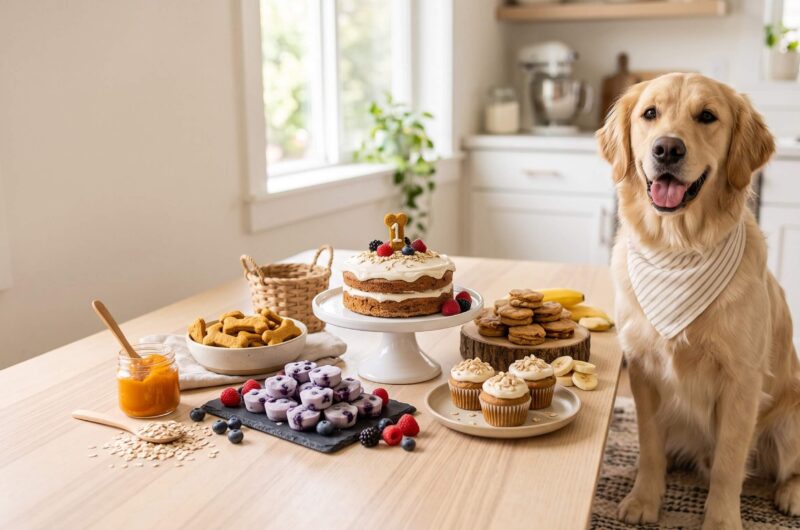

How to Make Dog Bakery Treats Look Beautiful
Dog treats don’t have to look boring.
If you’re creating treats for a birthday party, pet photos, Pinterest content, or a special celebration, presentation can make a huge difference.
Use Small Shapes
Bone, paw, heart, and star-shaped cutters instantly make homemade treats look more like bakery products.
Keep Colors Natural
Pumpkin creates a warm orange color.
Blueberries add purple-blue accents.
Carrots provide orange highlights.
Bananas and yogurt create lighter colors.
These natural ingredients can make a treat platter look colorful without artificial food coloring.
Create a Mini Dog Bakery Box
Place several small biscuits in a kraft paper box lined with parchment.
Add a simple handwritten label such as:
“Birthday Treats for Max”
or
“Homemade Pup Bakery”
Keep the presentation decorative but make sure your dog cannot eat packaging, ribbons, toothpicks, or other non-food items.
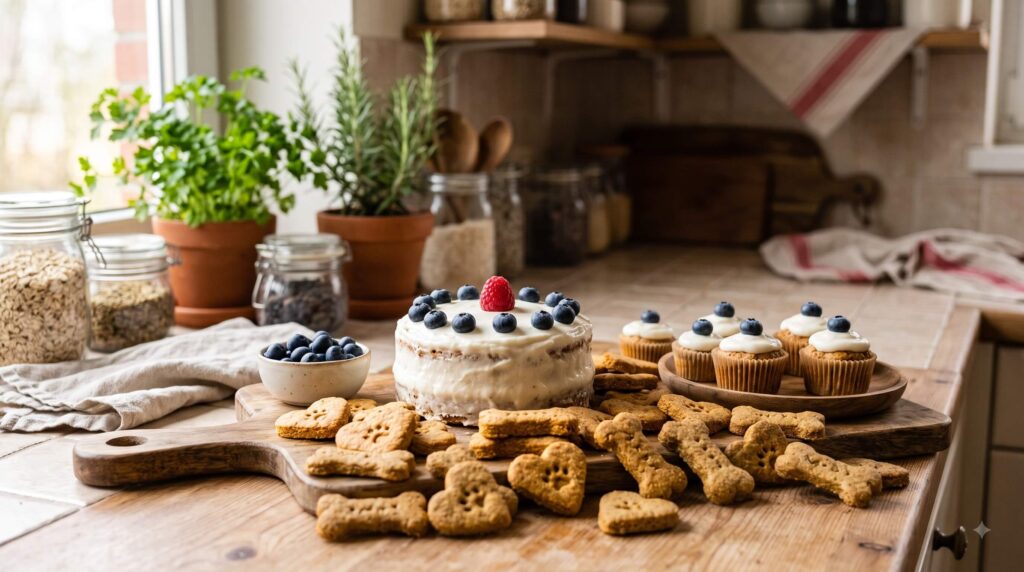
How to Store Homemade Dog Treats
Storage depends on the ingredients and recipe.
Baked biscuits that are thoroughly cooked and relatively dry generally keep longer than moist cakes or yogurt-based treats.
Refrigerator
Use the refrigerator for moist treats, pupcakes, yogurt-based toppings, and other recipes that require refrigeration.
Freezer
Frozen yogurt bites, banana treats, and other freezer-friendly recipes can be stored in airtight freezer containers.
Airtight Containers
Once baked treats are completely cool, store them in an appropriate airtight container.
Label the container with the preparation date.
When you’re unsure how long a homemade treat remains safe, it’s better to make a smaller batch rather than keeping it for an extended period.
How Many Homemade Treats Can a Dog Have?
Treats should generally make up only a small portion of a dog’s overall daily calorie intake.
The appropriate amount depends on factors such as:
- Dog size
- Age
- Activity level
- Existing health conditions
- Current diet
- Weight-management goals
- Ingredients used in the treat
A tiny frozen yogurt bite may be appropriate for one dog but excessive for another.
For dogs with diabetes, food allergies, pancreatitis, kidney disease, gastrointestinal problems, or other medical conditions, ask your veterinarian before introducing homemade treats.