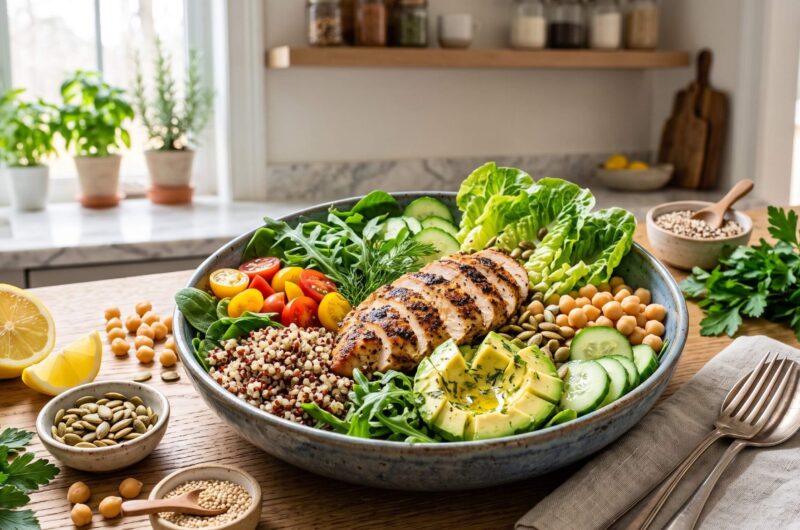

Tips for Building Your Own High-Protein Salad
Once you understand the basic formula, creating filling salads becomes much easier. Instead of following a recipe every time, build your bowl around a few simple components.
1. Start With a Protein
Chicken, salmon, tuna, eggs, Greek yogurt, cottage cheese, beans, chickpeas, lentils, edamame, and quinoa can all help turn vegetables into a more substantial meal.
2. Add Plenty of Vegetables
Use a combination of leafy greens and colorful vegetables. Romaine, spinach, kale, cabbage, carrots, cucumbers, tomatoes, peppers, and roasted vegetables all work well.
3. Include a Fiber-Rich Ingredient
Beans, lentils, chickpeas, quinoa, vegetables, fruits, nuts, and seeds can add fiber and make the salad more substantial.
4. Don’t Forget Healthy Fats
Avocado, nuts, seeds, and olive oil can add richness and help make a salad more satisfying.
5. Add Something Crunchy
Texture makes a huge difference. Try roasted chickpeas, pumpkin seeds, sunflower seeds, chopped peanuts, cabbage, carrots, or toasted nuts.
6. Make Dressing Separately for Meal Prep
If you’re preparing salads ahead of time, keep the dressing in a separate container. Add it right before eating to help prevent soggy greens and vegetables.
7. Batch-Cook Your Main Ingredients
One of the easiest ways to make healthy lunches during a busy week is to prepare several ingredients at once.
Cook a batch of quinoa, grill extra chicken, roast chickpeas, boil eggs, or prepare lentils ahead of time. Once those ingredients are ready, assembling a complete salad can take just a few minutes.
How to Meal Prep High-Protein Salads
Meal-prep salads don’t have to become boring or soggy.
The key is to layer ingredients strategically.
Start with sturdier ingredients such as beans, quinoa, chicken, or roasted vegetables. Add vegetables that can handle refrigeration, followed by leafy greens. Keep delicate toppings, crunchy ingredients, and dressing separate whenever possible.
For example, you can prepare four containers with quinoa, chicken, cucumber, tomatoes, and greens. Store the dressing and crunchy toppings separately.
Then simply combine everything when you’re ready for lunch.
This approach also makes it easy to change the flavor throughout the week. Use a lemon-herb dressing one day, a peanut-lime dressing the next, and a balsamic vinaigrette after that.
The base ingredients can stay similar while the flavor profile changes.
What Makes a Salad Actually Filling?
A satisfying salad usually needs more than vegetables.
Think of your bowl as a combination of protein + fiber + vegetables + healthy fats + texture.
Protein can come from chicken, fish, eggs, beans, lentils, dairy, or plant-based ingredients.
Fiber can come from vegetables, legumes, whole grains, fruits, nuts, and seeds.
Healthy fats can come from avocado, olive oil, nuts, and seeds.
When these components work together, your salad becomes a complete meal rather than simply a side dish.