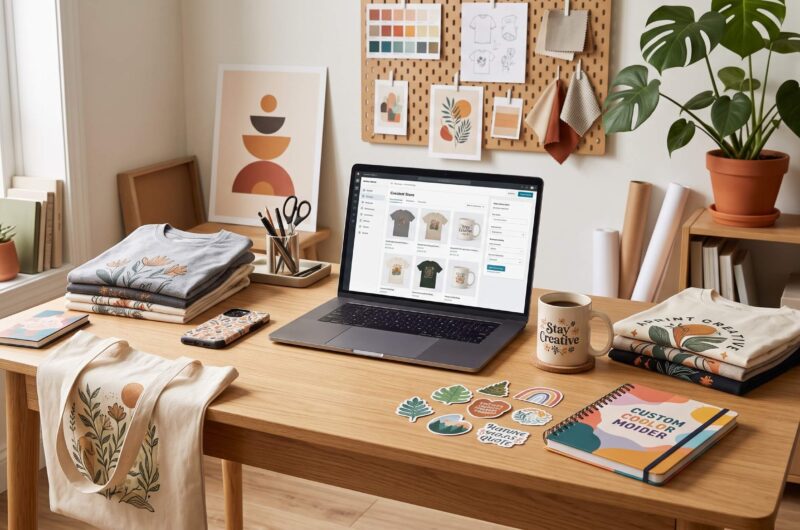

What if you could sell your own T-shirts, mugs, posters, and phone cases without buying inventory, renting storage, or shipping a single parcel? That is exactly what print on demand (POD) offers, and it is one of the most beginner-friendly ways to start an online business today.
The real challenge is not the setup. It is knowing what to sell. This free guide is packed with print on demand ideas for beginners, along with the products, platforms, design tools, and marketing tactics you need to launch with confidence. Whether you want a side income or a full brand, you will find a clear starting point below.
What Is Print on Demand?
Print on demand is a business model where products are printed only after a customer places an order. You create a design, upload it to a POD platform, and list it for sale. When someone buys, the supplier prints the item, packs it, and ships it directly to the customer. You keep the difference between your selling price and the production cost.
Because you never hold stock, you avoid the biggest risks of traditional retail: unsold inventory, upfront bulk costs, and warehouse headaches.
Why Print on Demand Is Great for Beginners
Before diving into ideas, it helps to understand why so many first-time sellers choose this model.
- Low startup cost. Most platforms are free to join. You pay only when an order comes in.
- No inventory or shipping. The supplier handles printing, packaging, and delivery.
- Easy to test. You can launch dozens of designs and see which ones sell before investing further.
- Work from anywhere. All you need is a laptop and an internet connection.
- Scalable. Once a design works, you can put it on many products without extra effort.
The trade-off is lower profit margins than bulk manufacturing and less control over shipping times and quality. That is why choosing a smart niche and a reliable supplier matters so much.
How Print on Demand Works: 5 Simple Steps
- Choose a niche and idea. Decide who you are designing for.
- Create your designs. Use free or low-cost tools, or hire a designer.
- Pick a POD platform and products. Upload your artwork onto items such as shirts, mugs, or tote bags.
- Connect a sales channel. Sell through a marketplace like Etsy or your own store on Shopify or WooCommerce.
- Promote and optimise. Drive traffic, collect reviews, and refine your best sellers.
How to Choose a Profitable Print on Demand Niche
A good niche sits where three things overlap: passion, demand, and low-to-moderate competition. Ask yourself:
- Is there an audience that identifies strongly with this topic (hobbyists, professions, communities)?
- Do people already buy related products?
- Can I create designs that feel specific rather than generic?
The more specific you go, the easier it is to stand out. “Dog lover” is crowded. “Dachshund mom who loves hiking” is far more targeted. To validate an idea, search it on Etsy, Amazon, and Pinterest. If you see steady listings with reviews, demand exists. If you see thousands of identical designs, look for a fresh angle.

20 Print on Demand Ideas for Beginners
Here are 20 niches and design concepts that work well for newcomers. Each one has an engaged audience and room for creative variation.
Hobby and Lifestyle Niches
1. Pet lover designs. Pet owners love showing off their animals. Think breed-specific shirts, “dog mom” mugs, and cat-themed tote bags. Personalised pet name items perform especially well.
2. Fitness and gym motivation. Quotes, workout humour, and sport-specific graphics (yoga, running, weightlifting, cycling) appeal to people who wear their routines proudly.
3. Gardening and plant parents. Houseplant lovers and gardeners buy aprons, tote bags, and posters. Botanical illustrations and funny plant puns are popular.
4. Camping, hiking, and outdoor adventure. Minimalist mountain graphics, “take a hike” slogans, and national park-inspired art suit shirts, stickers, and water bottles.
5. Coffee and tea lovers. Mugs are a POD classic. Caffeine-themed humour and cosy illustrations make easy, giftable products.
6. Book lovers and reading. Tote bags, bookmarks, and shirts with literary quotes or “one more chapter” humour attract a loyal community.
Profession and Identity Niches
7. Teacher appreciation. Teachers buy for themselves, and parents buy gifts. Seasonal designs around back-to-school and end-of-year do well.
8. Nurses and healthcare workers. Proud, relatable designs for nurses, midwives, and caregivers sell consistently as gifts and everyday wear.
9. Remote workers and freelancers. Work-from-home humour, desk accessories, and mousepads speak to a growing audience.
10. Programmers and tech workers. Coding jokes and developer culture graphics fit shirts, hoodies, and laptop stickers.
Occasion and Gift Niches
11. Personalised gifts. Custom names, dates, and initials on mugs, blankets, and jewellery boxes command higher prices because they feel unique.
12. Wedding and bridal party. Bridesmaid shirts, bride totes, and wedding date posters are bought in groups, raising your average order value.
13. Birthday and milestone celebrations. Age-specific designs for 30th, 40th, or 50th birthdays work well all year round.
14. Holiday and seasonal designs. Christmas, Halloween, Valentine’s Day, Mother’s Day, and Diwali collections create predictable sales spikes. Plan these two to three months ahead.
15. New parents and baby. Baby bodysuits, announcement prints, and “new mom” mugs are strong gift categories.
Creative and Trend-Driven Niches
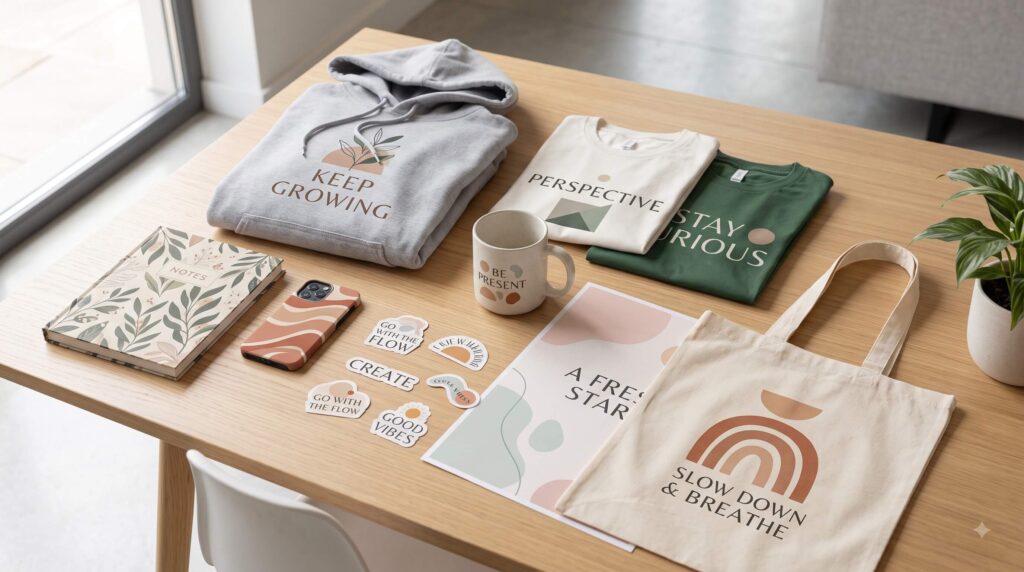
16. Typography and quote art. Simple, bold text designs are easy to create and ideal for beginners with no illustration skills.
17. Minimalist line art. Clean, single-line drawings and abstract shapes look good on posters, tote bags, and phone cases.
18. Mental health and positivity. Affirmations and gentle reminders resonate with wellness-minded buyers. Keep messaging supportive and respectful.
19. Regional and cultural pride. Designs celebrating a city, state, language, or heritage connect emotionally. For example, Punjabi-language typography or local landmark art can build a loyal niche audience.
20. Funny and sarcastic humour. Relatable jokes about adulting, Mondays, or everyday struggles are shareable and often go viral on social media.
Best Print on Demand Products for Beginners
You do not need a huge catalogue. Start with a handful of proven products.
- T-shirts and hoodies. The most popular POD items with strong demand and many colour options.
- Mugs. Low-cost, giftable, and easy to design for.
- Tote bags. Eco-friendly, affordable, and perfect for quote or illustration designs.
- Posters and wall art. Great for minimalist and typography designs, with healthy margins.
- Phone cases. Always in demand, especially with trending or personalised art.
- Stickers. Cheap to produce and ideal for impulse purchases.
- Notebooks and journals. A natural fit for teacher, student, and wellness niches.
A smart strategy is to take one strong design and place it on several products. This multiplies your catalogue without multiplying your design work.
Best Print on Demand Platforms to Start With
Choosing the right partner affects quality, shipping speed, and profit. Here are widely used options for beginners.
Printful. Known for consistent quality, a large product range, and easy integrations with Shopify and Etsy. Prices are slightly higher, but reliability is strong.
Printify. Connects you with multiple print providers, so you can compare prices and pick the best fit. Good for maximising margins.
Gelato. Prints locally in many countries, which can reduce shipping times and costs for international customers.
Redbubble and Society6. Marketplace-style platforms where you upload designs and they handle the storefront. You get less control and lower margins, but you also avoid the work of driving all your own traffic.
Amazon Merch on Demand. Access to Amazon’s huge audience, though approval can take time and the programme has specific rules.
Tip: Order samples before you promote any product. Checking the print quality, fabric feel, and delivery time yourself protects your reputation. Platform features and pricing change often, so confirm current details on each provider’s website.
Where to Sell: Marketplace or Your Own Store?
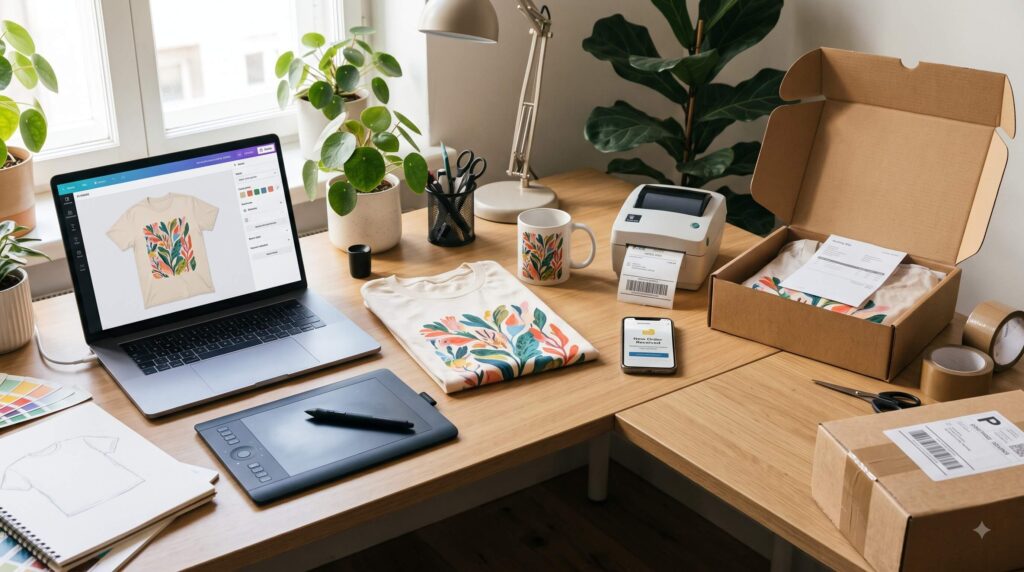
Marketplaces (Etsy, Amazon, Redbubble) give you built-in traffic, which is helpful when you have no audience. The downsides are competition and fees.
Your own store (Shopify, WooCommerce, Wix) gives you full control over branding, pricing, and customer data. It requires more effort to drive traffic, but it builds a long-term asset.
Many beginners start on Etsy to test designs, then open their own store once they know what sells.
How to Create Designs Without Being a Designer
You do not need professional skills to begin. Several tools make design accessible.
- Canva. Beginner-friendly with templates, fonts, and easy export.
- Adobe Express or Photoshop. More advanced options for custom artwork.
- Procreate. Popular for hand-drawn illustration on an iPad.
- AI image generators. Useful for brainstorming, but check the terms of use and any copyright restrictions before selling AI-assisted artwork.
- Freelance designers. Platforms like Fiverr or Upwork let you hire an artist affordably.
Design best practices:
- Use high-resolution files, typically 300 DPI, with transparent backgrounds for apparel.
- Keep designs simple and readable at a glance.
- Choose colours that contrast well with the product colour.
- Follow each platform’s template and size guidelines.
- Make sure every font and image is licensed for commercial use.
Print on Demand SEO: How to Get Found
Search optimisation is one of the cheapest ways to get steady traffic, whether you sell on Etsy or your own site.
1. Research keywords. Use Etsy’s search bar suggestions, Google autocomplete, Pinterest search, and tools like Google Keyword Planner to find phrases buyers actually type, such as “funny nurse mug” or “minimalist mountain poster.”
2. Optimise titles. Place your main keyword near the start of the title and describe the product clearly. Write for people first, then search engines.
3. Write useful descriptions. Mention the design, the product, sizing, materials, and ideal gift occasions. Naturally include related keywords without stuffing.
4. Use all available tags. On Etsy, use every tag slot with specific, varied phrases rather than repeating the same word.
5. Add strong images. Use mockups that show the product in real life, plus close-ups and size guides. Good visuals raise click-through rates.
6. Optimise your own store. If you run a Shopify or WooCommerce site, add keyword-rich collection pages, write unique product descriptions, add image alt text, and publish blog posts that answer buyer questions.
How to Market Your Print on Demand Business
A beautiful design does nothing if nobody sees it. These channels work well for beginners.
Pinterest. Product pins and idea pins act like a search engine for shoppers and can drive traffic for months.
Instagram and TikTok. Short videos showing your designs, behind-the-scenes creation, and customer unboxings build trust and reach.
Email marketing. Offer a small discount for signing up, then send updates about new collections and seasonal sales.
Content marketing. Blog posts or videos around your niche (for example, “gift ideas for plant lovers”) attract buyers who are already interested.
Paid ads. Once you have a proven product, small Facebook, Instagram, or Google ad budgets can scale sales. Do not run ads until you know a design converts organically.
Communities. Engage genuinely in niche groups, forums, and subreddits. Be helpful first and promotional second.
Pricing and Profit: What to Expect
Your profit is the selling price minus production cost, shipping adjustments, platform fees, and any ad spend. A common approach is to price products so that you earn a healthy margin after all costs, often by testing small price increases on bestsellers.
Factors that raise margins include personalisation, bundles, premium materials, and strong branding. Factors that lower them include heavy discounting and underpriced shipping. Track your numbers from the start so you know which products truly make money.
Common Print on Demand Mistakes to Avoid
- Choosing a niche that is too broad. Specific audiences convert better.
- Skipping sample orders. Quality problems become your problems.
- Copying trending designs. Imitation risks takedowns and damages your brand.
- Using copyrighted material. Do not use logos, characters, song lyrics, or celebrity names without permission.
- Ignoring seasonality. Upload holiday designs early so they can rank before demand peaks.
- Giving up too soon. Most successful sellers test many designs before finding winners.
- Neglecting customer service. Fast, friendly replies lead to reviews and repeat buyers.
Legal Basics Every Beginner Should Know
Protect yourself by following a few simple rules. Only use original artwork or properly licensed assets. Avoid trademarked phrases and brand names. Check your local requirements for business registration, taxes, and any import or sales tax obligations. Read each platform’s content policy before you upload. If you are unsure, consult a qualified professional, since rules vary by country.
A Simple 30-Day Launch Plan
Week 1: Pick one niche, research competitors, and list 10 design concepts.
Week 2: Create 10 to 15 designs and set up your POD account and sales channel. Order samples of your top products.
Week 3: Upload your listings with optimised titles, descriptions, and tags. Create mockups and begin posting on Pinterest or Instagram.
Week 4: Review early data, improve underperforming listings, and add new designs based on what gets views and favourites.
Consistency beats perfection. Aim to add a few new designs every week.
Frequently Asked Questions
Is print on demand profitable for beginners?
It can be, but results vary. Success depends on your niche, design quality, marketing effort, and patience. Most beginners see slow early progress and improve by testing and refining.
How much does it cost to start a print on demand business?
You can start with very little. POD platforms are usually free to join, but expect small costs for sample orders, a store subscription or listing fees, and optional design tools or ads.
Do I need design skills to start?
No. Tools like Canva make it easy to create text-based and simple graphic designs, and you can always hire a freelancer for more complex art.
What is the best product to sell with print on demand?
T-shirts, mugs, tote bags, and posters are reliable starting points because demand is steady and designs transfer easily across them.
Is print on demand still worth it?
Yes, for sellers who focus on specific niches and original designs. Competition is real, so standing out with unique ideas and good marketing is essential.
Can I sell print on demand products on Etsy?
Yes. Etsy allows print on demand if you follow its policies, including being transparent about your production partners where required. Check Etsy’s current seller rules before listing.
Final Thoughts
Print on demand lets you test creative ideas with minimal financial risk, which makes it ideal for anyone starting out. The key is to choose a focused niche, create designs your audience genuinely connects with, order samples, and promote consistently.
Pick one idea from the list above, design your first ten products this week, and publish them. You will learn more from your first real listings than from any amount of planning. Start small, stay consistent, and let your data guide what you create next.
Ready to begin? Choose your niche, open a free POD account, and launch your first design today.