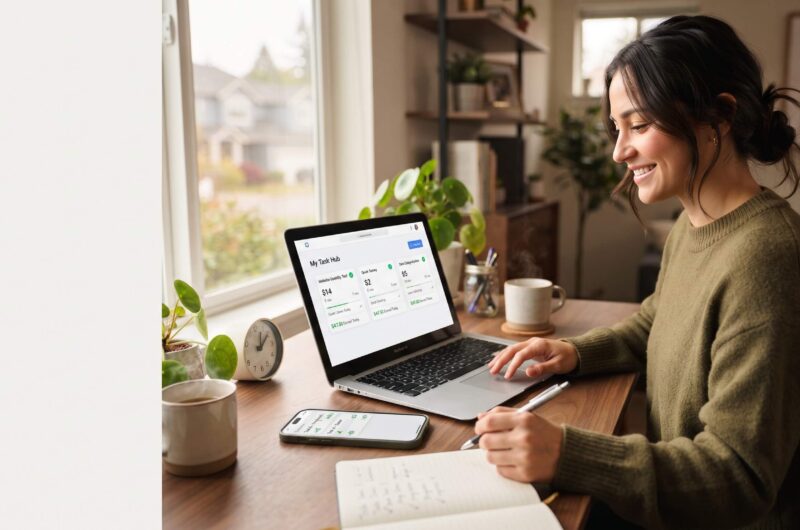

Your Spare Minutes Are Worth More Than You Think
Think about the last time you waited in a queue, sat on a bus, or scrolled aimlessly before bed. Those ten or fifteen minutes felt empty, but they were not worthless. Right now, companies around the world are paying real people to do small, simple jobs: answer a few questions, test a website, label a photo, or record a short opinion.
These websites are not exactly secret. They simply do not get the attention that flashy “get rich quick” schemes do, because the truth is less dramatic. They will not make you a millionaire. But they can put real money in your pocket, help you build a side income, and teach you how the digital economy works, all with nothing more than a phone or laptop and a little consistency.
In this guide, you will discover the most trusted websites that pay you to do simple tasks, what you can realistically earn, how to avoid scams, and how to turn scattered spare minutes into a steady stream of extra income.

Why Do Companies Pay People for Simple Tasks?
Before we get to the list, it helps to understand why this industry exists. Knowing the “why” makes it much easier to spot the legitimate opportunities.
Companies need human opinions. Brands spend billions on market research. Before launching a product, they want to know what real people think, and they pay panels of everyday consumers to tell them.
Technology still needs human help. Artificial intelligence and search engines learn from data that people have checked, labelled, and sorted. Tasks like tagging images, rating search results, or transcribing short audio clips are still done by humans at scale.
Websites and apps need testing. A design team can’t see their product through a stranger’s eyes. Paying users to try an app and speak their thoughts aloud reveals problems that no internal meeting ever would.
Advertisers want attention. Cashback and rewards platforms exist because brands pay to reach shoppers who are already making purchases.
In short, these sites pay you because your time, attention, and opinions have genuine commercial value. That is the foundation of every legitimate platform on this list.
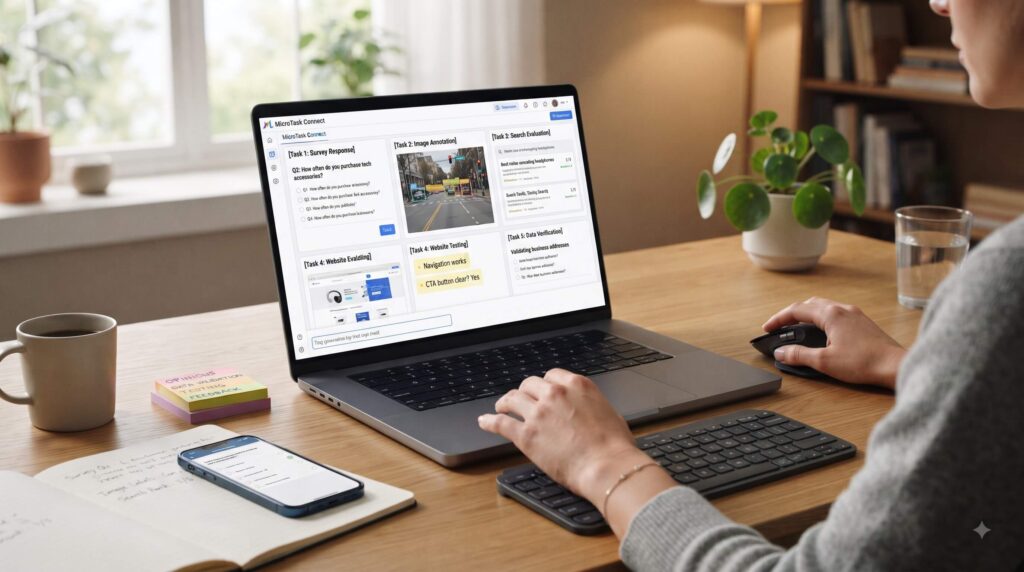
How Much Can You Realistically Earn?
Honesty matters here, because most articles on this topic overpromise. Simple online tasks typically pay modestly. Many beginners earn a few dollars a day, or roughly the equivalent of pocket money, in their first weeks. With experience, good profiles, and smart selection of platforms, some people reach a few hundred dollars a month. A small number who specialise in higher-paying work such as paid usability studies or expert interviews earn considerably more.
The key insight is this: these sites reward consistency and strategy, not luck. Treat them as a way to monetise small pockets of time, not as a replacement for a full-time income, and you will be far less likely to feel disappointed.
Note also that availability, payout methods, and pay rates vary by country. Always check a platform’s current terms and supported regions before signing up.

Category 1: Paid Survey and Opinion Sites
Surveys are the most beginner-friendly way to earn. No special skills are needed, only honest opinions.
Prolific
Built originally for academic researchers, Prolific connects university studies and research projects with participants. It is widely respected for paying fairly and displaying the expected hourly rate upfront, so you always know what you are getting. Studies appear in limited numbers, so check often and act fast. It is one of the more transparent platforms in the industry.
Swagbucks
Swagbucks is one of the best-known reward sites. You earn points, called SB, for surveys, watching videos, shopping online, and completing offers, then redeem them for gift cards or cash-style payouts. The pay per task is small, but the variety makes it easy to dip in whenever you have a spare moment.
Survey Junkie and Similar Panels
Survey Junkie and comparable panels match you with surveys based on your profile. The more accurate and complete your profile, the fewer “sorry, you don’t qualify” screens you will face. These panels are best used as one of several tools rather than your only source.
Google Opinion Rewards
This app asks short questions on your phone, often only a few seconds each, and pays in Google Play credit or account balance depending on your region. It will never make you rich, but it takes almost no effort and is backed by a name you can trust.
Pro tip: Join three or four survey panels instead of just one. When one runs out of surveys for your profile, you can switch to another and keep earning.
Category 2: Usability Testing and Paid Research Studies
This is where simple tasks begin to pay noticeably better. Instead of answering a quick poll, you are helping real teams improve real products.
UserTesting
UserTesting pays people to visit websites or use apps while speaking their thoughts aloud, usually in a recorded session of around 10 to 20 minutes. Many testers say the pay per session is attractive compared with surveys. The catch is that you first need to pass a short practice test, and available sessions depend on your demographics.
User Interviews
User Interviews is a marketplace connecting researchers with participants for studies, from short surveys to longer one-on-one conversations. Because interviews can be longer, the payouts are often higher. If you have a professional background in a particular field, such as healthcare, finance, or teaching, you may qualify for especially well-paid studies.
Respondent
Respondent focuses on higher-value research projects, including interviews with professionals. Sessions are fewer but can pay much better than typical micro-tasks. It is a strong option if you have workplace experience that companies want to understand.
Why this category works: Companies pay a premium for feedback that reveals how people truly think. If you can describe your thoughts clearly and honestly, you have a marketable skill.
Category 3: Micro-Task and Data Work Platforms
Micro-task sites break big projects into tiny pieces and pay people to complete them. These are the closest thing to “secret” websites on the list, because many people have never heard of them.
Amazon Mechanical Turk (MTurk)
MTurk is one of the oldest micro-task marketplaces. Tasks, called HITs, include categorising images, verifying data, or answering short questionnaires. Pay varies widely, and some tasks pay very little. Experienced workers build a reputation and filter for the best requesters. Availability and payout options depend on your country.
Clickworker
Clickworker offers short text writing, data categorisation, web research, and similar jobs. Tasks are usually simple and can be done from a phone or computer. Once you pass the basic assessments, you gain access to more work.
Appen and Toloka
These platforms hire people to help improve search engines, voice assistants, and AI systems by rating results, checking translations, or labelling content. Some projects require you to pass a qualification test, and project availability can come and go. When work is available, it can be a steady source of small payments.
DataAnnotation and Similar AI-Training Sites
A newer wave of platforms pay people to review and improve AI-generated answers. Pay can be higher than classic micro-tasks, particularly for people with strong writing, coding, or subject-matter skills. Expect screening tests before you begin.
Honest warning: Micro-task work can pay very little per task if you are not selective. Focus on tasks with a clear hourly equivalent and avoid anything that takes much longer than the advertised time.
Category 4: Cashback and Receipt-Scanning Apps
These do not pay you for “working” in the usual sense, but they reward you for doing something simple you may already be doing: shopping.
- Fetch Rewards: Scan receipts from everyday purchases to earn points redeemable for gift cards, where available.
- Ibotta: Unlock offers on groceries and household items, then earn cashback after you shop.
- Rakuten: Get a percentage back when you shop through its links at partner stores.
The lesson here is to never spend extra just to earn rewards. Used wisely, cashback adds up. Used carelessly, it can trick you into buying things you do not need.
Category 5: Micro-Gig Marketplaces
If you are willing to turn a simple skill into small paid jobs, micro-gig platforms open a larger door.
Fiverr
Fiverr lets you sell small services, called gigs, such as proofreading, simple graphic edits, voice-overs, data entry, or social media captions. You set the price and describe what you offer. It takes longer to build momentum, but earnings can grow far beyond survey sites once you collect good reviews.
Upwork
Upwork connects freelancers with clients for everything from data entry and virtual assistance to writing and translation. Competition is real, so a clear profile and a sharp proposal matter. It can be a stepping stone from simple tasks toward sustainable freelance income.
Microworkers
Microworkers is built around very small paid tasks such as signing up for services, testing websites, or leaving feedback. Quality varies, so read task instructions carefully and avoid anything that asks for sensitive personal data.
How to Spot Scams and Protect Yourself
The popularity of online side hustles has attracted scammers. Learn these red flags and you will save yourself time, money, and stress.
- You are asked to pay to start. Legitimate task platforms do not charge you for the opportunity to work. If a site demands a “registration fee,” walk away.
- Promises of huge, guaranteed income. If it sounds like hundreds of dollars a day for a few clicks, it is almost certainly false.
- Requests for sensitive information. Never share bank passwords, one-time codes, or identity documents with an unverified site. Legitimate platforms may verify identity, but only through established, secure processes.
- No clear company details. Look for an actual business address, a privacy policy, and genuine user reviews on independent sites.
- Unrealistic payout rules. Be wary of sites where the withdrawal threshold is impossible to reach or keeps changing.
- Pressure and urgency. Real opportunities do not vanish in ten minutes. Scammers want you to rush.
Before joining any site, search its name along with the word “reviews” or “payment proof,” and check recent reviews on independent platforms. Use a separate email address for side-hustle sign-ups to keep your main inbox clean and safe.
Smart Strategies to Earn More From Simple Tasks
Most people quit these sites within a few weeks because they approach them the wrong way. Here is how to do better.
1. Complete Your Profile Fully
The more accurate your profile, the more surveys and studies you will qualify for. Honest, detailed answers lead to better matches and fewer disqualifications.
2. Stack Multiple Platforms
No single site will have work for you all day. Registering on several lets you move between them and fill every gap in your schedule.
3. Think in Hourly Rates
A “five-minute task” that pays a tiny amount might actually take fifteen minutes. Track the time you spend and focus on platforms with the best effective hourly rate.
4. Use Dead Time
Commutes, waiting rooms, and lunch breaks are ideal for mobile-friendly tasks. Turning wasted minutes into income is the secret behind most successful micro-earners.
5. Be Consistent and Honest
Platforms track the quality of your answers. Rushing or giving random responses can get you removed. Careful work builds trust and unlocks better-paying tasks.
6. Build Skills That Pay More
Use simple tasks as a launchpad. Improve your writing, learn basic data skills, or develop a specialty. Over time, you can move from low-paying micro-tasks to better-paid freelance and research work.
7. Keep Records for Taxes
In many countries, side income is taxable. Keep a simple record of what you earn, and check your local rules so you are never surprised later.
A Simple 30-Day Starter Plan
If you want to begin without feeling overwhelmed, follow this plan.
Week 1: Set up. Create a dedicated email address, choose two or three trusted platforms (for example, Prolific, Swagbucks, and Google Opinion Rewards), and fill in your profiles carefully.
Week 2: Build a routine. Set aside 20 to 30 minutes a day. Complete surveys and tasks, and note which ones pay best for the time spent.
Week 3: Level up. Apply for a usability-testing platform such as UserTesting or User Interviews, and try a micro-task site such as Clickworker.
Week 4: Review and refine. Look at your earnings and time spent. Drop platforms that waste your time, double down on those that pay well, and make your first withdrawal. Seeing real money arrive is the best motivation to continue.
Frequently Asked Questions
Are websites that pay you to do simple tasks legit?
Many are. Established platforms such as Prolific, UserTesting, and Amazon Mechanical Turk have been paying people for years. However, scams exist, so always research a site, never pay to join, and protect your personal information.
How much money can I make from simple online tasks?
Most beginners earn small amounts, often a few dollars a day. With experience and the right mix of platforms, some people earn a few hundred dollars a month. Higher-paying work such as research interviews and freelance gigs can earn more, but results vary widely.
Do I need experience or special skills?
For surveys and basic micro-tasks, no. For usability testing, interviews, and AI-training work, clear communication and relevant knowledge help. For freelance gigs, a skill you can offer is essential.
How do I get paid?
Common payout methods include bank transfer, PayPal, and gift cards. Options depend on the platform and your country, so check payout details before you invest time.
Can I do this from my phone?
Yes, many platforms have mobile apps or mobile-friendly websites. Surveys, receipt scanning, and short opinion tasks are especially convenient on a phone. Some jobs, such as usability tests, may require a computer and a microphone.
Can students and stay-at-home parents use these sites?
Absolutely. The flexibility makes these platforms popular with students, parents, retirees, and anyone who needs to earn around a busy schedule. Be sure to meet each platform’s minimum age and country requirements.
What is the best website to start with?
For beginners, Prolific and Swagbucks offer a gentle learning curve, while Google Opinion Rewards is effortless to try. If you want better pay per task, explore UserTesting and User Interviews once you are comfortable.
Final Thoughts: Small Steps, Real Results
The websites that pay you to do simple tasks are not a magic trick, and they are not a trap. They are tools. In the hands of someone who is patient, careful, and consistent, they turn idle minutes into extra cash, build digital skills, and open doors to bigger opportunities.
You do not need to quit your job, buy expensive courses, or chase flashy promises. You need a free account, a little curiosity, and the willingness to start. Choose two platforms today, complete your profiles, and finish your first task. That small action is the difference between reading about extra income and actually earning it.
Your first payout may be small. But it will be proof that your time, opinions, and effort have value, and that proof is often the spark that leads to something much bigger.
Disclaimer: Earnings vary by person, country, and platform. Always read each site’s terms, confirm availability in your region, and never pay to access work. This article is for information only and is not financial advice.