
By your friendly neighborhood pizza obsessive
Why Everyone on Your Street Suddenly Owns a Pizza Oven
Three summers ago, I counted the pizza ovens on my block. There were two. Last weekend I stopped counting at seven. An Ooni was glowing on one patio, a Gozney sat on a stand next to a hot tub, and my neighbor Dale had built a full brick dome out of salvaged firebrick and sheer stubbornness. Somewhere around the second Friday-night pizza party, it hit me: backyard wood-fire cooking is not a fad. It is a full-blown American pastime.
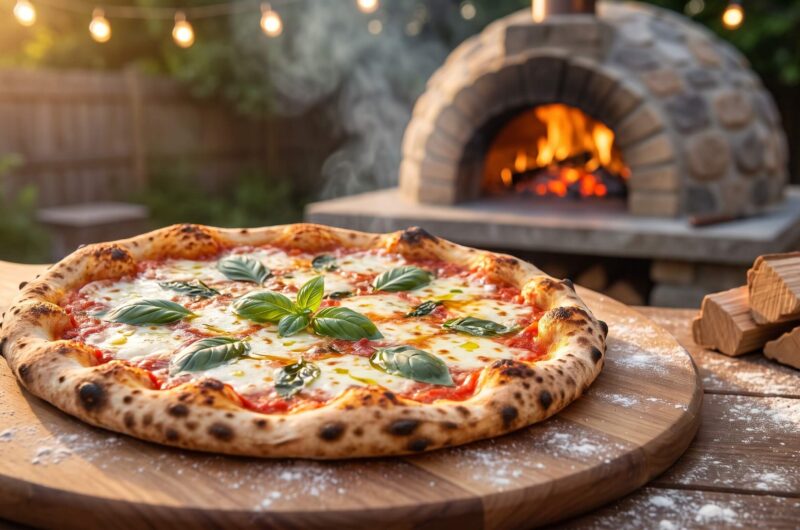
It makes sense. A pizza oven turns dinner into an event. You feed the fire, you stretch the dough, you slide a pie in, and ninety seconds later you are tearing into something that no delivery box has ever come close to matching. The blistered, leopard-spotted edge, the whisper of smoke, the molten cheese. It is theater you can eat.
But owning the oven is the easy part. Making the pizza is where people stumble: dough that tears, crusts that go soggy, pies that weld themselves to the peel. This guide fixes all of that. Below you will find the science behind a truly crisp, airy crust, the gear and wood that matter, a master thin crust pizza dough recipe in plain American measurements, four signature wood-fired pizza recipes, and the techniques that separate a good bake from a great one.
Grab a cold drink. Let’s light the fire.
The Anatomy of a Perfect Thin Crust
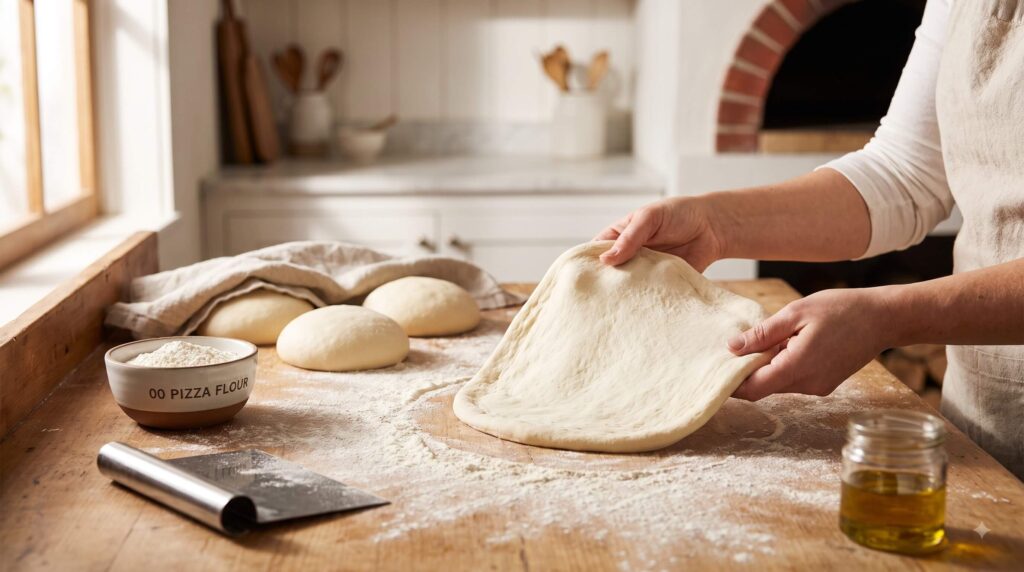
A great thin crust is not just a flat piece of dough. It is a balancing act: crisp on the bottom, tender and slightly chewy in the middle, puffy and charred at the rim, and strong enough to hold toppings without flopping. Every one of those qualities is decided long before the pizza touches the oven floor.
Flour: ’00’ vs. All-Purpose
Italian ’00’ flour is milled extremely fine, which has nothing to do with protein content and everything to do with texture. Good pizzeria-grade ’00’ (Caputo Pizzeria is the one I keep stocked) sits around 11.5 to 12.5 percent protein and absorbs water beautifully. It stretches thin without tearing and bakes up soft inside with a delicate crisp outside, and it is built to survive 800°F-plus temperatures without burning before the crust cooks through.
All-purpose flour will work in a pinch, and I have made plenty of respectable pies with it. Expect a slightly denser crumb and a dough that fights back more when stretched. If you go that route, a splash less water helps. For a true authentic pizza dough recipe, though, ’00’ is worth the few extra dollars.
Hydration: The Quiet Hero
Hydration is simply the weight of water compared with the weight of flour. Thin crust lives in the 60 to 65 percent range.
- 58 to 60 percent: Easy to handle, great for beginners, a crisper and more cracker-like bite.
- 62 to 65 percent: The sweet spot for wood-fired ovens. Enough moisture to puff in the heat, still manageable on the peel.
- 70 percent and up: Gorgeous open crumb, but a sticky headache for thin pies. Save it for another day.
My master recipe below sits at 62 percent, which gives you extensibility without a fight.
Cold Fermentation: Where the Flavor Is Built
If you take one thing from this article, let it be this: time is an ingredient. Letting dough rest in the refrigerator for 24 to 48 hours does three jobs at once.
- It develops flavor. Enzymes slowly break starches into sugars while the yeast produces subtle, complex acids. The result tastes nutty, a little tangy, and far more interesting than same-day dough.
- It improves texture. Gluten relaxes over a long, cold rest, so the dough stretches thin without snapping back.
- It browns beautifully. Those extra sugars caramelize in a flash at high heat, giving you the signature charred spots in under two minutes.
I learned this the hard way. My first dozen pizzas were made with same-day dough, and they were bland, pale, and tough. The first batch I rested for 48 hours changed everything. If you want truly homemade pizza in a wood oven that tastes like it came from a Naples side street, plan ahead.