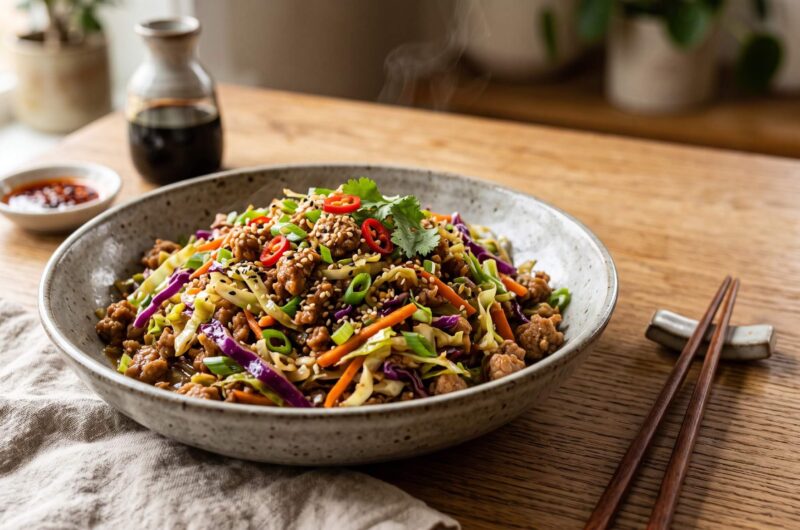

If you’ve never made “crack slaw,” you’re missing out on one of the most efficient meals in the low-carb world. Egg Roll in a Bowl takes everything you love about a classic Chinese-American egg roll — savory pork, crunchy cabbage, ginger-garlic depth, a salty-sweet soy glaze — and strips away the deep-fried wrapper. What’s left is a nutrient-dense, high-volume, low-carb dinner that comes together in the time it takes to boil water for pasta you’re not making anymore.
This guide goes deep: how to pick the right protein, how to prep the slaw without touching a knife, how to balance your sauce like a pro, why this dish is a smart choice for keto and diabetic meal planning, how to eat a genuinely huge portion without blowing your carb budget, and a full macro breakdown so you know exactly what you’re putting in your body.
Why This Dish Works
Egg Roll in a Bowl is built on a simple ratio: a lot of vegetables, a moderate amount of protein, and a small but mighty amount of sauce. That structure is what makes it fast, cheap, and forgiving. There’s no wrapper to fold, no oil bath to monitor, and no single ingredient that can ruin the dish if it’s slightly overcooked. It’s a skillet meal, start to finish, and it scales beautifully whether you’re cooking for one or meal-prepping for a week.
Choosing Your Protein: Pork, Turkey, or Tofu
The protein is the backbone of the dish’s flavor, and each option brings something different to the table.
Ground pork is the traditional choice, and for good reason. Pork’s natural fat content (typically 15–20% fat in standard ground pork) renders out as it cooks, basting the cabbage and onions in savory richness without needing added oil. This is the closest flavor match to an actual egg roll filling. The trade-off is a higher saturated fat and calorie count, so portion awareness matters if you’re watching total fat intake. Look for ground pork labeled 80/20 or 85/15 for the best balance of flavor and manageable grease. If you want to cut some fat, briefly drain the pan after browning before adding vegetables.
Ground turkey is the lean, high-protein alternative. 93% lean ground turkey delivers a comparable amount of protein per serving with roughly half the fat of standard ground pork, which is why it’s the go-to for anyone tracking calories closely or building muscle on a cut. The catch: turkey lacks pork’s natural fat, so it can taste flat on its own. Compensate by adding a teaspoon of toasted sesame oil to the pan and being generous with garlic, ginger, and a splash of the soy-based sauce while the meat browns, not just at the end. This “seasoning while cooking” trick prevents the classic problem of turkey-based stir-fries tasting like seasoned cardboard.
Tofu is the plant-based route, and it’s genuinely excellent in this dish when handled correctly. Extra-firm tofu, pressed for at least 15 minates to remove excess water, crumbles into pork-like bits when broken up with a spatula in a hot pan. Because tofu is porous, it absorbs the soy-ginger-sesame flavor profile aggressively, arguably better than meat does. For extra texture, pan-fry the crumbled tofu until the edges crisp before adding the vegetables — this mimics the slightly caramelized edges you get from browned ground meat. Tofu is also the lowest-calorie, lowest-saturated-fat option of the three, though it has less protein per ounce than meat, so plan for a slightly larger tofu portion to hit equivalent protein targets.
Quick decision guide:
- Want maximum classic flavor and don’t mind the fat? Pork.
- Want lean, high-protein, and don’t mind seasoning assertively? Turkey.
- Want plant-based, low-calorie, and high sauce absorption? Tofu.
You can also blend proteins — half pork, half turkey is a popular compromise that keeps flavor high while trimming fat.
Knife-Free Prep: The Bagged Coleslaw Mix Hack
The single biggest reason this recipe takes 10 minutes instead of 30 is the bagged coleslaw mix. Pre-shredded coleslaw mix (typically green cabbage, purple cabbage, and shredded carrot) does the job of what would otherwise be 10–15 minutes of knife work, and it’s sold in every grocery store for a couple of dollars a bag.
A few hacks to make this even smoother:
- Buy the tri-color or “angel hair” cut if your store offers it — the thinner shred cooks faster and gives a better bite-to-sauce ratio than thick-cut slaw mix.
- Skip the rinse. Bagged slaw mix is pre-washed and ready to go straight into the pan. Rinsing just adds water you’ll need to cook off.
- Add it in two batches if your skillet is small. Dump half in, let it wilt for a minute to make room, then add the rest. This avoids the “mountain of cabbage that won’t fit” problem.
- Use kitchen shears, not a knife, for garnish. If you want scallions or extra cabbage chopped finer, snip them directly over the bowl with scissors instead of pulling out a cutting board.
- Pre-minced garlic and ginger (sold in jars or tubes) are legitimate knife-free shortcuts here. A teaspoon of jarred minced ginger is functionally identical in the finished dish to fresh-grated, and it eliminates the most tedious knife task in the recipe.
- Frozen diced onion works the same way — no tears, no cutting board, straight from freezer to pan.
With these swaps, the entire recipe requires zero knife contact, which is a big part of why it’s realistic as an actual weeknight 10-minute meal and not just a recipe-blog exaggeration.
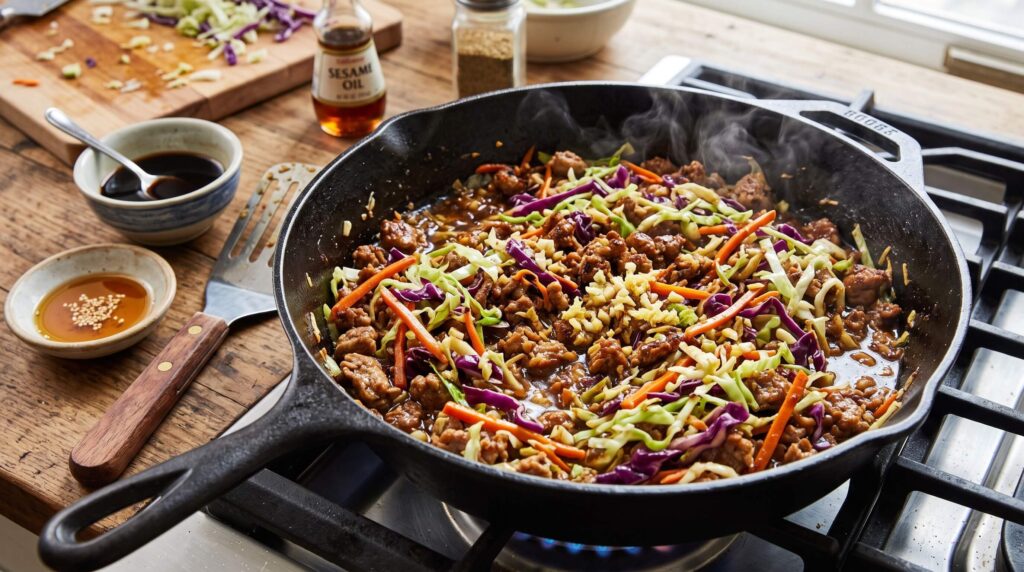
Balancing the Sauce: Soy Sauce, Sesame Oil, and Ginger
The sauce is where this dish either sings or falls flat, and it comes down to three ingredients working in balance.
Low-sodium soy sauce is the backbone. Regular soy sauce can push a single serving well past 1,000mg of sodium, which adds up fast when you’re already eating a savory, umami-heavy dish. Low-sodium soy sauce typically cuts sodium by around 40% compared to regular, giving you room to season assertively without turning the dish punishingly salty. If you’re strictly gluten-free, tamari is a direct low-sodium-compatible swap; coconut aminos is a lower-sodium, slightly sweeter alternative for those avoiding soy sauce altogether.
Toasted sesame oil is not a cooking oil here — it’s a finishing flavor. It has a low smoke point and a concentrated, nutty aroma that turns bitter and flat if you try to sauté with it. The right technique: cook your protein and vegetables in a neutral oil (avocado or light olive oil) or the fat rendered from the meat, then stir in toasted sesame oil at the very end, off heat or on low heat, so its aroma stays bright. A little goes a long way — 1 to 2 teaspoons for a full skillet is usually plenty. Too much and the dish turns greasy and one-note.
Fresh ginger provides the brightness that keeps the dish from tasting like a flat salty stir-fry. Ginger’s slightly citrusy, peppery heat cuts through the richness of the soy sauce and sesame oil, giving the dish lift. A tablespoon of freshly grated ginger (or the jarred equivalent) added early, along with garlic, blooms in the fat and infuses the whole pan. If you like a sharper ginger note, add a bit more raw, finely grated ginger at the very end as a garnish-level hit.
The balancing formula that works for most palates:
- 3 tablespoons low-sodium soy sauce
- 1–2 teaspoons toasted sesame oil (added last)
- 1 tablespoon fresh grated ginger
- 2–3 cloves garlic, minced
- Optional: 1 teaspoon rice vinegar for acidity, a drizzle of sriracha or chili garlic sauce for heat
Taste as you go. Because low-sodium soy sauce is less aggressive than regular, you have more room to adjust without oversalting, which makes this an easier sauce to get right on the first try than most stir-fry sauces.
Glycemic Index Benefits for Keto and Diabetic Meal Prep
This dish’s biggest nutritional advantage is what it leaves out: rice, noodles, and wrapper dough. A traditional egg roll wrapper and its typical serving of fried rice on the side can add 40–60 grams of refined carbohydrate to a meal — carbohydrate that digests quickly and spikes blood glucose. Egg Roll in a Bowl replaces essentially all of that with cabbage and carrot, vegetables with a low glycemic index and a glycemic load that’s negligible in the portions used here.
For context, cabbage has a glycemic index in the single digits to low teens, meaning it has minimal impact on blood sugar even in generous portions. Carrots, despite an undeserved reputation, have a moderate glycemic index but a very low glycemic load in the small amounts found in a bag of slaw mix, because the actual carbohydrate content per serving is small. Combined with a solid dose of protein and fat from the meat or tofu, this meal produces a slow, blunted glucose response rather than a spike-and-crash pattern.
This makes the dish a strong fit for:
- Ketogenic diets, where net carbs per serving typically land in the 6–10 gram range, well within most daily keto carb allowances even with multiple servings.
- Diabetic meal planning, where minimizing rapid glucose spikes is a primary goal. Protein and fat also slow gastric emptying, further flattening the post-meal glucose curve.
- Reactive hypoglycemia management, since the absence of a large refined-carb bolus means there’s no sharp insulin response to overshoot afterward.
As always, individual glucose responses vary, and this is general nutritional information rather than personalized medical advice — anyone managing diabetes should coordinate meal planning with their doctor or a registered dietitian, especially around insulin dosing.
High-Volume Eating Strategy
One of the most underrated features of this recipe is portion size relative to calories. A single bag of coleslaw mix (roughly 14–16 oz) has very low caloric density — often under 100 calories for the entire bag — which means you can build a physically enormous bowl of food without a correspondingly enormous calorie count.
This matters for anyone practicing high-volume eating as a satiety strategy, a common approach in both weight-loss-focused and diabetic-friendly eating plans. The psychological and physiological satisfaction of a large, visually generous meal is real: stomach stretch receptors contribute meaningfully to the sensation of fullness, independent of calorie count. A large bowl of cabbage, protein, and sauce triggers those fullness signals in a way that a calorie-equivalent small portion of a calorie-dense food simply doesn’t.
Practical high-volume tactics for this recipe:
- Use two bags of coleslaw mix per pound of protein instead of one, doubling the vegetable-to-meat ratio without meaningfully increasing calories.
- Add extra low-calorie bulk vegetables: bean sprouts, shredded zucchini, or mushrooms all wilt down and blend seamlessly into the dish while adding volume.
- Serve over a bed of riced cauliflower for an even bigger bowl with minimal added carbs or calories.
- Eat slowly — a large bowl takes longer to physically consume, which gives your body’s natural satiety signals time to catch up before you overeat.
This approach is especially useful for anyone who feels deprived by “small portion” low-carb meals. Crack slaw is the opposite of a small portion — it’s genuinely one of the largest meals you can eat for the calorie and carb cost.
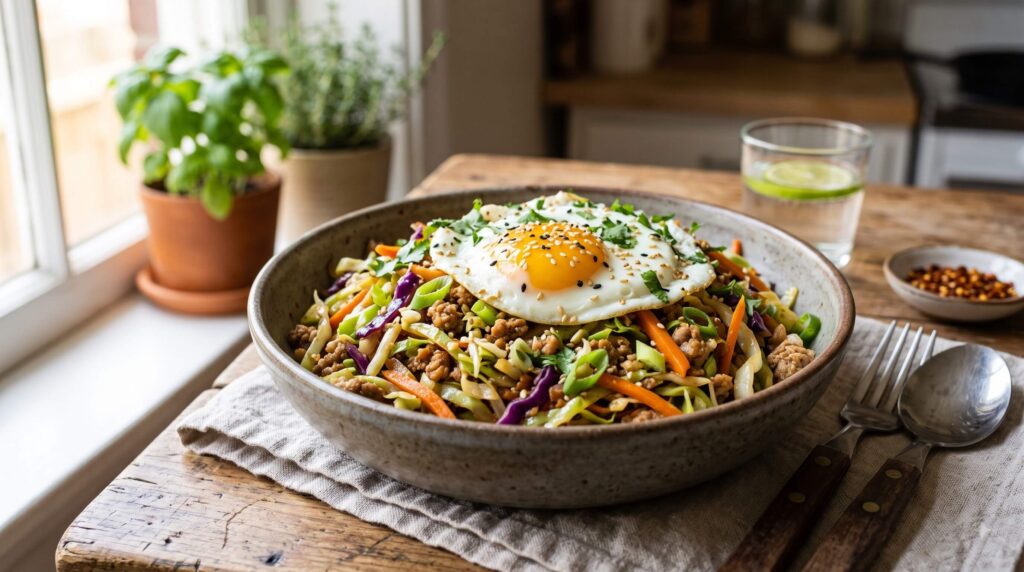
Comprehensive Macro Profile
Macros will shift depending on your protein choice and exact sauce quantities, but here are representative profiles per serving (recipe divided into 4 servings, using 1 lb of protein and 1 bag of coleslaw mix):
Ground Pork Version (80/20):
- Calories: ~320
- Protein: ~22g
- Fat: ~23g
- Total Carbs: ~8g
- Fiber: ~2g
- Net Carbs: ~6g
- Sodium: ~480mg (using low-sodium soy sauce)
Ground Turkey Version (93% lean):
- Calories: ~230
- Protein: ~26g
- Fat: ~10g
- Total Carbs: ~8g
- Fiber: ~2g
- Net Carbs: ~6g
- Sodium: ~470mg
Tofu Version (extra-firm):
- Calories: ~190
- Protein: ~14g
- Fat: ~11g
- Total Carbs: ~9g
- Fiber: ~3g
- Net Carbs: ~6g
- Sodium: ~460mg
Across all three versions, net carbs stay remarkably consistent, because the carbohydrate content is driven almost entirely by the cabbage and carrot slaw mix and the sauce, not the protein. This consistency is part of why the dish is so easy to fit into a fixed daily carb budget regardless of which protein you’re in the mood for on a given night.
If you’re tracking macros precisely, remember that jarred minced garlic/ginger, added vinegar, or a fried egg on top (a popular topping) will shift these numbers slightly — always adjust based on your exact ingredient brands and quantities.
Frequently Asked Questions
Can I use fresh cabbage instead of bagged coleslaw mix? Yes. Shred a small head of green or napa cabbage and a carrot by hand or with a food processor’s shredding disc. This restores the knife work the bagged mix eliminates, but it’s a fine option if you already have cabbage on hand or want to control the cabbage-to-carrot ratio yourself.
What’s the best soy sauce substitute for a gluten-free diet? Tamari is the closest match in flavor and can be swapped 1:1 for soy sauce, and most tamari brands are naturally gluten-free (always check the label, as cross-contamination and blended formulas exist). Coconut aminos is another popular gluten-free option, though it’s naturally sweeter and less salty, so you may need slightly more of it to match the depth of flavor.
Can I make this dish egg-free even though it’s called “Egg Roll” in a bowl? Yes, the name refers to the flavor profile of a traditional egg roll filling, not a literal egg ingredient. The base recipe (protein, cabbage, sauce) contains no egg. Some variations scramble in a whisked egg at the end for extra protein and texture — that’s optional, not foundational.
How long does this keep in the fridge? Properly stored in an airtight container, Egg Roll in a Bowl keeps for 3 to 4 days in the refrigerator. The cabbage will soften further as it sits in the sauce, but it remains pleasant to eat — many people prefer the flavor on day two once everything has had time to meld.
Can I freeze it? Freezing is possible but not ideal. Cabbage has a high water content, and freezing followed by thawing tends to make it noticeably mushier and can cause slight separation in the sauce. If you do freeze it, portion it into individual containers, freeze for up to 2 months, and thaw overnight in the refrigerator rather than at room temperature. Reheat gently in a skillet rather than the microwave to help the texture recover somewhat.
What can I substitute for coleslaw mix if I want more variety? Pre-shredded broccoli slaw, a broccoli-carrot blend sold in the same section as coleslaw mix, is an easy swap that adds a slightly different texture and a mild flavor twist while keeping the same knife-free convenience.
Is this recipe suitable for meal prep? Very much so. It reheats well, holds its macros consistently across the week, and the high-volume, low-calorie nature of the dish makes it a satisfying lunch that doesn’t leave you hungry an hour later. Divide into 4 airtight containers immediately after cooking and cooling for best results.
What are good low-carb toppings to add? A fried or soft-boiled egg on top, a sprinkle of toasted sesame seeds, sliced scallions, a drizzle of sriracha or chili crisp, or a few drops of rice vinegar for brightness are all popular additions that add minimal carbs while boosting flavor and texture contrast.
Can I make this dish spicier without changing the base recipe? Yes — spice is easiest to add at the finishing stage rather than baked into the sauce. A drizzle of chili crisp, a pinch of red pepper flakes added with the garlic and ginger, or a squeeze of sriracha at the table all let you control heat per serving without altering the core macro profile for people sharing the dish who prefer it mild.