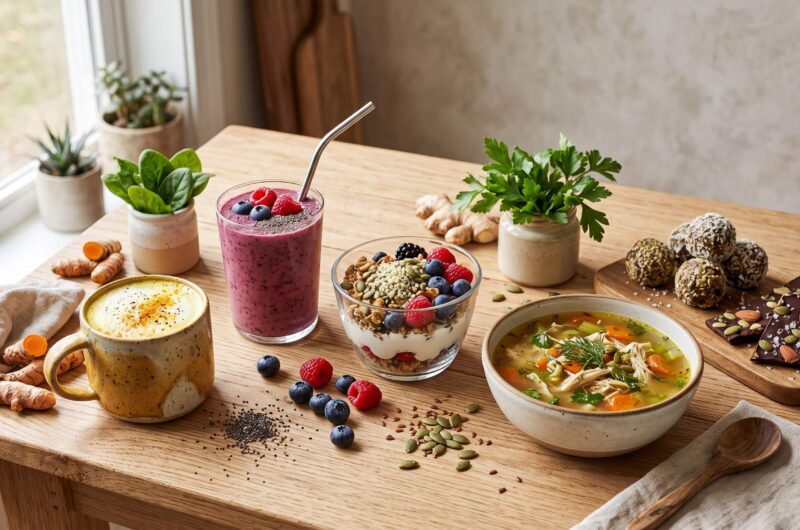

7. Dark Chocolate Seed & Nut Bark
A satisfying treat with cacao, nuts, and seeds
You don’t have to eliminate chocolate to build a nutrient-conscious diet.
Dark chocolate with a high cacao percentage contains minerals such as magnesium along with plant compounds called flavanols.
Adding nuts and seeds provides healthy fats, protein, and additional minerals.
Ingredients
Makes about 10 pieces
- 8 ounces dark chocolate, 70–85% cacao
- ¼ cup roasted almonds, chopped
- ¼ cup pumpkin seeds
- ¼ cup dried tart cherries
- 1 tablespoon cacao nibs
- 1 teaspoon coconut oil
- Flaky sea salt
Instructions
- Line a baking sheet with parchment paper.
- Melt the dark chocolate and coconut oil gently using a double boiler.
- Stir until smooth.
- Pour onto the prepared baking sheet.
- Spread into an even layer about ¼ inch thick.
- Scatter almonds, pumpkin seeds, cherries, and cacao nibs over the chocolate.
- Finish with a small pinch of flaky sea salt.
- Refrigerate for about 30 minutes.
- Break into pieces and store in an airtight container.
A Note About Chocolate
Dark chocolate still contains calories and some caffeine. If you’re sensitive to caffeine or notice that chocolate affects your sleep, enjoy it earlier in the day.
Frequently Asked Questions
How long does it take to improve gut health through food?
There isn’t one timeline that applies to everyone.
Some people notice changes in digestion after making dietary changes, while others need more time. Your response can depend on your starting diet, fiber intake, food tolerances, medications, health conditions, sleep, stress, and other factors.
Focus on consistency rather than expecting a dramatic change in a few days.
Can food balance hormones?
Food plays an important role in overall health, but it’s misleading to suggest that one food or recipe can “balance hormones.”
Hormone levels are influenced by many factors, including genetics, age, sleep, stress, body composition, medications, and underlying medical conditions.
A balanced diet can support overall metabolic and reproductive health, but persistent symptoms deserve proper evaluation.
Does seed cycling really work for PCOS?
Evidence for seed cycling as a specific hormone-balancing protocol is limited.
The individual seeds themselves are nutritious sources of fiber, healthy fats, and minerals, so they can certainly be part of a balanced eating pattern.
For PCOS, nutrition is only one part of management. Evidence-based PCOS care can also involve lifestyle support, medications, and other individualized treatment options.
What foods support a healthy gut?
A varied diet containing fiber-rich plant foods is a practical starting point.
Examples include:
- Berries
- Oats
- Beans and lentils
- Vegetables
- Nuts and seeds
- Whole grains
- Fruit
- Fermented foods such as yogurt
Increase fiber gradually if your current intake is low.
What foods are good sources of magnesium?
Some magnesium-rich foods include:
- Pumpkin seeds
- Almonds
- Cashews
- Spinach
- Other leafy greens
- Beans
- Whole grains
- Dark chocolate
Getting nutrients from food is generally preferable to adding supplements without a specific reason.
Do I need supplements for gut or hormone health?
Not necessarily.
A varied diet can provide many of the nutrients needed for good health. Supplements can be useful in certain situations, but they aren’t automatically better than food.
If you’re considering supplements such as magnesium, ashwagandha, or concentrated herbal products, check with your healthcare professional—especially if you’re pregnant, breastfeeding, have a medical condition, or take medication.